

Price monitoring: watch competitor prices to decide fast
Price monitoring means continuously tracking your competitors' prices across your sales channels, marketplaces and comparison engines like Google Shopping. It turns scattered prices into usable data: where you stand, when to react, and what price keeps you competitive without giving up your margin.

The essentials
- More sellers leave you less room to adjust prices: on a comparison site, the gap between the two lowest prices shrinks as seller numbers rise.
- Repricing does not mean matching the cheapest seller: sellers using algorithms win the Buy Box more often without always offering the lowest price.
- At one garden retailer, 45.4% of SKUs had no competitor. Monitoring helped raise prices where the market allowed, without losing sales.
- In France, you can collect public prices to set your own. Collect data fairly, respect sites’ terms, and never coordinate prices with competitors.
A seller running 12,000 references across the Amazon marketplace, Cdiscount, Fnac and Google Shopping cannot check competitor prices by hand. By the time the spreadsheet is done, the market has already moved: according to Alberto Cavallo (NBER, 2018), the average duration of regular prices at US multichannel retailers, excluding temporary discounts, fell from about 6.7 months in 2008-2010 to 3.65 months in 2014-2017.
Price monitoring starts with one simple thing: stop guessing who is undercutting you and see for yourself. If you track competitor prices in a spreadsheet, verify the figures before acting: they may already have changed by the time you finish updating it. According to Alberto Cavallo (NBER, 2018), average regular-price duration at US multichannel retailers, excluding temporary discounts, fell from about 6.7 months in 2008-2010 to 3.65 months in 2014-2017. Compare the collected prices to identify which competitors are undercutting you. You can then decide when to adjust your prices to stay competitive while protecting your margin.
What is price monitoring?
Price monitoring means tracking what competitors charge for the same products on each sales channel. It answers three simple questions: who sells the same product, at what price, and where your offer sits in that distribution. It differs from two related practices. Competitive intelligence watches a competitor's activities, not just prices. Market monitoring follows a category's trends. Price monitoring helps you set your own price using competitors’ prices.
Match products before comparing prices
Start by connecting your catalog through a sales-channel feed, CSV file, URL, or FTP. The tool then finds matching competitor offers for each SKU. That is the matching step, the trickiest one: for complex products without an EAN, only matching by title, image, and attributes links the right offer to the right listing. Once products are matched, the tool checks prices at a frequency you choose. Not every SKU needs the same frequency: check products facing intense competition several times a day; once a day is enough for stable products. You can then see your position in the price distribution: the lowest, median and highest prices, plus the gap to the Buy Box offer.
Monitoring shows where your offer stands within the spread of competitor prices. You decide whether to target the Buy Box, protect your margin, or raise prices where you are the only seller.
Track seller numbers and price changes
Track your rank, seller count and price history to identify offers that need attention.
On a comparison site, Baye, Morgan and Scholten (Journal of Industrial Economics, 2004) found that the gap between the two lowest prices falls from 23% with two merchants to 3.5% with seventeen. More sellers mean less room to adjust prices and tighter margins. Check the competing offers before setting your price.
For your private-label products, match similar products from other brands before comparing prices. At an organic private-label cosmetics maker, manual research took hours each week. Automated monitoring makes price changes visible the same day.
Use monitoring to adjust prices
Checking a competitor’s price does not change yours. Use the prices you collect to decide on an adjustment through repricing. A repricing engine uses competitor prices, your market position, and your costs to propose a price that follows your rules.
The system monitors, matches offers, and proposes a price; the operator sets the rules and validates the proposal. Use the monitoring data to make your pricing decision.
You set the repricing rules and approve the proposed price; the system must stay above your price floor. Repricing does not mean matching the lowest price, either: a study presented at the WWW 2016 conference (Chen, Mislove and Wilson) identified more than 500 Amazon sellers using algorithmic repricing and showed they win the Buy Box more often without always showing the lowest price. One electronics seller with around 1,000 SKUs let automatic repricing apply its rules to the 70% of stable products so the seller could concentrate fast repricing on the 30% that actively competed for the Buy Box. Reaction time dropped from several hours to a few minutes.
According to McKinsey (2017), well-designed dynamic pricing can deliver sales growth of 2 to 5% and margin improvement of 5 to 10% for a retailer.
Choose manual monitoring, a monitoring tool, or repricing
Choose between manual checks, a tool that collects prices, and repricing that also adjusts them. The right level depends on your catalog and your channels.
Manual monitoring
| Criterion | How it works |
|---|---|
| Coverage | A few competitors tracked by hand |
| Frequency | Occasional, quickly outdated |
| Product matching | Manual, error-prone |
| Operator effort | High: each price must be checked manually |
| Pricing decision | You, by hand |
| Margin protection | No guarantee |
| For whom | Very small catalog, one or two channels |
Price monitoring tool
| Criterion | How it works |
|---|---|
| Coverage | Connected marketplaces and comparison engines |
| Frequency | Scheduled, up to several times a day |
| Product matching | AI-automated, even without EAN |
| Operator effort | Low: review the prices and decide |
| Pricing decision | You, informed by the data |
| Margin protection | Visible, not automatic |
| For whom | Mid-size catalog, several channels |
Automated repricing
| Criterion | How it works |
|---|---|
| Coverage | Same sources, followed by price adjustment |
| Frequency | Continuous, near real time |
| Product matching | Automated, costs included |
| Operator effort | Low: you set the rules, the system applies them |
| Pricing decision | System proposes; you approve the price and set limits |
| Margin protection | Price floor applied to every adjustment |
| For whom | Large multichannel catalog, strong competition |
Choose the approach that fits your catalog and sales channels.
Use credits to monitor the products that need the most frequent checks, across more than 250 marketplaces and comparison engines like Google Shopping.
Use myPricing repricing when you want the system to propose prices within your rules.
Protect your margin while staying visible on Google Shopping
On Google Shopping and comparison engines, your price affects both visibility and conversion. According to Google (documentation accessed in 2026), the Merchant Center benchmark price is the average price that typically leads to better auction performance, impressions, clicks, or conversions. Lowering prices to gain visibility reduces your margin; high prices can cost you clicks. Compare the data product by product to find that balance, rather than adjusting prices blindly across the whole catalog.
Garden retailer: classify the 23,365 analyzed products before setting prices
Source: gardening and pet supplies retailer case, Boostmyshop, 2026.
Identify SKUs with no direct competitor: at one garden specialist, 45.4% of SKUs had no direct competitor. On those products, raising the price where the market allows lifts profitability without losing sales, and steering ads toward already well-positioned SKUs lifted clicks by 34%. Then calculate your actual margin. A home-equipment retailer made sales profitable across its marketplaces by including every cost and setting a margin floor on each sale. myMarket monitoring and myPricing margin protection address both needs.
Use monitoring data to choose your pricing strategy
Use monitoring data to apply your pricing policy. Most online pricing strategies use two approaches. The reference strategy starts from the market: you position yourself relative to a competitor's price, with a chosen offset. The cost strategy starts from your margin. You set a profitability floor and ceiling, and the price stays within that range.
You can combine the two strategies, using reference pricing by default and cost pricing as a guardrail, with rules per product or per collection. Inverted pricing reports work back from the market selling price to a target purchase price. The pharmacy retailer used these reports to negotiate with suppliers. Its online share of revenue rose from 5-10% of the total to 50%.
Collect public prices without coordinating with competitors
In France, businesses generally set their prices freely under competitive market conditions (article L410-2 of the commercial code). You collect prices that are already available to any buyer.
Two limits apply. First, the data must be collected fairly, respecting sites' terms of use and without disrupting their operation. Second, monitoring must never be used to coordinate prices with competitors: cartels are prohibited (article L420-1 of the commercial code). Watching the market to decide your own price independently is allowed; coordinating with other sellers is not.
Set up your catalog, monitoring frequency, and pricing rules
- Connect your catalog. Import your references via a channel connection, a file, or a URL, with your costs if you want to manage your margin.
- Check product matching. Make sure each offer matches the right product, especially without an EAN. One motorcycle-parts seller reached 99% accuracy across 200,000 SKUs by adding instructions about attributes specific to those parts.
- Set the frequency. Reserve frequent checks for products subject to intense competition.
- Set your rules. Choose reference or cost pricing, then set price limits for each channel.
- Decide and measure. Adjust prices, then track sales and margin.
This is the logic of myMarket competitive intelligence and myPricing repricing: monitoring informs, the operator decides. For a Magento catalog, the Magento pricing integration shows when approved prices are published back to the store. To see how price steering supports advertising, look at this garden retailer's case.
Once you approve a price, the CMS integration sends it back to your store.
Track competitor prices continuously to see where your offer stands and decide when to adjust it. Use those prices for repricing in line with your rules and without going below your margin floor.
Frequently asked questions
Price monitoring means tracking what competitors charge for the same products on each sales channel. It shows who sells what, at what price, and where your offer sits, so you price with real data rather than guesswork.
Competitive intelligence tracks a competitor’s products, sales channels, and marketing. Price monitoring helps you set your own price using competitors’ prices.
No. Winning the Buy Box does not depend on price alone: a study presented at WWW 2016 shows sellers win it without being the cheapest. Use monitoring to assess your position, stay above your price floor, and lower the price only when the change serves your pricing objective.
AI matching links your products to competitor offers using titles, images and attributes, even without an EAN. One motorcycle-parts seller reached 99% matching accuracy after adding instructions about attributes specific to those parts.
Compare your price with competing offers. Lower it where that improves visibility and raise it where you are the only seller, while keeping your margin floor.
Yes. Collecting the public prices of your competitors is legal in France, where prices are set freely. Two rules: collect the data fairly, respecting sites' terms, and never use it to agree on prices with competitors.
For a few dozen SKUs on one channel, a manual check is enough. If you can no longer keep up with manual checks across your products and marketplaces, software collects prices for you and identifies where you need to act.
Continue exploring




Stock availability, picking accuracy, and shipping times affect marketplace sales. Jonathan Coloma, COO of Repiauto, explains how his team went from 300 to 1,000 orders a day in two years. He describes the limits of paper-based work, ERPs built for different needs, a go-live estimate of fifteen days, and changes to his daily routine.

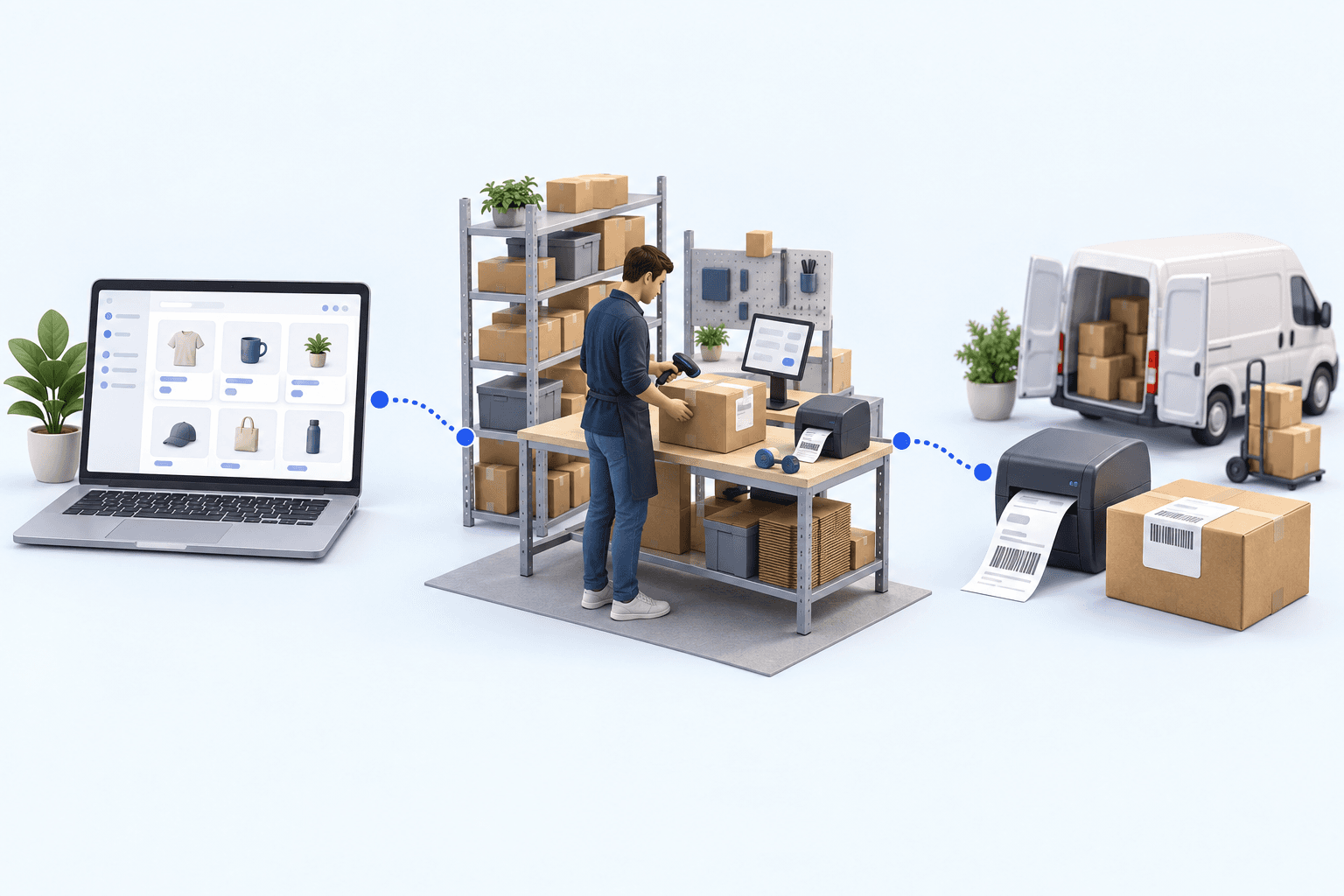
To hold up under peak volume, split the order queue into waves based on real operating constraints, then decide where barcode checks belong. At the packing bench, the operator verifies the parcel. Carrier rules select the service and print the label, so the next order can start without another decision.

Industrializing your purchasing means ordering on rules, not guesswork: at the right time (the reorder point), in the right quantity (your coverage period), from the right supplier, with a purchase order validated in one click. Available on replay.

















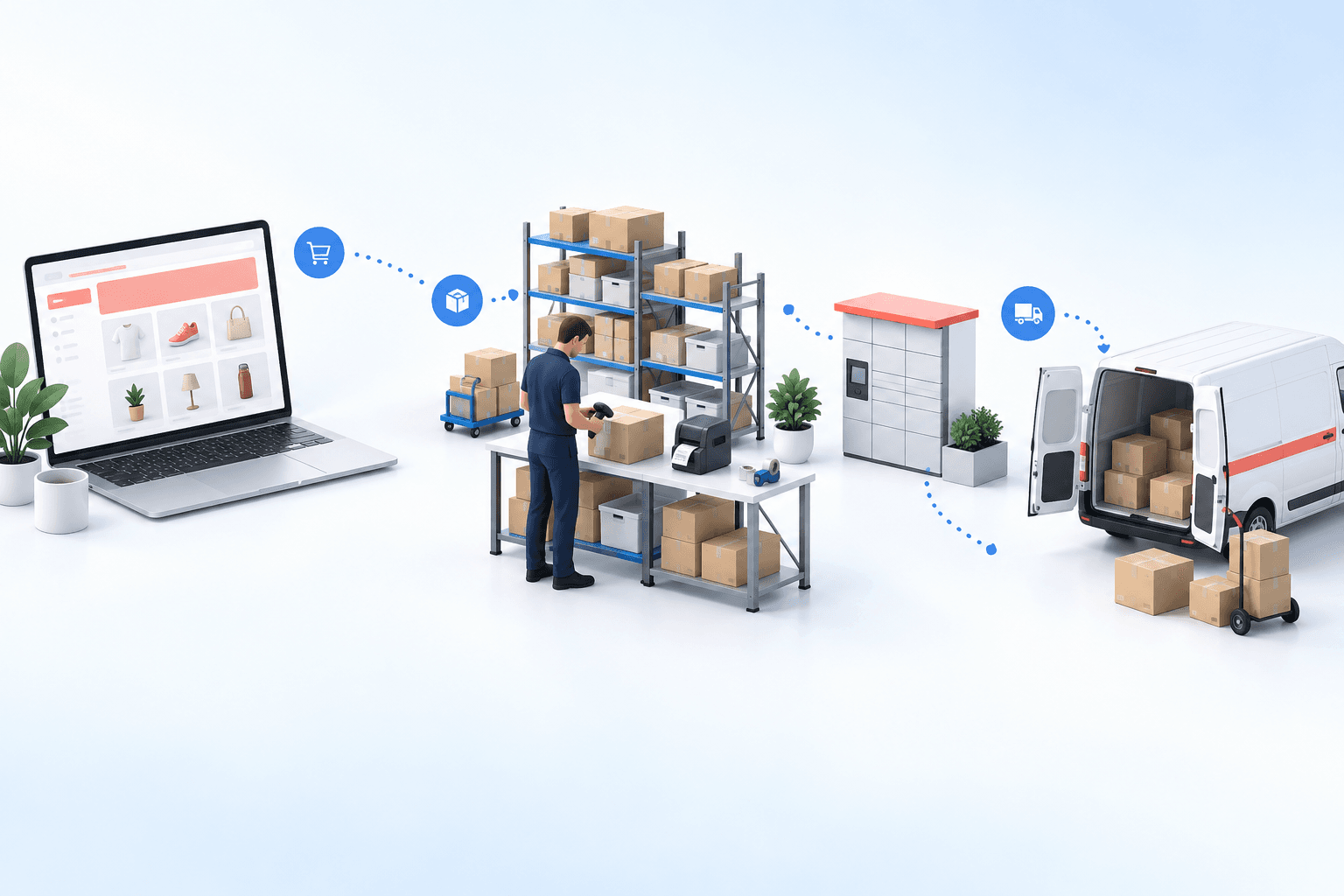


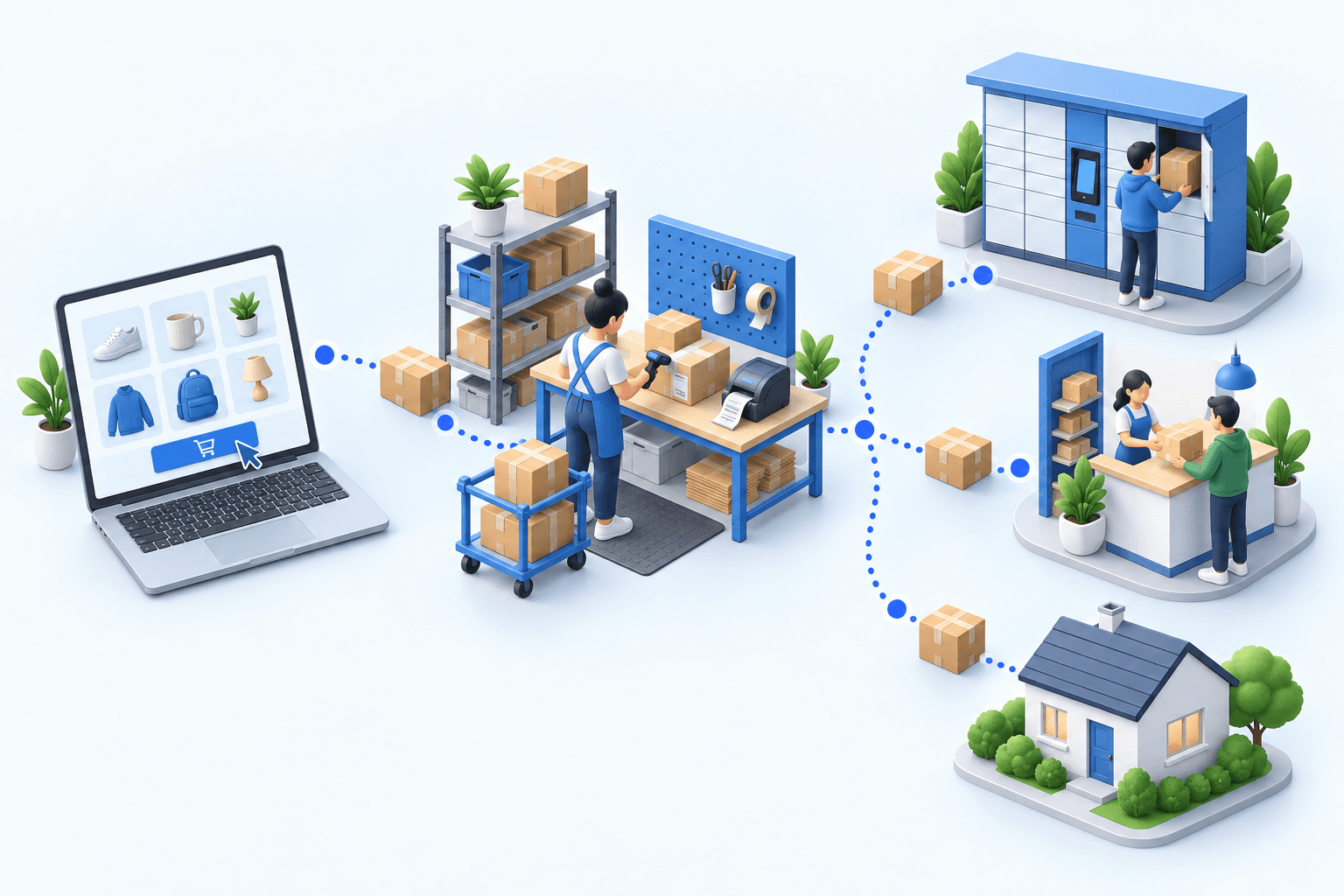
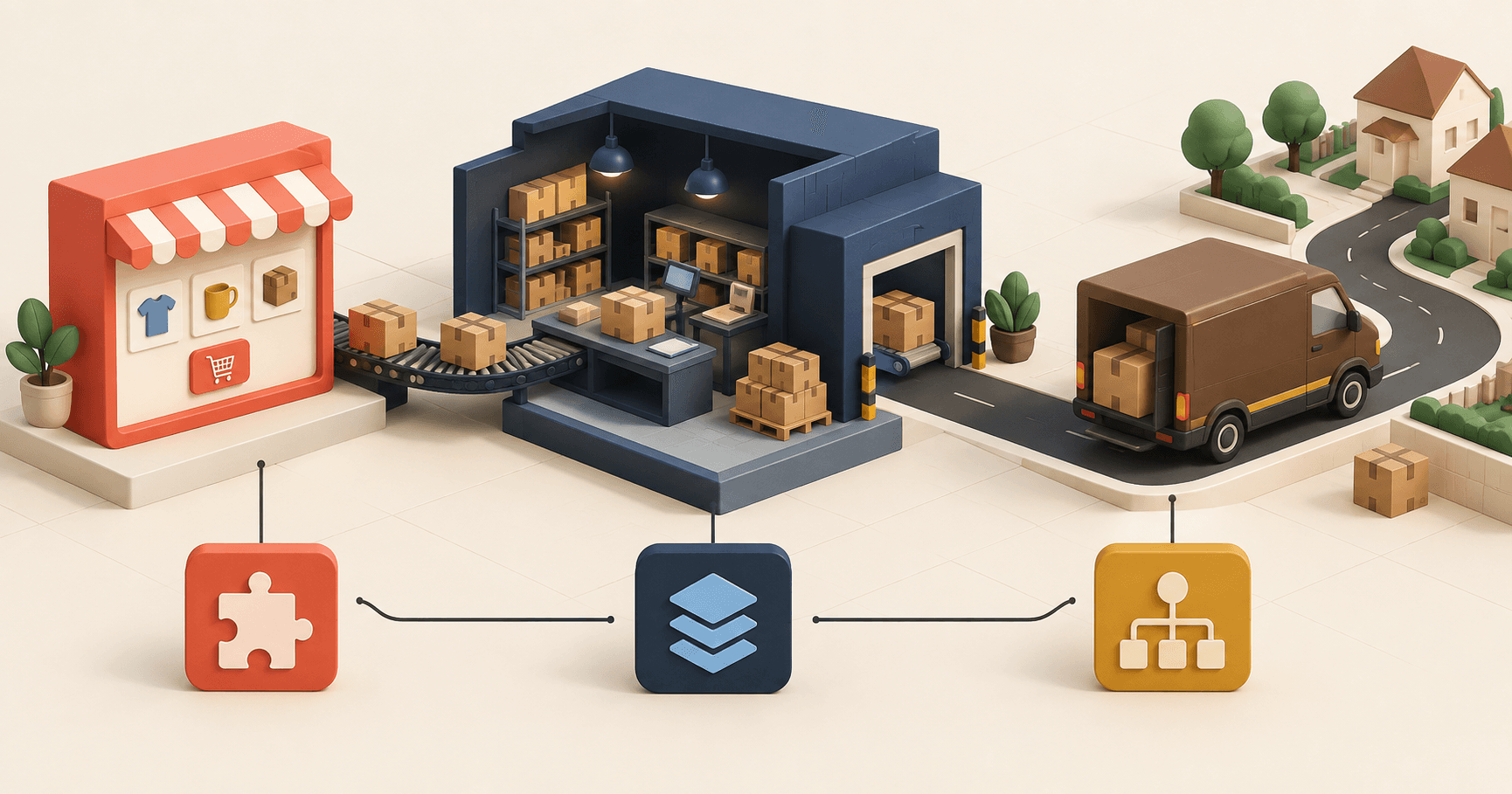



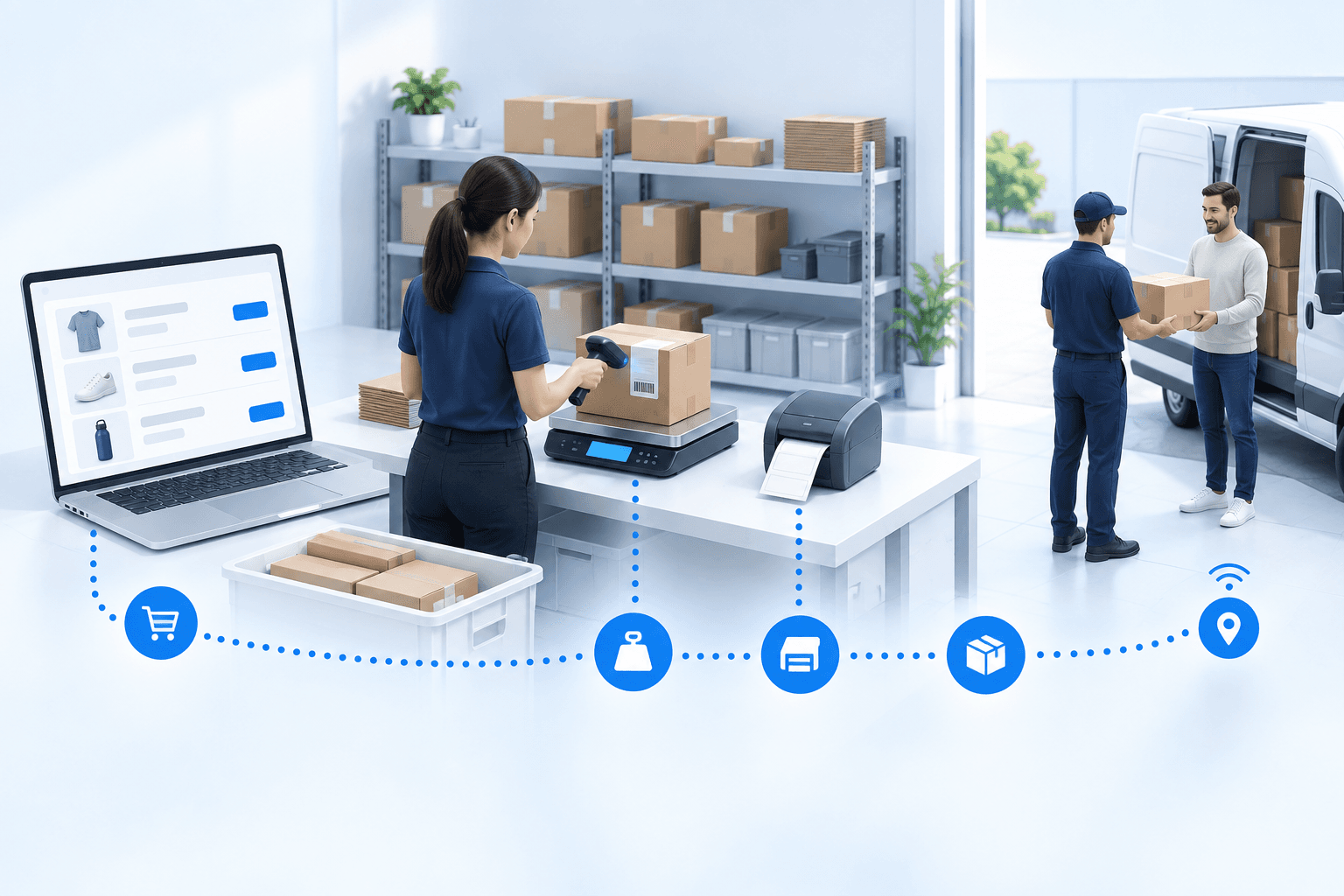

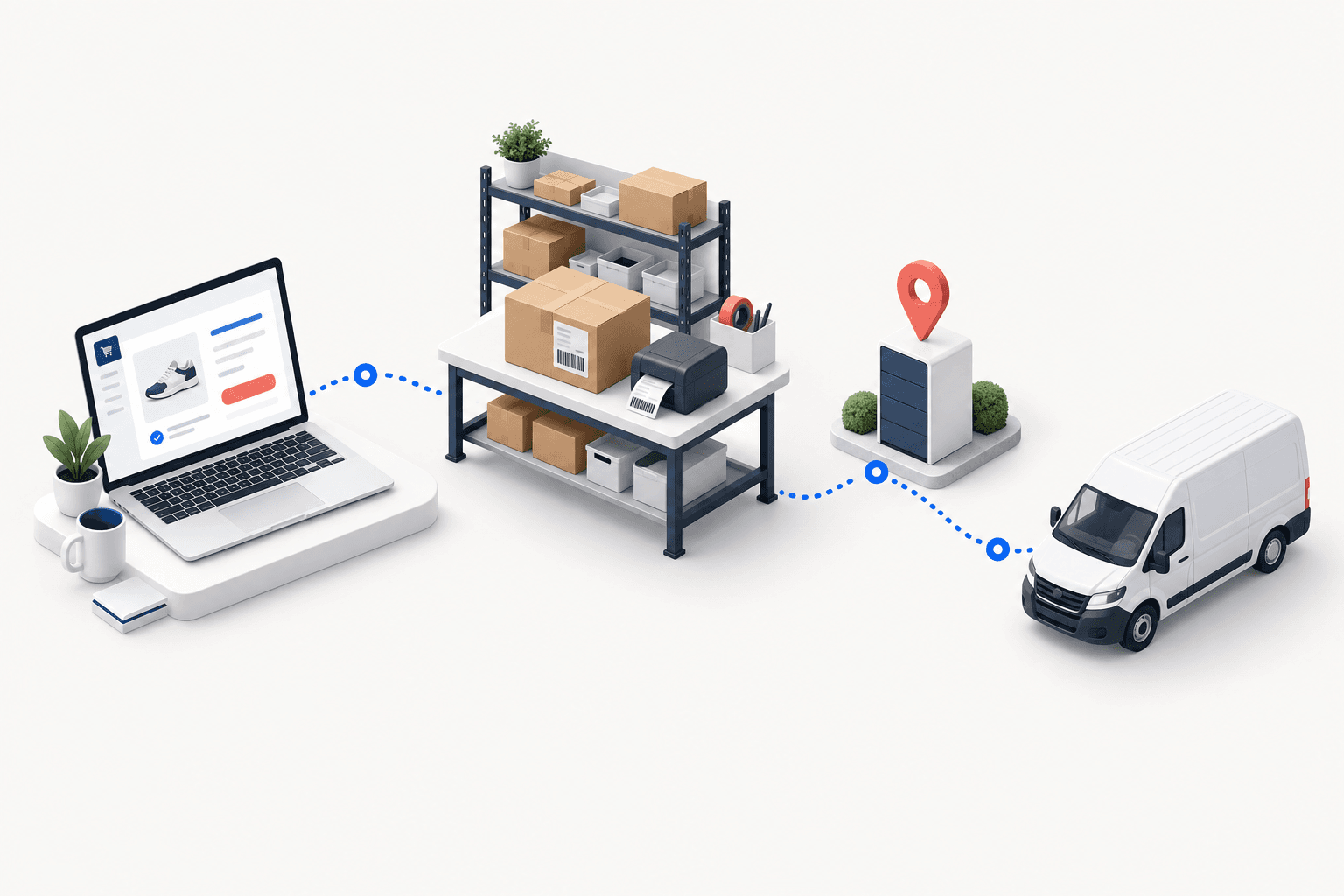
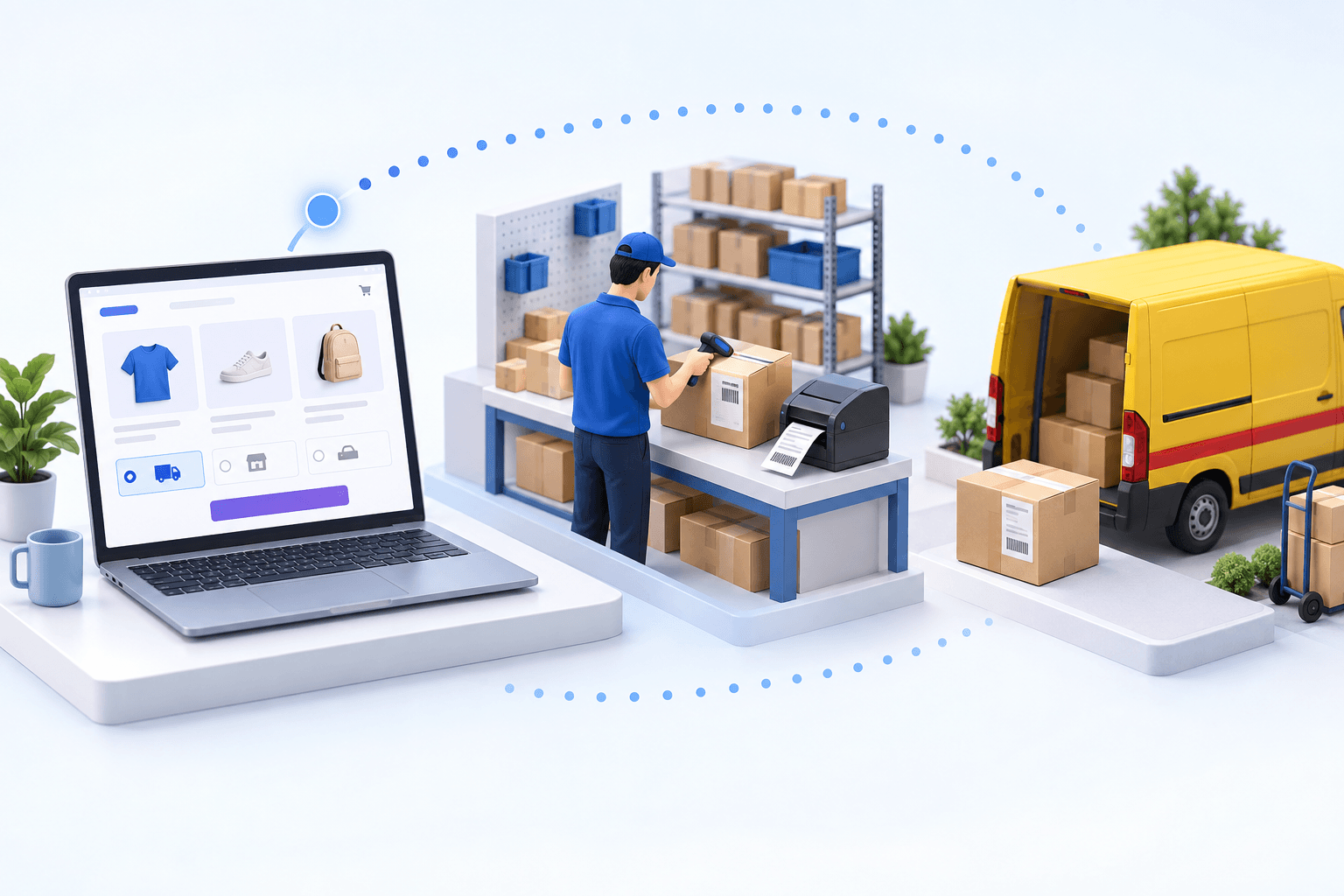
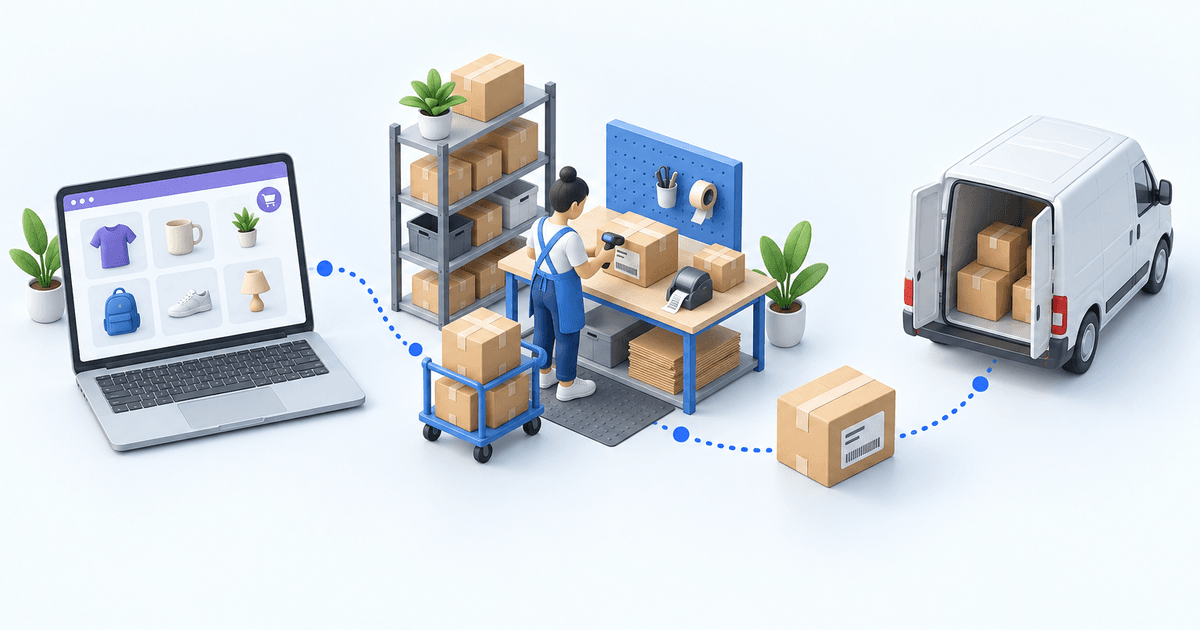
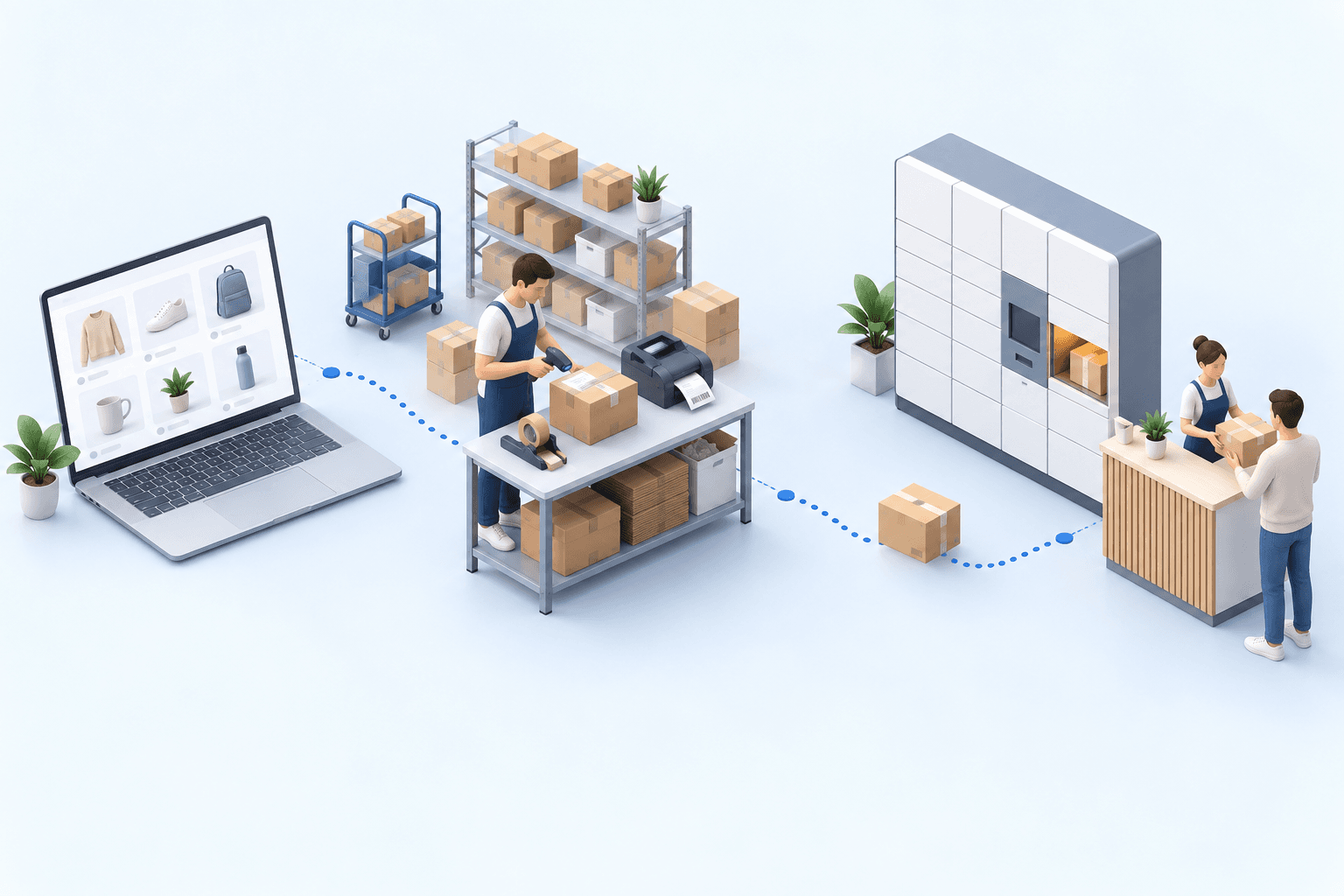
A higher conversion rate becomes profitable growth only when your logistics operation can handle the additional order volume. In 45 minutes, identify the pressure points that put inventory accuracy, order picking, shipping, customer support and margin at risk as sales rise. The webinar is presented in French.
Let’s review your order workflow
In 20 minutes, we’ll identify bottlenecks and ways to save time. No slides.
Free 20-min call · No commitment