2026 e-invoicing: prepare your sales data
From September 1, 2026, receiving electronic invoices becomes mandatory for every business established in France and registered for VAT; issuing follows in waves: large and mid-sized enterprises (ETIs) in 2026, then SMEs and micro-enterprises in 2027. For an online seller, most consumer sales fall under e-reporting, not business-to-business invoicing.

The essentials
- The OMS does not issue electronic invoices or make you compliant. It provides one complete sales-data stream for your accounting software and approved platform.
- Preparation requires centralized sales and reliable data: the customer’s SIREN (in B2B), delivery address, and type of transaction.
- Consumer payments, including counter sales, also fall under e-reporting. A cash register connected to the online store’s OMS centralizes them for reporting.
- The public portal acts as a directory and aggregator. Businesses use an approved platform to exchange electronic invoices.
- Possible initial leniency in enforcement is no reason to delay preparing your sales data.
An online seller rarely sells in one place. One order comes from the connected Amazon marketplace, the next from the web store, a third at the shop counter, a fourth from a business customer by email. Each channel has its own back office and its own export format. As long as volume holds, you cope with the patchwork.
When sales are scattered across marketplaces, your CMS, emails and a spreadsheet, France's e-invoicing reform makes that setup harder to maintain. For e-commerce operations, 2026 e-invoicing starts with reliable sales data. Since September 1, 2026, every business covered by the reform must be able to receive electronic invoices. Your accounting software and its approved platform handle invoice issuance. The operational challenge is gathering complete and accurate data on those scattered sales before sending the data to the accounting system. A seller who has already centralized their channels has a head start.
All VAT-registered businesses must receive e-invoices from September 2026
The reform covers every business established in France and registered for VAT, with no size exemption. Receiving electronic invoices and issuing them follow separate deadlines. E-reporting follows the same schedule as issuing.
Receiving becomes mandatory for everyone from September 1, 2026. The issuing requirement takes effect in two stages: September 1, 2026 for large and mid-sized enterprises (ETIs), then September 1, 2027 for SMEs and micro-enterprises. This progression is set out in the 2024 Finance Act (article 91), Légifrance.
- Receiving: all businesses
- Issuing: large and mid-sized enterprises (ETIs)
- E-reporting: large and mid-sized enterprises (ETIs)
- Issuing: SMEs + micro-enterprises
- E-reporting: SMEs + micro-enterprises
The public invoicing portal no longer provides free invoice exchange; since October 2024, it has acted as a directory and aggregator. Ministry of the Economy, 2024
SMEs and micro-enterprises selling online must be able to receive electronic invoices from 2026, and issue and report from 2027. Every business must first be able to receive electronic invoices.
Use e-invoicing for domestic B2B sales and e-reporting for consumer or international sales
If you sell to French businesses, you fall under e-invoicing. If you sell to consumers or internationally, you fall under e-reporting: you transmit the transaction data, not a business-to-business electronic invoice.
That distinction determines what an online seller must transmit. A web store mostly sells to consumers, and often across borders. Those sales therefore fall under e-reporting.
| E-invoicing | E-reporting | |
|---|---|---|
| Scope | Domestic B2B sales (between French VAT-registered businesses) | B2C (consumer) sales + international |
| What flows | The compliant electronic invoice | The transaction data (amount, VAT, etc.) |
| On the e-commerce side | Sales to professionals and resellers | Consumer sales on websites and marketplaces, and in stores |
| Who is responsible | The issuer via its approved platform | The seller via its approved platform |
| Deadline | Receiving: 2026; issuing: large/mid-sized enterprises (ETIs), 2026; SMEs/micro-enterprises, 2027 | Same schedule as issuing |
Sources: DGFiP, calendar accessed in 2026; Légifrance, 2024 Finance Act (art. 91).
Use your accounting software and its approved platform for invoicing
Compliance depends on three components. The approved platform (registered by the tax administration, formerly PDP) issues, transmits and receives electronic invoices and handles e-reporting. Your accounting software produces the invoice. Businesses use an approved platform to exchange electronic invoices. The public invoicing portal (PPF) acts as a directory and aggregator: following the change announced in October 2024 by the Ministry of the Economy, it no longer provides free invoice exchange.
- Approved platform
Issues, transmits, and receives invoices; handles e‑reporting.
Issues a compliant invoice? Yes
- Accounting software
Produces the invoice
Issues a compliant invoice? Yes
- Public portal (PPF)
Directory and aggregator (no free exchange)
Issues a compliant invoice? No
- OMS · myFulfillment
Centralizes sales and supplies data to the accounting software
Issues a compliant invoice? No
- myWebPOS
Records counter sales in the same OMS
Issues a compliant invoice? No
The OMS does not issue electronic invoices or make you compliant. It provides one complete sales-data stream for your accounting software and approved platform.
NF525 is not e-invoicing. NF525 governs the tamper-proofing of your point-of-sale software (your in-store payments), an obligation distinct from the e-invoicing reform. If you take payments in-store, see NF525 for e-commerce: what changes.
Bring sales data from all your channels together
For a multichannel seller, preparation starts with sales data. You have to bring complete and accurate sales data together in one place, from the separate systems that currently hold it.
Marketplace orders stay in seller accounts, online store orders in your CMS, B2B sales in emails, and stock in a spreadsheet updated when there is time. Service Public Entreprendre (2026) lists the new invoice fields: customer SIREN, delivery address if different from the billing address, transaction type and the option to pay VAT on debits, where applicable. Those details require clean, centralized customer and order data. If the source is shaky, so is the report.
Send centralized sales data to your accounting software
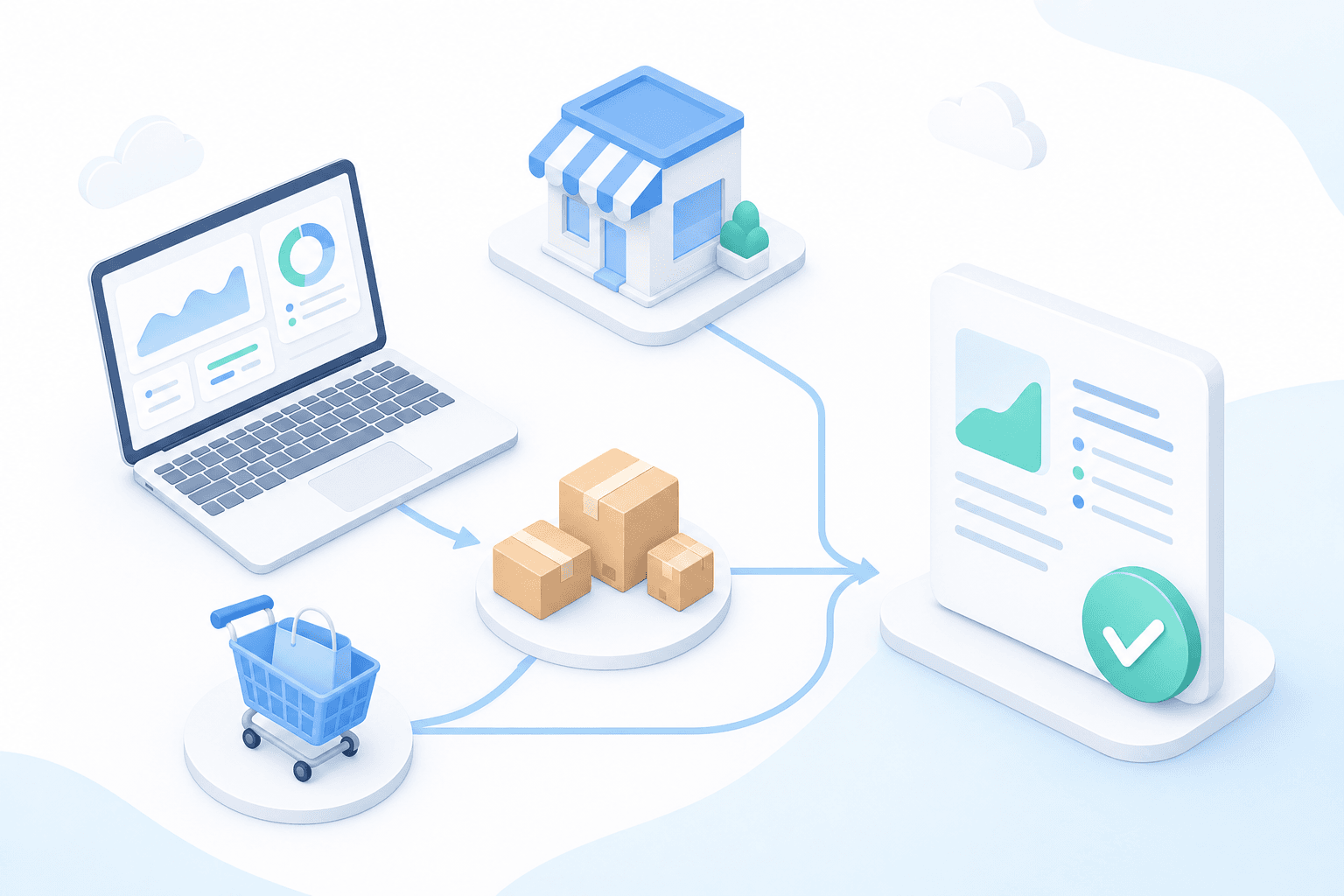
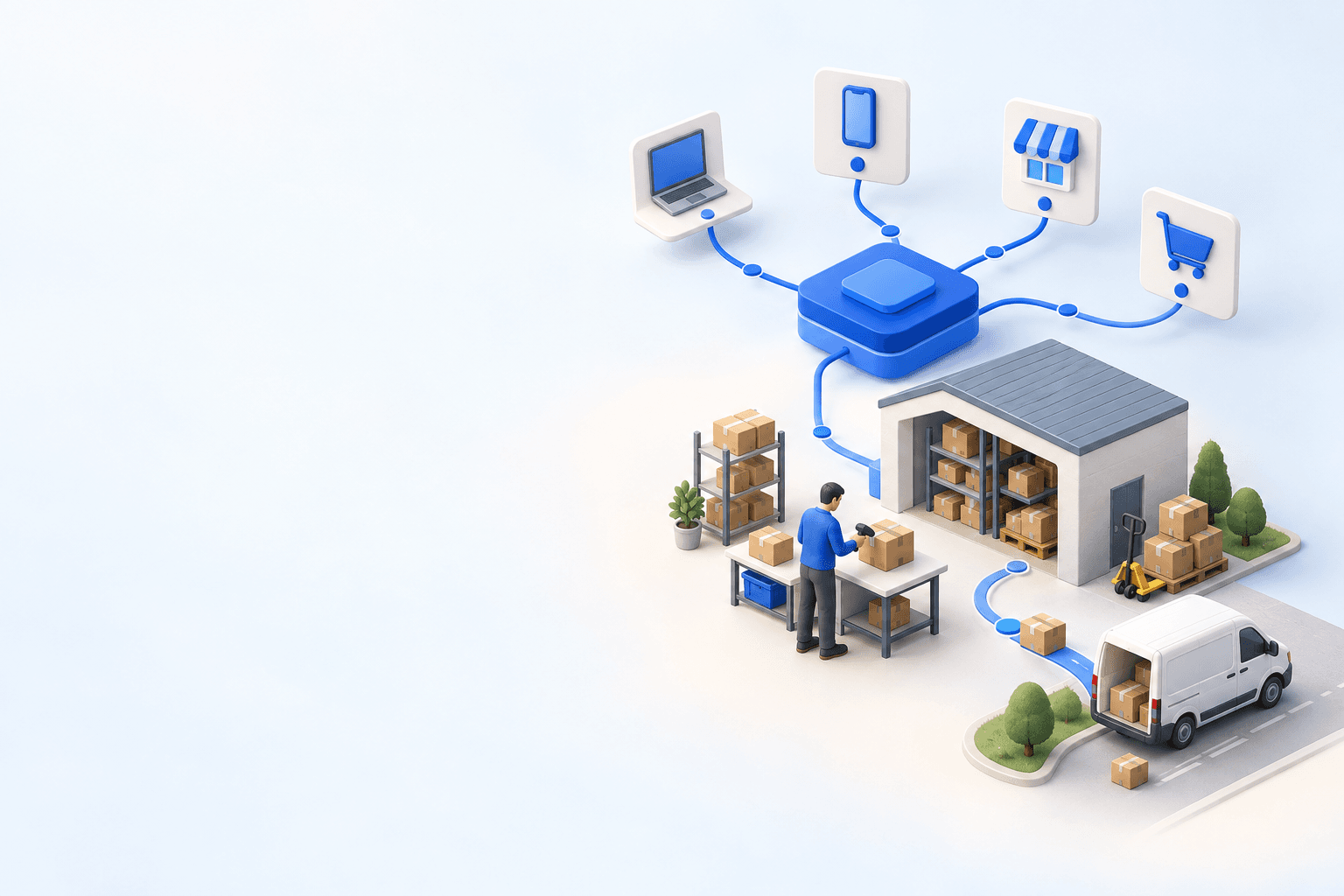
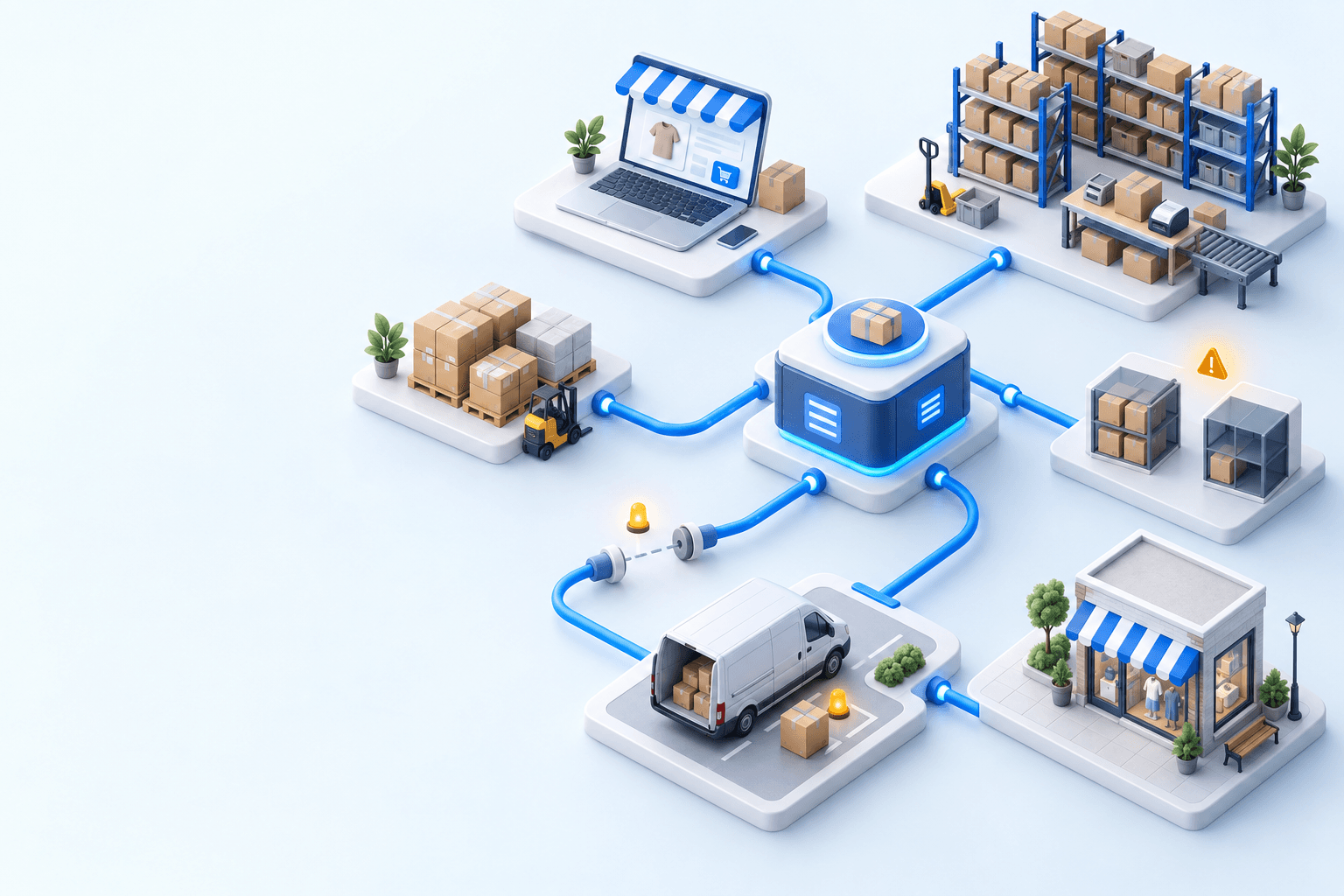
An order management system (OMS) brings the sales from all your channels into one screen, with unified stock. It is the single source that feeds your accounting software, without re-keying.
A concrete example: a home and garden distributor brought orders from 5 sales channels onto one screen, with unified real-time inventory. The team saved over 4 hours a day, and same-day shipping became the norm. The team manages every order on one screen and sends the consolidated sales data to the accounting system. myFulfillment centralizes the data from those sales in its order management system. Other sellers connect OMS and WMS or automate multi-country fulfillment.
The OMS centralizes sales and supplies the data; compliance depends on the accounting software and its approved platform.
Include counter sales in e-reporting
If you also sell in-store, those consumer payments fall under e-reporting. When your point-of-sale system records sales in the same OMS as your online store, those sales are already centralized and ready to report.
For an omnichannel seller, each counter sale becomes a standard OMS order. The quantities sold are deducted from stock across all channels, without duplicate data entry. The sale appears in the same reports as online sales. One distributor saw its counter sales grow from 0 to approximately 25% of revenue within the first year, with no parallel system and no manual reconciliation. myWebPOS records sales in the same OMS, as in this case study.
How to prepare your sales data for the reform
Start with four concrete tasks:
- Centralize the sales from all your channels (site, marketplaces, store) into a single source.
- Get the mandatory fields right: the customer's SIREN (in B2B), the delivery address, the type of transaction.
- Choose your accounting software and check that it is linked to an approved platform.
- Map your sales: B2B (e-invoicing) on one side, B2C and international (e-reporting) on the other.
September 1, 2026 remains the official deadline. Some initial leniency in enforcement has been discussed, but prepare your data without relying on it. Ministry of the Economy, 2026.
To find out exactly what applies to your store, take the 2026 e-invoicing compliance test in two minutes: it shows which regime applies and what you still need to prepare.
Frequently asked questions
E-invoicing covers invoices between French VAT-registered businesses. E-reporting transmits to the tax administration data on consumer (B2C) and international sales. An online seller selling to consumers falls mostly under e-reporting.
From September 1, 2026, receiving becomes mandatory for every business established in France and registered for VAT, with no size exemption. Issuing starts for large and mid-sized enterprises (ETIs); SMEs and micro-enterprises follow on September 1, 2027.
Receiving: September 1, 2026. Issuing and e-reporting depend on business size: large and mid-sized enterprises (ETIs) in 2026, SMEs and micro-enterprises in 2027. SMEs and micro-enterprises will issue and report from 2027, but must be able to receive from 2026.
Your sales to French businesses fall under e-invoicing; your sales to consumers and internationally fall under e-reporting. A B2C online seller is therefore mainly subject to e-reporting.
The invoice is issued and transmitted by an approved platform linked to your accounting software. An OMS like myFulfillment does not issue the electronic invoice: it centralizes your multichannel sales and feeds those tools.
Centralize sales from your channels (site, marketplaces, store) into a single source, get the mandatory fields right (customer SIREN, delivery address, type of transaction), then choose your accounting software and its approved platform.
No. NF525 governs the tamper-proofing of your point-of-sale software (your in-store payments); e-invoicing governs the transmission of invoices and sales data. They are two distinct obligations.
Continue exploring
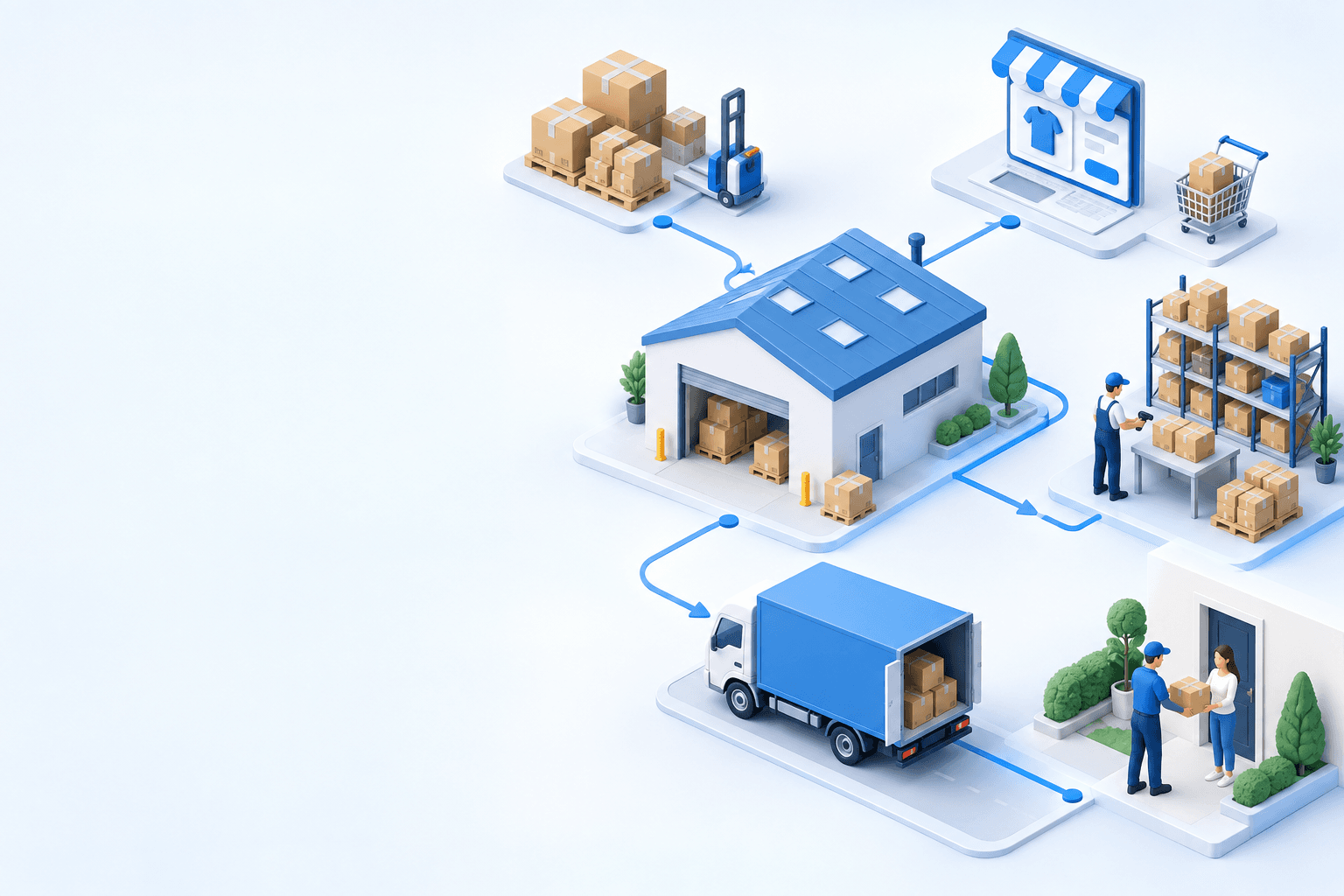
Stock availability, picking accuracy, and shipping times affect marketplace sales. Jonathan Coloma, COO of Repiauto, explains how his team went from 300 to 1,000 orders a day in two years. He describes the limits of paper-based work, ERPs built for different needs, a go-live estimate of fifteen days, and changes to his daily routine.

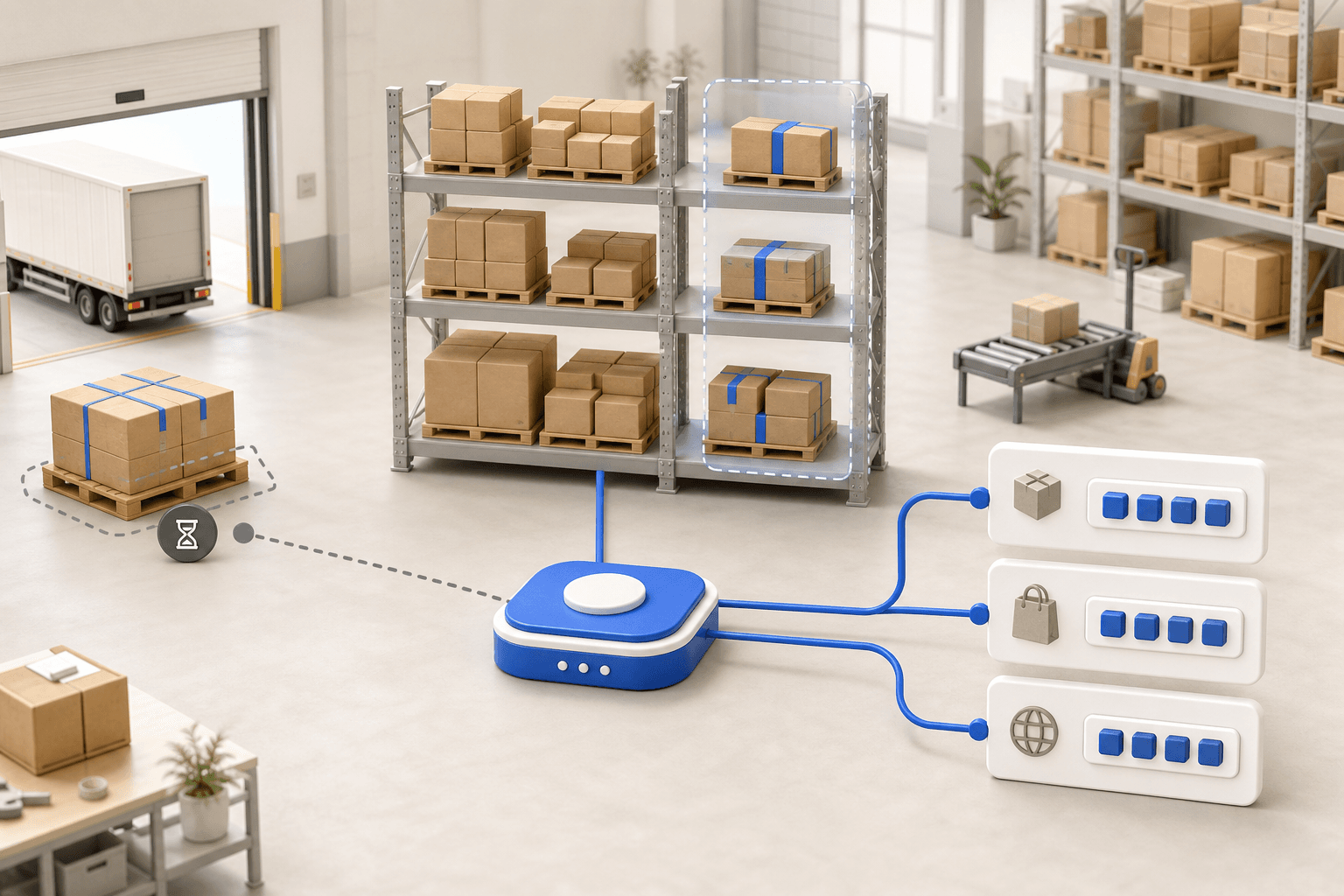
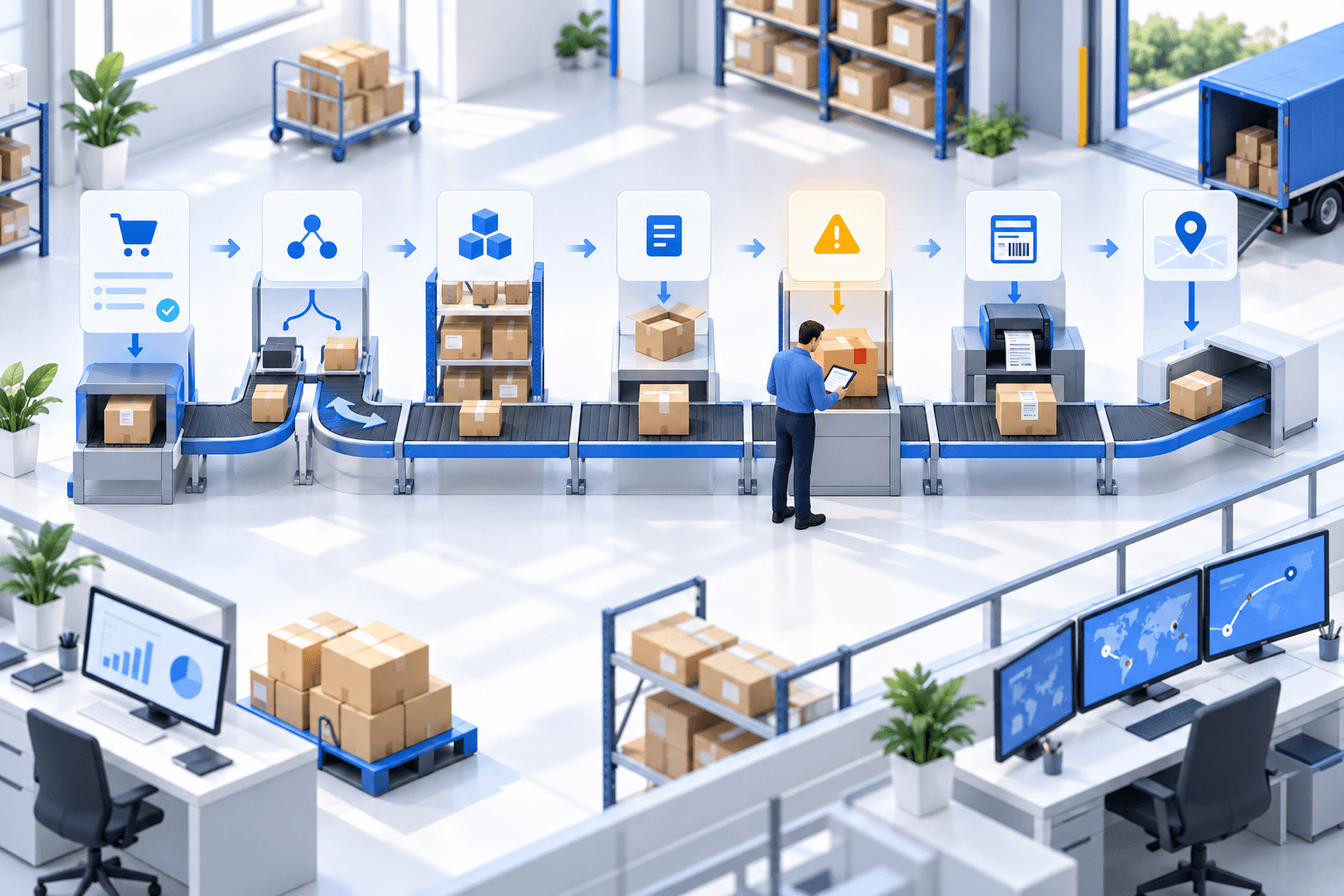
To hold up under peak volume, split the order queue into waves based on real operating constraints, then decide where barcode checks belong. At the packing bench, the operator verifies the parcel. Carrier rules select the service and print the label, so the next order can start without another decision.

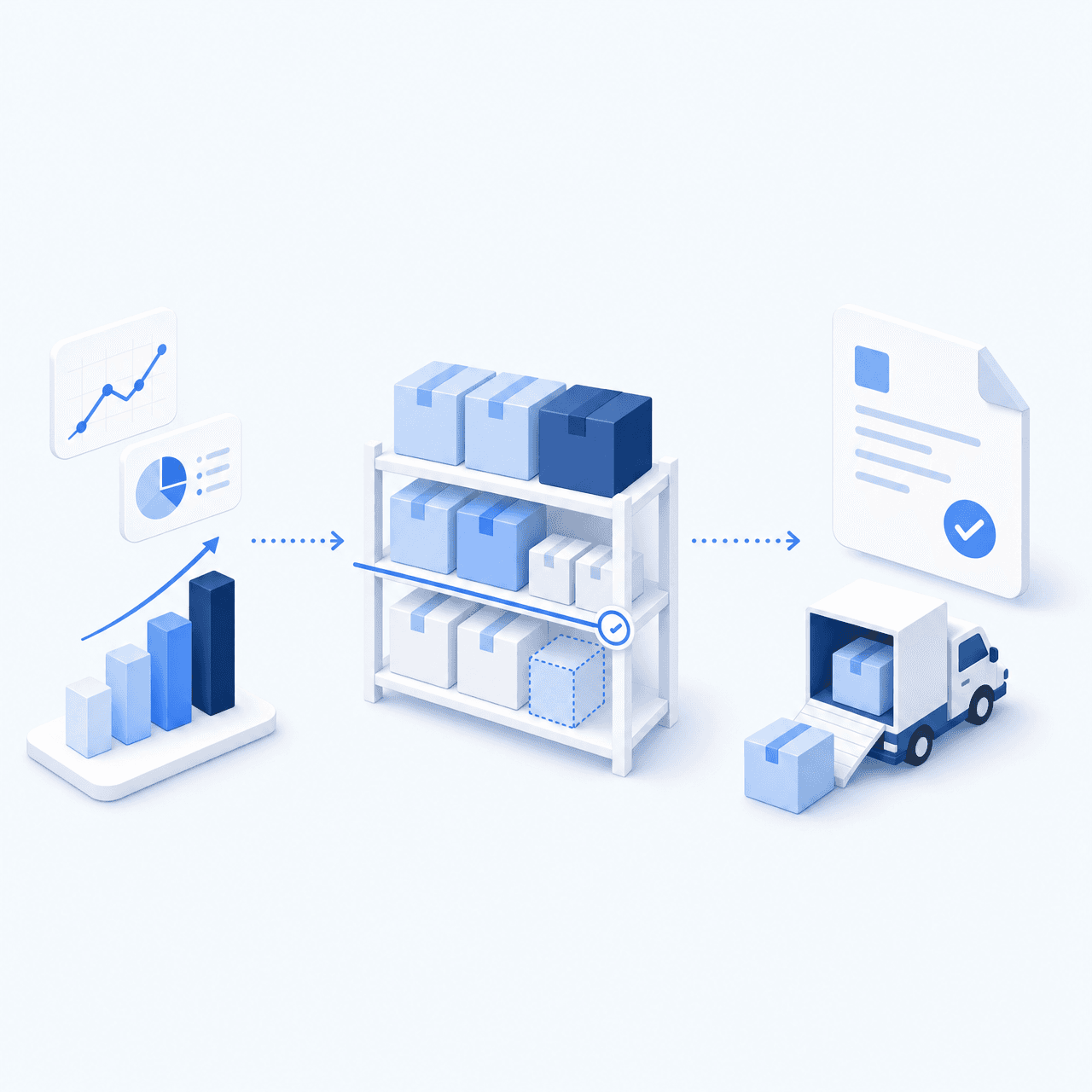
Industrializing your purchasing means ordering on rules, not guesswork: at the right time (the reorder point), in the right quantity (your coverage period), from the right supplier, with a purchase order validated in one click. Available on replay.



See it in your own operations
Book a 20-minute call. We'll map your workflow and point out where it breaks. No slides.
Free 20-min call · No commitment