
Case studies · Checkout · Home & garden equipment
How a Brittany Retailer Turned Warehouse Walk-Ins Into 25% of Revenue
Brittany home & garden retailer€3M revenue, 10+ marketplaces
From zero POS to 25% of revenue through walk-in sales
A home and garden equipment retailer based in Brittany, France, with a 30-year history. The business started as a traditional brick-and-mortar shop selling hardware and garden supplies. As e-commerce developed, they made a strategic pivot to online marketplaces, eventually generating €3M in annual revenue across 10+ platforms with an 85/15 online-to-offline split. The transformation was powered by myFulfillment, which gave them the warehouse management, order orchestration, and shipping infrastructure to operate at marketplace scale.
- Problem
- Customers showing up at the warehouse. No system. Manual orders in PrestaShop.
- Setup
- 30-second checkout. Same team. Full WMS/OMS connectivity.
- Result
- 25%revenue from walk-ins
01 / Before
Where they started
After years of aggressive online growth, the business identified two converging problems. First, excessive dependency on marketplaces — margins were shrinking, competition was intensifying, and every algorithm change was a revenue risk. Second, local customers had discovered the warehouse location and were showing up to buy directly. What started as the occasional walk-in became a steady stream. But the warehouse had no point of sale. Every in-person transaction required a warehouse team member to stop what they were doing, open PrestaShop, manually create an order, calculate pricing on the fly, and process payment informally. It was slow, error-prone, and disruptive to ongoing logistics operations. Customers waited while pickers fumbled through a system not designed for face-to-face selling. The business was leaving money on the table and creating a poor impression for the customers most likely to become loyal, repeat buyers.
What kept going wrong
- 1
No POS system — warehouse walk-ins required manual order creation in PrestaShop
- 2
Every in-person sale was slow, ad hoc, and disruptive to warehouse logistics
- 3
Over-dependence on marketplace channels with shrinking margins
02 / Configuration
What we set up
myWebPOS was deployed as a lightweight layer on top of the existing myFulfillment infrastructure. Because the warehouse already ran myFulfillment for inventory, orders, and shipping, the POS plugged directly into that stack with no data migration and no new integrations to build.
The POS terminal was set up on a tablet at the warehouse receiving area. Product catalog, pricing, and stock levels are pulled live from the existing myFulfillment database — the same catalog that feeds their 10+ marketplaces. When a walk-in customer buys a product, the sale is recorded as a standard order in the OMS, inventory is decremented across all channels in real time, and the transaction appears in the same reporting dashboard used for online sales. Cash drawer management and receipt printing were configured for the warehouse setup. The warehouse team received a 30-minute training session — the interface is designed for people who are not dedicated retail staff.
03 / Before · After
What changed
01Walk-in revenue share
Before0% (no POS)
After25% of total revenue
02Checkout time
Before5-10 min manual order in PrestaShop
After30 seconds
03Dedicated retail staff
BeforeN/A (not feasible)
AfterZero — same warehouse team
Walk-in sales grew from zero to approximately 25% of total revenue within the first year. The warehouse became a de facto local shop, reconnecting the business with its original retail identity from three decades ago. The key operational gain: the same team that picks, packs, and ships online orders now handles in-person sales without switching tools or mindsets. A picker can pause a shipping workflow, process a walk-in transaction in 30 seconds, and return to their picking mission. No dedicated retail headcount was hired. The business also gained a strategic advantage: every walk-in sale carries full margin with no marketplace commission, no advertising cost, and no platform dependency. The owner describes it as a channel rebalancing strategy — reducing marketplace risk while building a direct local customer base.
What this case shows
This business has come full circle: from a traditional shop 30 years ago, to an 85% online business, and now back to physical retail through warehouse walk-ins — but this time with the entire e-commerce infrastructure running behind the counter.
Stores
Not just for hardware retailers
Any e-commerce business with a warehouse location where customers can (or already do) show up in person faces the same need — a POS that works without disrupting logistics.
- Wholesale distributors with showroom or counter sales alongside B2B fulfillment
- Food & beverage producers selling direct from production facilities
- Any online seller whose warehouse doubles as a pick-up point for local customers
- Artisan or craft businesses operating from workshop spaces open to walk-ins

Your turn
Got the same problem?
Walk us through how your team works. We’ll tell you what configuration covers and what needs custom work.
« We built this one. Let’s talk about yours. »

More cases at the same step
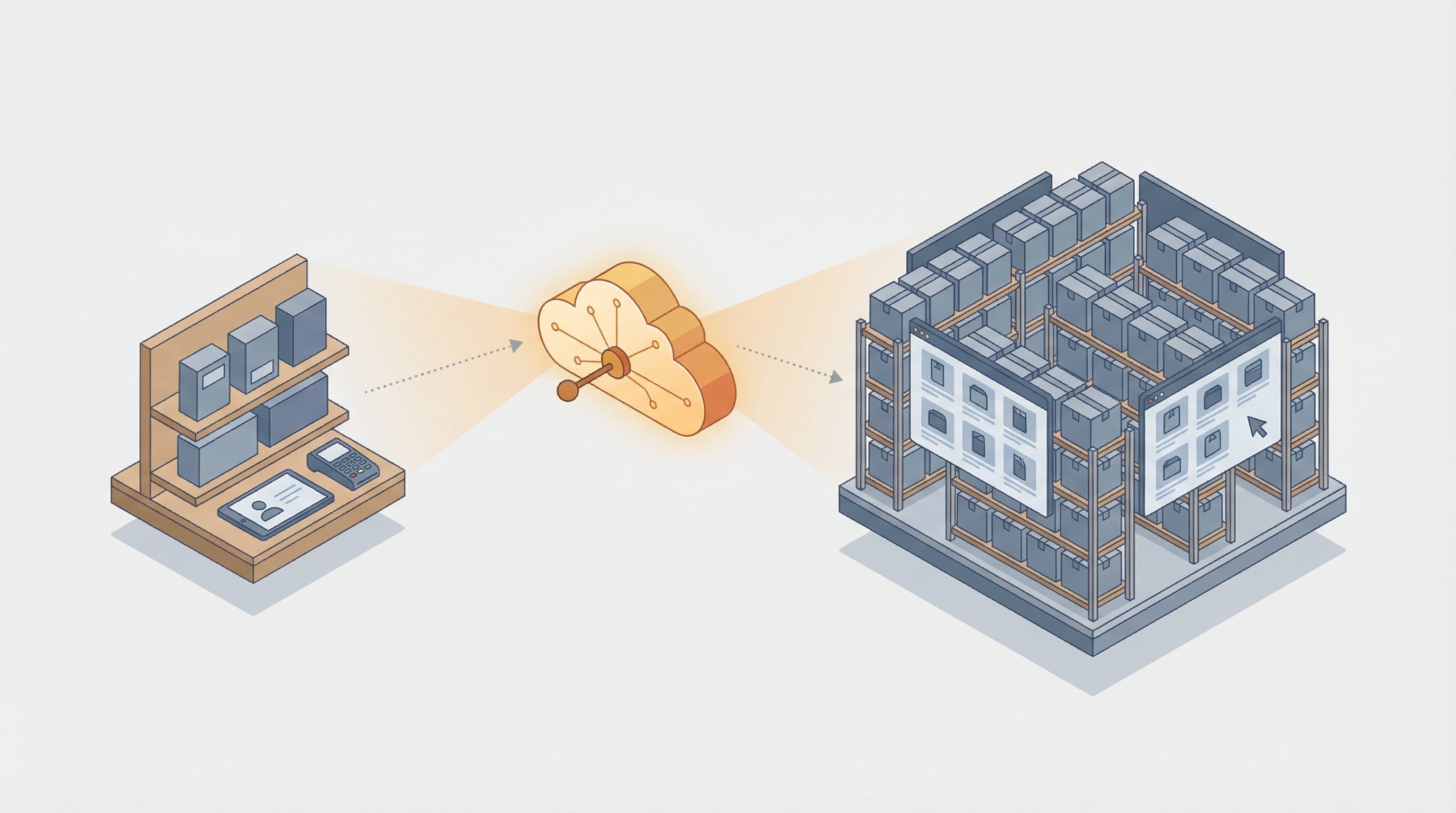
100% catalog accessible in-store
Hunting & outdoor equipmentSell the full warehouse catalog from any store counter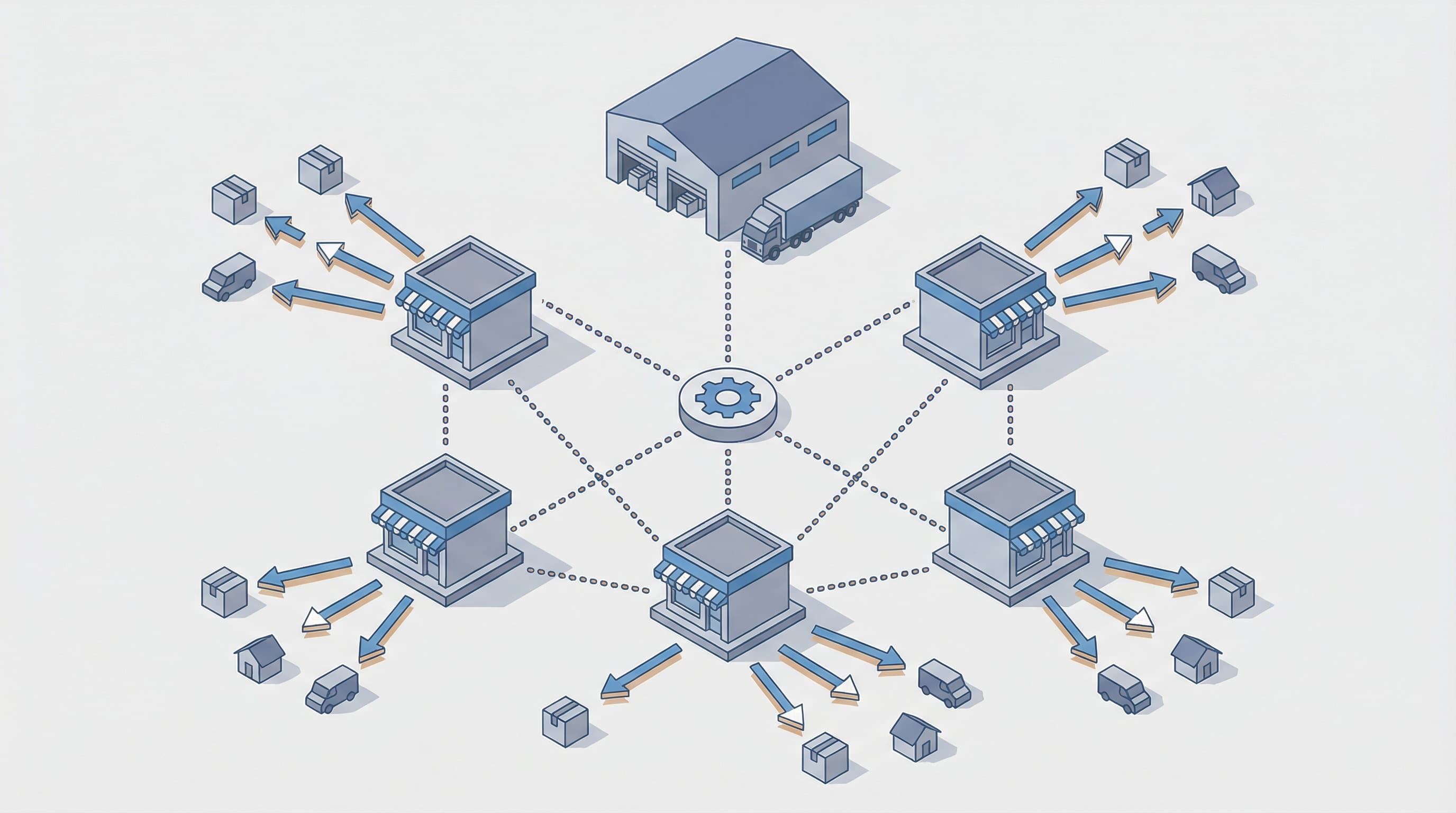
3 delivery modes per order
Gifts & gadgets retail5 stores as fulfillment nodes: ship, collect, or take now
5 stores unified on one platform
Gifts & gadgets retailEscaping Shopify POS: 5 stores unified, costs slashed