
Case studies · Orders · Bedroom products e-commerce
How We Replaced Scissors with Algorithms for a Multi-Country Bedroom Products Seller
Bedroom products e-commerce5 Shopify sites + 20 marketplaces, FR + ES
How a bedroom seller replaced scissors with algorithms across two countries
This bedroom products e-commerce company sells beds, mattresses, cushions, duvets, and accessories across 5 Shopify sites and approximately 20 marketplaces in France and Spain. Its catalog has two distinct logistics categories: bulky bed components (headboards, frames, bases, mattresses) shipped as kitted multi-package orders, and accessories (cushions, mattress toppers, duvets) with packaging rules that vary by combination and quantity. It operates a main facility in France and a Spanish site divided into zones for cushions, bases, mattresses, and bed packaging materials.
- Problem
- Printing orders. Cutting them apart with scissors. Dispatching manually across two countries.
- Setup
- Algorithmic splitting. Integrated labels. Real-time tracking on 25+ channels.
- Result
- 100%fulfillment automated
01 / Before
Where they started
The company came to us with a single core complaint: order preparation was entirely manual. When an order arrived containing, say, a bed frame and three cushions, someone had to print the order, physically cut it apart, and manually route each piece to the right warehouse and sub-warehouse. The bed components went to France; the cushions might need splitting across two zones of the Spanish warehouse; accessories required hand-calculated packaging decisions on every order — 4 cushions fit in one box, but 5 need two; 2 cushions plus a mattress topper is one box, but 3 cushions plus a topper is two. Beyond order splitting, traditional warehouse automation was off the table: their products come primarily from China and Turkey, where barcode reliability is inconsistent. The same product might carry different barcodes depending on the manufacturing run or country of origin. PDA-based scanning workflows simply weren't feasible. And when packages were finally ready, there was no way to immediately confirm shipping to their 25+ sales channels — they were dependent on carrier pickup as the trigger, which could happen the same day or two days later, creating marketplace SLA compliance problems.
What kept going wrong
- 1
Manual order splitting across FR/ES warehouses — printed, cut apart with scissors, hand-routed on every order
- 2
Complex per-combination packaging rules for accessories, calculated manually with no system to enforce them
- 3
No real-time tracking dispatch — reliant on carrier pickup schedules causing marketplace SLA compliance issues
02 / Configuration + custom work
What we set up
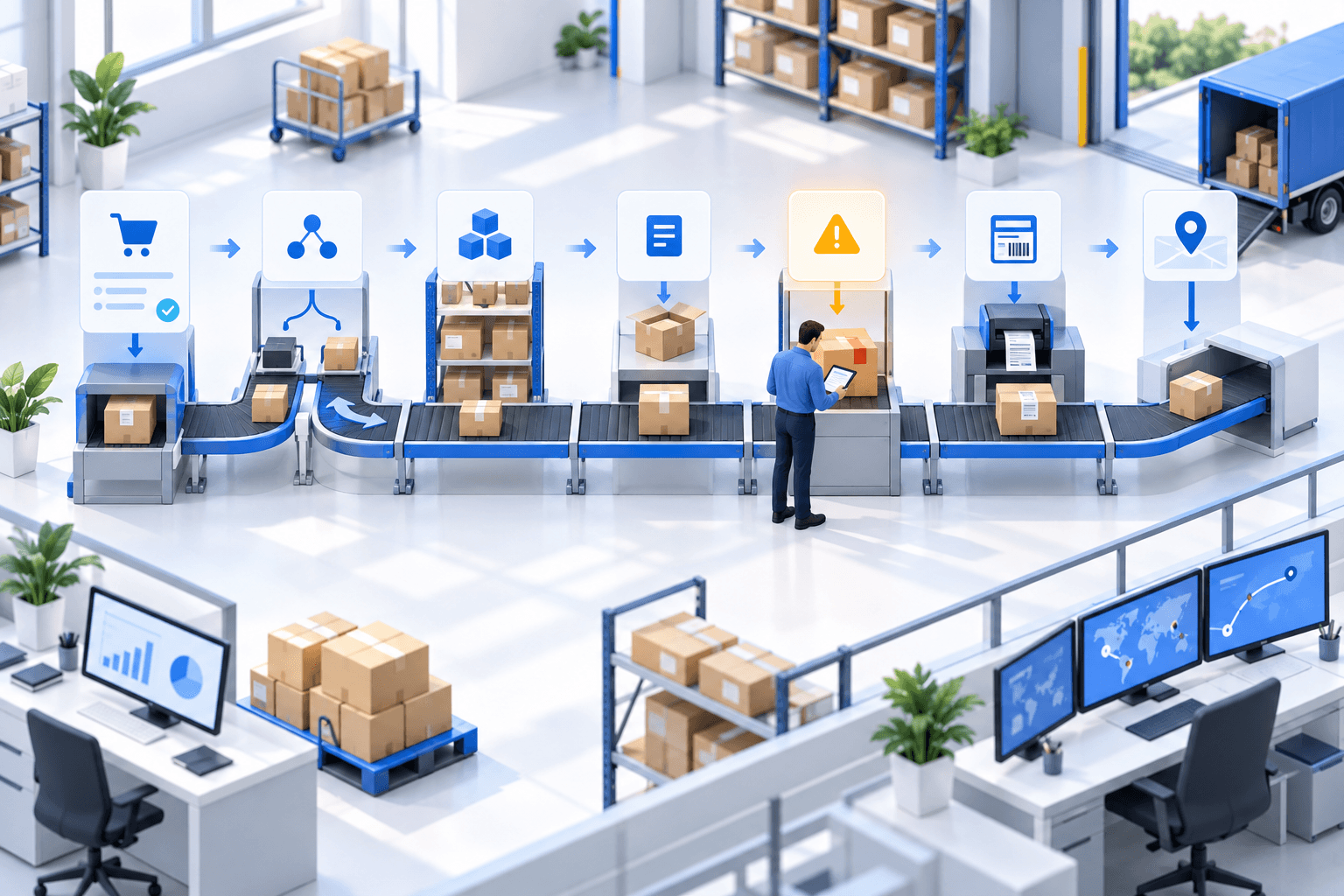
We redesigned their entire fulfillment chain in three connected layers: algorithmic order orchestration, integrated label printing, and scan-based tracking updates.
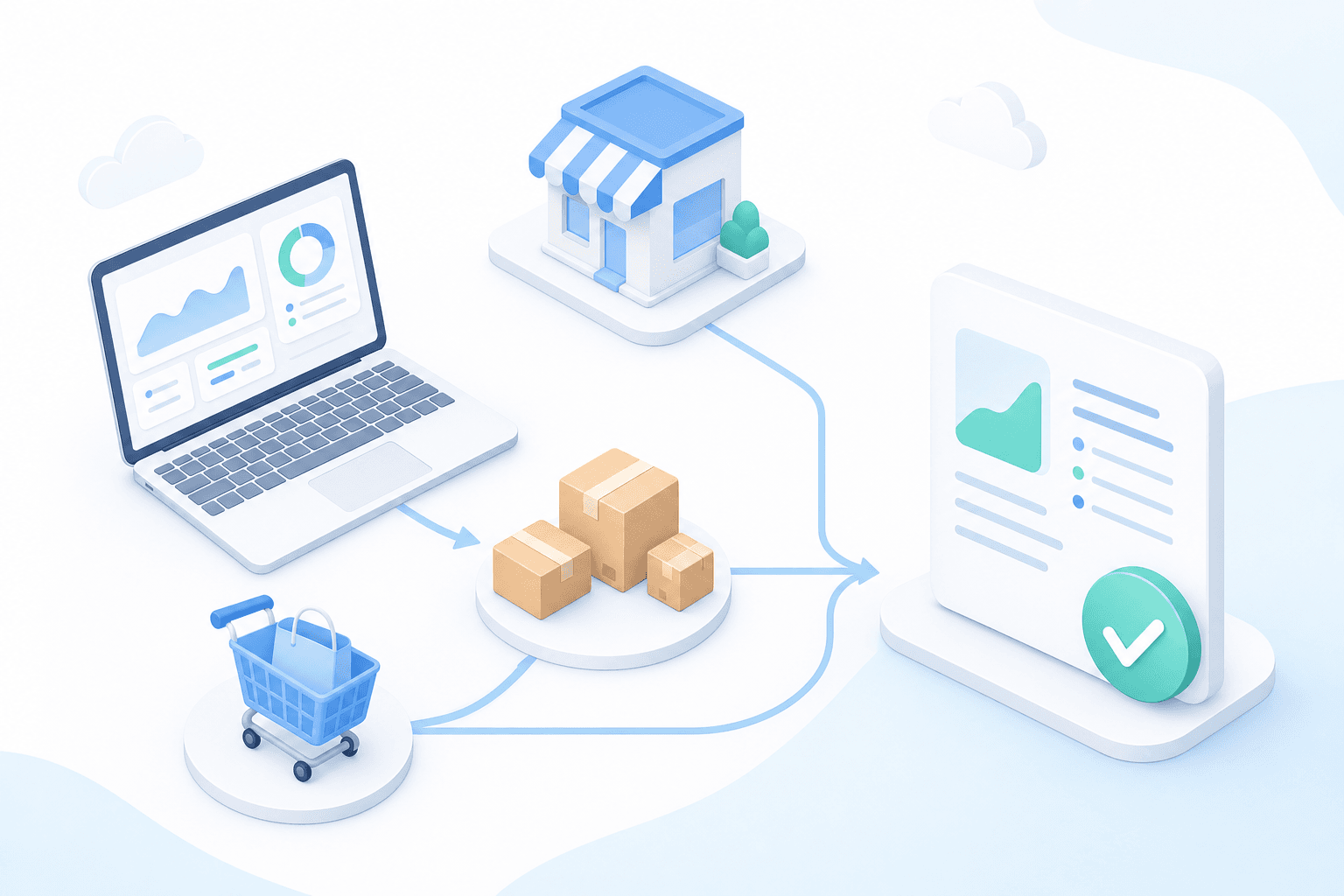
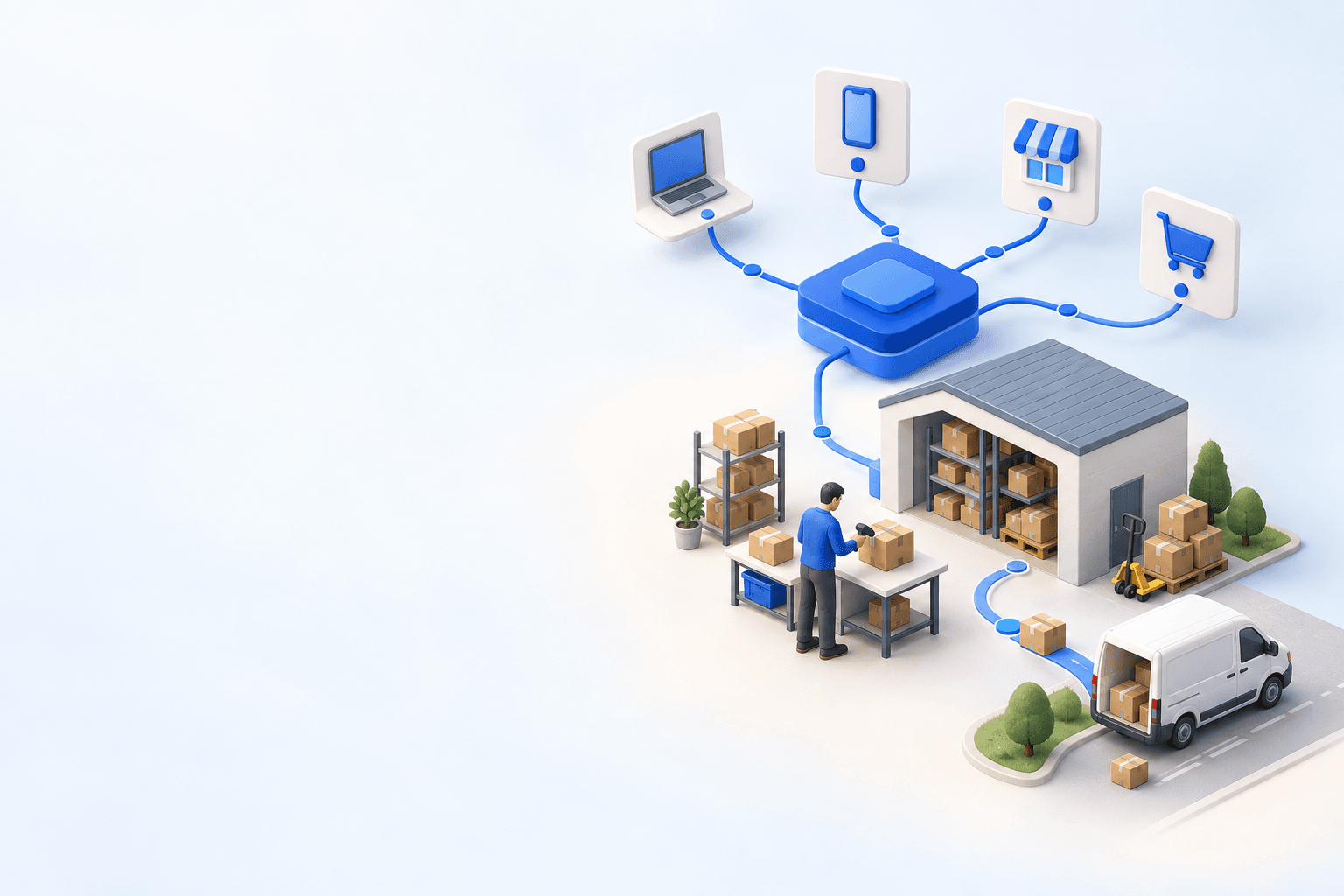
Native connectors for all 5 Shopify sites and approximately 20 marketplace accounts centralized incoming orders. The kitting configuration for beds allows myFulfillment to automatically recognize that a 'king bed' order requires 5–6 separate packages and route them accordingly.
Custom development
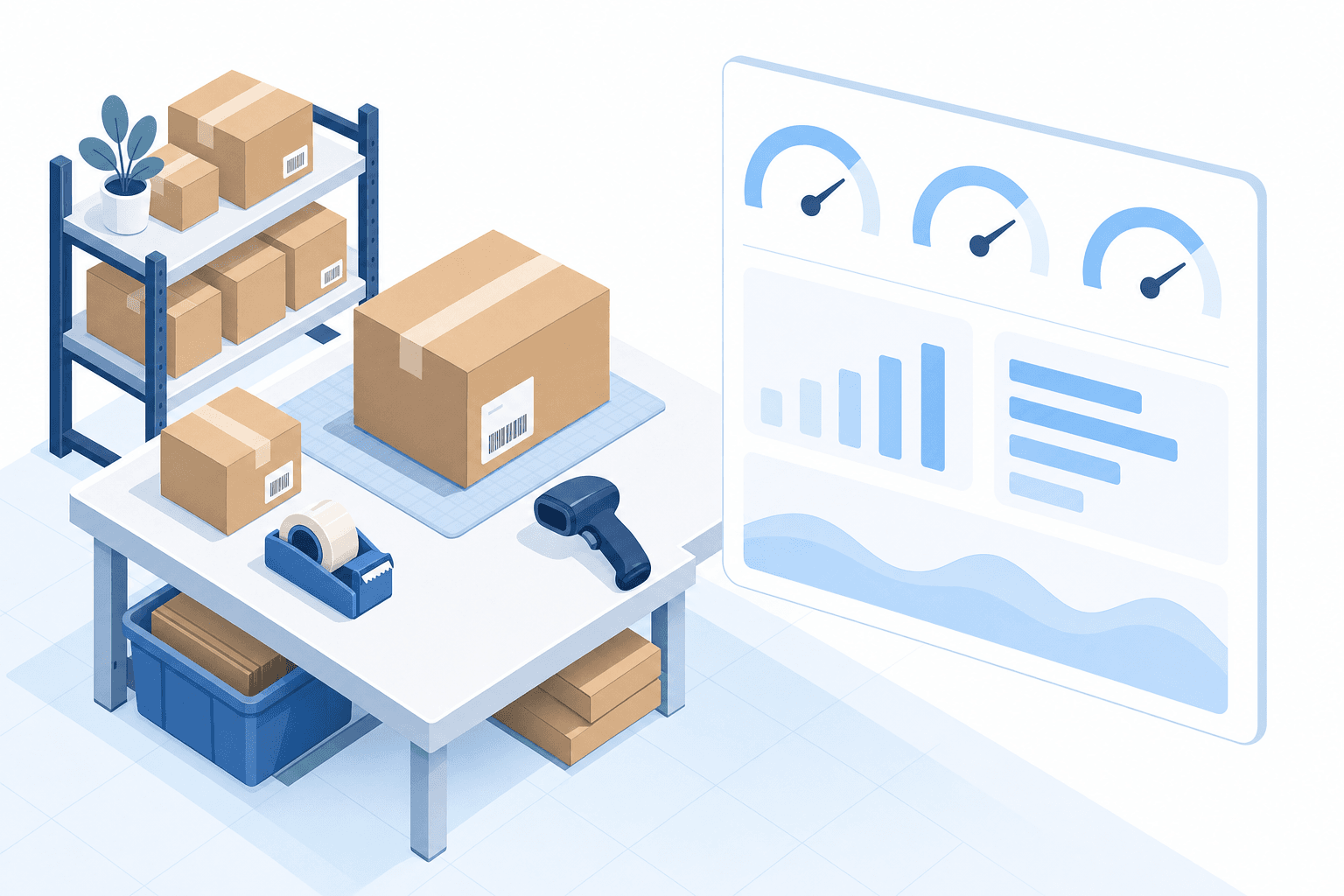
Three custom layers run on top of standard myFulfillment. First, an algorithmic engine splits every order by primary warehouse (France or Spain), Spanish sub-warehouse, and logistics classification (pre-packaged or requiring boxing). The system evaluates each combination and quantity of accessories and calculates the exact number of boxes. Second, myFulfillment prints one integrated A4 landscape label per package. The left side contains the pick list, order source, products, quantities, and box count. The right side contains a peelable GeoDis, GLS, MRW, or DPD carrier label. Third, a barcode on the A4 sheet identifies the package. Several times a day, a team member batch-scans the completed sheets. myFulfillment immediately links each tracking number to its order and sends shipping confirmation to every connected channel, without waiting for carrier pickup.
03 / Before · After
What changed
01Manual order splitting
BeforeEvery order
AfterZero
02Packaging calculation
BeforeManual, by hand
AfterAutomated by rules
03Tracking updates
BeforeAfter carrier pickup (hours/days later)
AfterReal-time on pack completion
The entire fulfillment chain is now automated end to end. Order splitting that previously required printing, cutting with scissors, and manual routing now happens in milliseconds on order arrival. Packaging decisions that required mental math on every single accessories order are now enforced by rules. And tracking updates that used to lag carrier pickup schedules now fire immediately when packages are sealed, keeping all 25+ marketplaces compliant with their SLA requirements.
What this case shows
When products come from China and Turkey with inconsistent barcodes, traditional PDA scanning simply isn't an option. The integrated label turns a plain A4 sheet into a complete fulfillment document: pick list, packaging instructions, carrier label, and tracking barcode — all in one.
Orders
Not just for bedroom products
Any multi-warehouse, multi-channel seller with complex routing rules and non-standard product logistics faces the same challenge.
- Furniture or large-item e-commerce with bulky products shipped from regional depots
- Fashion or apparel brands sourcing from Asia with inconsistent barcode reliability
- Multi-brand distributors routing orders to brand-specific warehouses or 3PLs
- Any marketplace seller managing 10+ sales channels needing real-time tracking SLA compliance

Your turn
Got the same problem?
Walk us through how your team works. We’ll tell you what configuration covers and what needs custom work.
« We built this one. Let’s talk about yours. »

More cases at the same step
4h saved daily
Home & garden e-commerceFrom Excel chaos to one screen for all orders
B2B2C stores connected
Multi-brand retail / e-commerceConnecting retail stores to e-commerce inventory after acquisition
1 cash-up screen
Pharmacy & parapharmacyLocal deliveries and payments managed together in myFulfillment
Related articles
For a concrete marketplace process, see the Cdiscount integration with myFulfillment.