Case studies · Procurement · Automotive body parts e-commerce
How We Automated Multi-Supplier Cross-Dock for an Auto Parts Distributor with 500K SKUs
Auto body parts distributor200K-500K SKUs
Automating supplier orders for a 500K-product catalog
A Barcelona-based e-commerce distributor specializing in automotive body parts — not mechanical parts, but panels, bumpers, and bodywork components. Their catalog spans 200,000 to 500,000 references, far too many to stock. This means virtually 100% of orders are fulfilled via cross-dock from suppliers. They serve two customer segments: standard B2C customers and garages, plus a premium channel through a major French marketplace.
- Problem
- 500K products, zero stock. Every order from a supplier.
- Setup
- Fully automated purchasing and receiving.
- Result
- 100%orders automated
01 / Before
Where they started
With hundreds of thousands of SKUs and no inventory, every order triggers a supplier purchase. The same product, such as a black Tesla Model 3 bumper, may come from several suppliers with different prices, stock levels, and delivery times. Supplier data changes several times a day. Premium-channel orders must use certified suppliers, and bulk deliveries often combine several purchase orders. Traditional PO-by-PO receiving could not handle that volume.
What kept going wrong
- 1
200-500K SKU catalog impossible to stock, requiring 100% cross-dock
- 2
Multiple suppliers per product with prices and stock changing daily
- 3
Suppliers delivering multiple POs in a single shipment
02 / Configuration + custom work
What we set up
We designed a comprehensive cross-dock procurement and receiving system tailored to their high-volume, zero-inventory model.
Automated supplier stock and price imports run several times a day, giving myFulfillment real-time visibility into each supplier's availability and pricing. The system selects the primary supplier according to stock, purchase price, and delivery time. It splits purchase orders into single-item orders, which can ship as soon as the product arrives, and multi-item orders, which wait for the remaining items. Premium-channel orders use qualified suppliers only.
Custom development
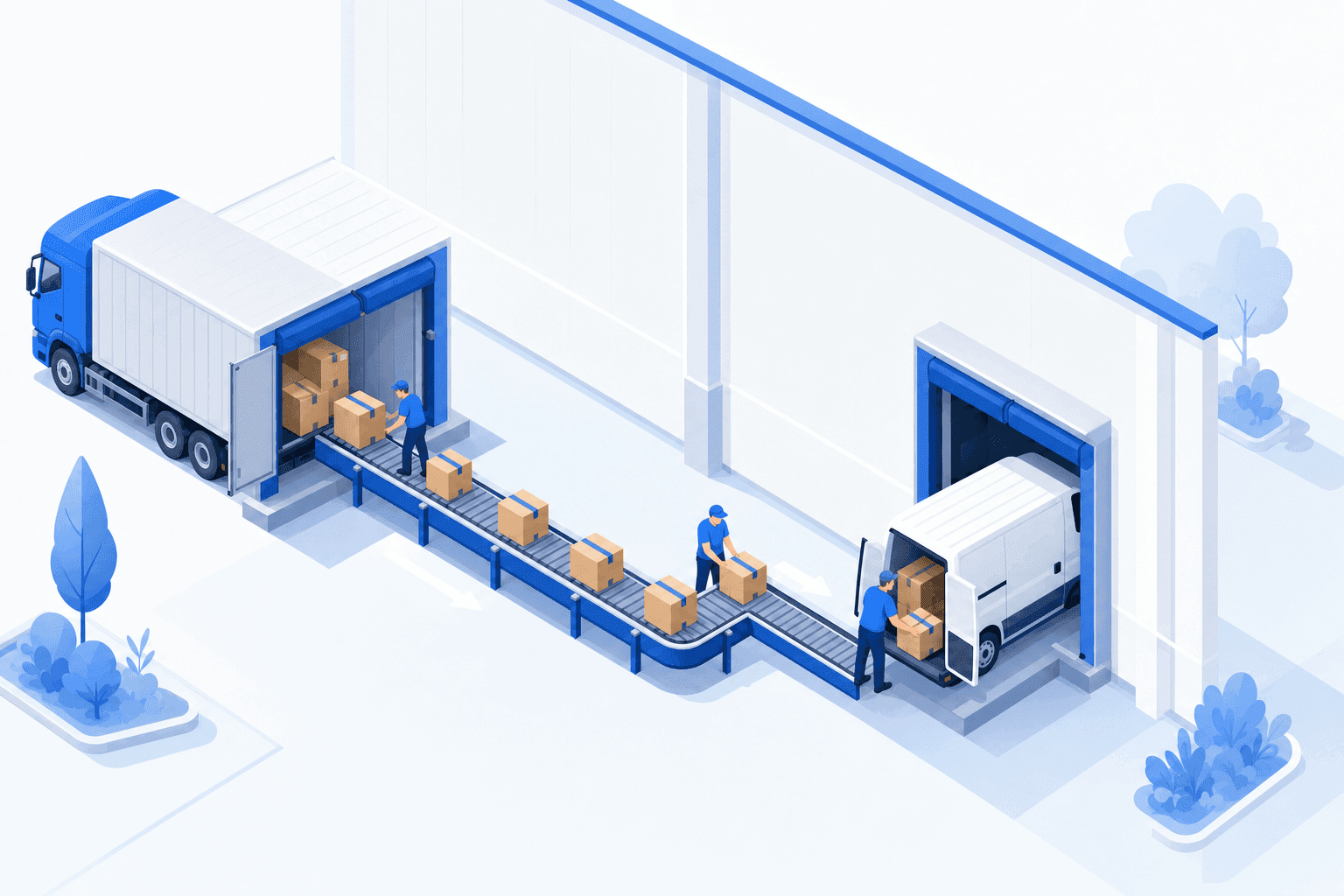
An open receiving system lets warehouse operators scan every product in a supplier delivery without selecting individual purchase orders. The system creates a bulk receiving record. After scanning, an allocation matrix shows the received products in columns and pending purchase orders in rows, with automatic allocation to the oldest orders. The buyer validates or adjusts the matrix, and products are allocated to their respective POs. For single-item cross-dock orders, received products move directly to a packing station, where the system matches them to the customer order before the operator packs and labels them. The product leaves the warehouse within minutes.
03 / Before · After
What changed
01Cross-dock processing
BeforeManual
After100% automated
02Single-item order transit time
BeforeHours
AfterMinutes
The system processes 100% of orders through cross-dock without manual intervention. Single-item orders — where a single product from a single supplier fulfills the entire customer order — follow an extremely short path through the warehouse: receiving, immediate routing to packing, label, and ship. Multi-item orders are restocked and automatically released when all required items arrive. The open receiving system eliminated the biggest bottleneck: matching bulk supplier deliveries to individual purchase orders.
What this case shows
Open receiving system: operators scan all received products without matching to specific POs, then an allocation matrix automatically assigns received items to the oldest waiting purchase orders. The buyer simply validates the proposed allocation.
Purchasing
Not just for auto parts
The same zero-stock, multi-supplier cross-dock model works for any distributor with a massive catalog they can't physically warehouse.
- Electronics component distributors sourcing from dozens of manufacturers
- Industrial MRO suppliers with 100K+ references and next-day delivery promises
- Plumbing and HVAC parts distributors aggregating multiple supplier catalogs
- Any marketplace-first seller running entirely on supplier stock

Your turn
Got the same problem?
Walk us through how your team works. We’ll tell you what configuration covers and what needs custom work.
« We built this one. Let’s talk about yours. »

More cases at the same step
50% of our clients use it
E-commerce (multi-industry)How half our clients sell beyond their own warehouse
0 stockouts
Lifestyle & seasonal goodsFrom manual purchasing spreadsheets to zero stockouts
1 cash-up screen
Pharmacy & parapharmacyLocal deliveries and payments managed together in myFulfillment
Related articles