
WMS comparison: choose the right fit for your warehouse
Evaluate a WMS against an order that reflects your operation, not a feature list. Set your deal-breakers, trigger an exception, and calculate the 36-month cost. The tables also show which evidence to request and whether you can export your data independently.

The essentials
- The right WMS passes your deal-breaker scenarios with your data, devices, and warehouse operators.
- Two client cases show why measurement matters: one tracked error rate fell below 0.5%, and one new hire became self-sufficient in two weeks.
- A demo proves nothing until the operator handles the removal of a reserved unit or a failed label request on screen.
- One system of record per data item and one owner per sync failure prevent three conflicting stock quantities.
- In myFulfillment, the packing scan checks the parcel, a status rule triggers the reservation, and the carrier integration generates the label.
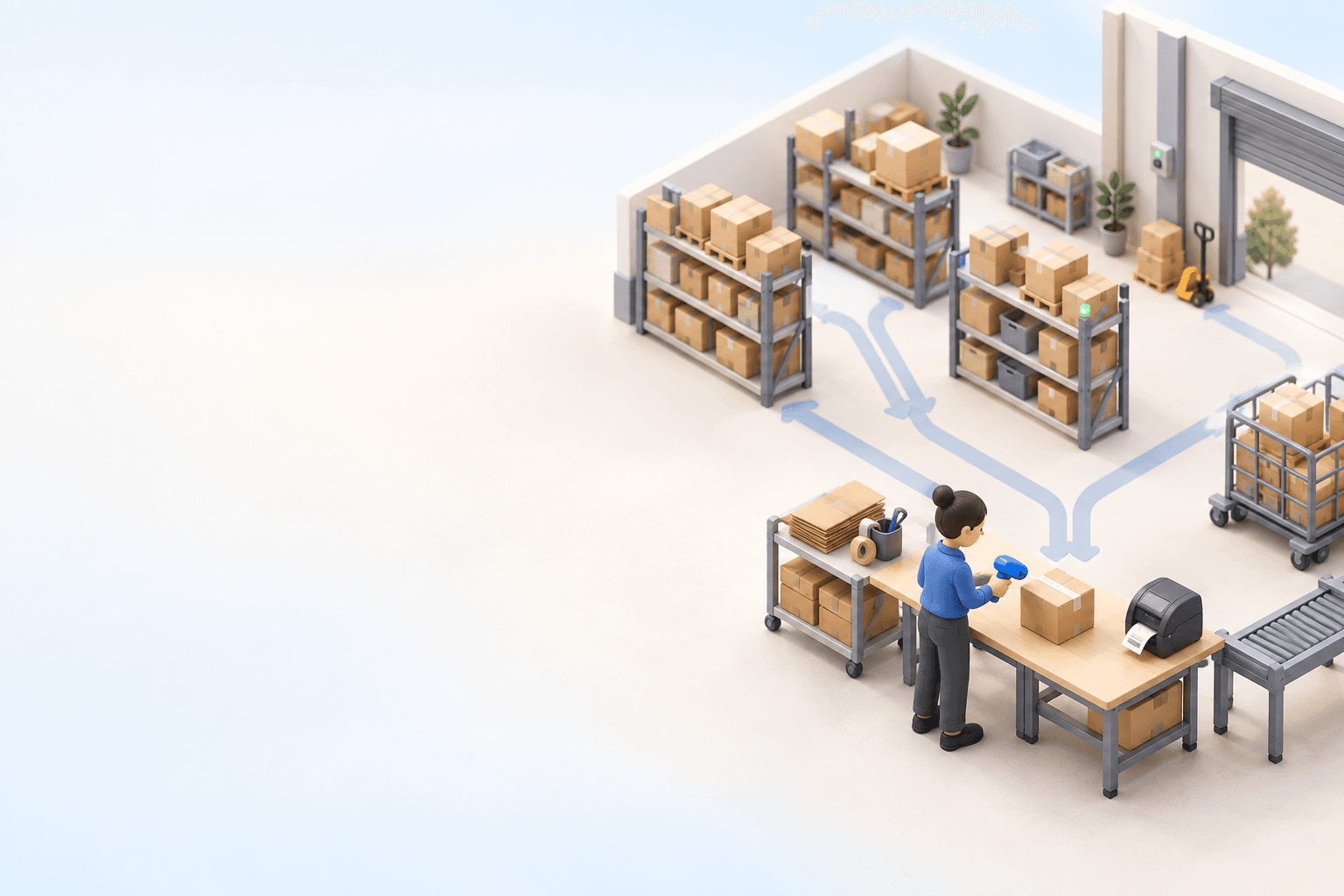
The order appears, the picker scans the product, and the printer produces a label. Now remove a reserved unit, change the assigned warehouse, or scan one item too many. If the vendor has to go and find out, the WMS has not passed your test.
Start with the work that consumes warehouse time
A WMS records each unit's location and movements. It also tracks picking and parcel checks. In the European Journal of Operational Research, de Koster, Le-Duc and Roodbergen (2007) estimate that picking can account for up to 55% of a manual warehouse's operating cost.
Watch a picker walk the aisles and pack before judging the dashboard. In the same journal, Boysen, de Koster and Weidinger (2019) describe urgent, small e-commerce orders with few products. Conventional picking methods struggle to keep up.
The US Census Bureau valued retail e-commerce at $340.2 billion in the second quarter of 2026. Sales rose 12.2% year over year, versus 6.7% for all retail. E-commerce represented 17.1% of retail sales.
WMS comparison: test the way you actually operate
An order line is one product entry within an order. One team ships 500 single-line orders. Another picks 500 orders with 20 lines, backorders, and three carriers. Count the products to be picked and the urgent shipments, not only the orders.
Record volumes for a normal day, the peak, and the recovery. Note which status reserves a unit and which rule selects a warehouse. Add backorders and returns. Ask the people who run these flows to check your notes.
The National Retail Federation and Happy Returns estimated 2025 retail returns at $849.9 billion. For online sales, the estimate was 19.3%.
Give the vendor ten products, two warehouses, a partial order, and a return.
Ask the operator to override the selected warehouse. The change should remain visible on screen.
| Criterion | Real scenario | Evidence to request | Test | Risk |
|---|---|---|---|---|
| Order import | A paid order arrives with the right status | Import log and documented field mapping | Import, then change the status | Missed or duplicate order |
| Sellable stock | Two channels cannot promise the last unit | Time-stamped physical, reserved, and sellable states | Reserve one unit on two channels | Overselling and cancellation |
| Channels and warehouses | Two stores share two warehouses | Allocation rules for each warehouse | Make one warehouse unavailable | Impossible promise |
| Locations | An item moves to another bin | Movement history by location | Move, then find by scan | Ghost stock |
| Picking | Pickers do not mix orders together | Mobile flow, item and quantity checks | Scan the wrong item | Wrong item shipped |
| Exceptions | One item is unavailable during picking | Status, available action, audit trail | Create a shortage, then recover | Order stalls unnoticed |
| Criterion | Real scenario | Evidence to request | Test | Risk |
|---|---|---|---|---|
| Packing and transport | The right parcel gets the right label | Parcel check, carrier response, tracking | Produce a test label | Wrong label or tracking |
| Returns | A damaged return stays unsellable | Reason, condition, decision, movement | Receive two different returns | Premature resale |
| Replenishment | An operator approves the purchase suggestion | Requirements calculation and human approval | Change the stock level | Unnecessary supplier order |
| API and exports | Your team exports without vendor help | Documentation, complete exports, data dictionary | Export orders, stock, and identifiers | Costly migration |
| Roles and training | A new hire follows the flow alone | Permissions, guidance, test environment | Give the test to a new hire | Workarounds |
| Rollout, support, and cost | The pilot has an owner and a budget | Plan, support, security, detailed quote | Simulate an incident, restore, and export | Overrun without recourse |
Test purchase requirements with the replenishment method. Request evidence, then reject a system that fails a deal-breaker criterion. Keep an export.
Set clear boundaries for WMS, OMS, ERP, and TMS
The WMS manages warehouse movements. The OMS coordinates orders and reserves units across channels. The ERP manages purchasing and accounting. The TMS organizes transport. Document these responsibilities before selection.
| Data or action | WMS | OMS | ERP | TMS |
|---|---|---|---|---|
| Order and priority | · | Decides | Customer record | · |
| Reserved and sellable stock | Manages movement | Owns the promise | Values stock | · |
| Location and picking | Decides | · | Stock posting | · |
| Parcel and check | Decides | Tracks status | · | · |
| Label and tracking | Triggers | Returns status | · | Selects transport |
| Purchase and receipt | Receives | Expresses need | Commits and posts | · |
The split depends on your architecture. Without an owner, a team may re-enter data or create a conflict.
If three systems calculate sellable stock, shoppers may see three quantities. Name the system of record and the person who handles a failed sync. The WMS requests a label, the carrier creates it, and the OMS receives the tracking number and status. Then check the status shown in your CMS.
Make an order fail during the demo
Ask the vendor to run the whole flow below. Do not let the demo start at picking.
- Storefront: create two lines, including one SKU stocked in two warehouses.
- Import: check status, quantities, address, service, and external ID.
- Reservation: note when the unit stops being sellable elsewhere.
- Warehouse: watch the allocation rule and its override.
- Picking: give the handheld terminal to an operator.
- Packing check: scan an unknown barcode, then one unit too many.
- Label: use a test carrier account and inspect the response.
- Tracking: confirm that the number and status report back to the correct channel.
- SellableSteps 1 and 2
- ReservedStep 3
- AllocatedStep 4
- PickedStep 5
- CheckedStep 6
- ShippedSteps 7 and 8
- 1Trigger the error
Unknown barcode, one unit too many, or a missing line.
- 2Find the stuck order
The status and the person allowed to act must be visible.
- 3Check the record
The action, user, and time must remain after correction.
Remove a reserved unit, fail a carrier call, then restart a sync. The operator should see the stuck order and know who can act. "Support will handle it" is not enough.
In myFulfillment, scan checks reject an unknown barcode or extra unit. A status rule triggers the reservation. The carrier integration generates the label.
At a French 3PL that employs people with disabilities, a handheld terminal guides each task with sound and images. Operators stopped re-keying data. Picking errors, once frequent, fell to near zero. Read the guided chaotic-storage case and the cut-to-order cable workflow.
Ask for numbers you can verify
Choose a customer reference whose operation resembles yours. Ask that company how it calculated each rate. WERC tracks 36 metrics in its 2026 DC Measures edition. Ask what each rate covers and who measured it.
| Where the number comes from | What it reports | Measurement method |
|---|---|---|
| WERC, DC Measures 2026 | Quintile benchmarks, 36 metrics | Operator self‑reports |
| DTC fashion brand provider, before | 3 to 4% picking errors | Provider estimate |
| DTC fashion brand, after insourcing | Below 0.5%, tracked | Scan check, line by line |
| Lyon-based 3PL, guided picking | Errors fell from frequent to near zero | Handheld terminal workflow |
A fashion brand that brought logistics in-house ships more than 2,000 orders each month. Its former provider quoted 3 to 4% picking errors without a verifiable method. After bringing logistics in-house, the brand measured less than 0.5% and now sees stock immediately instead of after 24 hours.
The founder said: "We're taking back control. We have the warehouse, we want a solution that manages our stock. Not another black box." At a home and garden retailer operating five channels, a new hire became self-sufficient in two weeks instead of three months.
The provider's initial rate could not be verified; the rate became traceable after insourcing.
Guided workflow at a home and garden merchant operating five sales channels.
Customer results are not market benchmarks.
Compare total cost over 36 months and include exit costs
Compare every quote over 36 months with the same scope. Add your team's time.
| Line item | Frequency | Amount to enter | 36-month calculation |
|---|---|---|---|
| Subscription | Monthly | Monthly price | Amount × 36 |
| Integration and connectors | One-time | Quoted amount | Count once |
| Devices and printers | One-time | Hardware price | Count once |
| Data migration and handover | One-time | Quoted amount | Count once |
| Training and support | Mixed | Initial plus monthly | Add both over 36 months |
| Internal team and exit | One-time | Estimated cost | Count once |
In the 2026 DC Measures edition, 48.6% of respondents ranked cost reduction first. The quote should list the included warehouses, users, channels, and service levels. It should also name the owner of each connector.
Define your exit in the contract. Since September 12, 2025, the EU Data Act, Regulation (EU) 2023/2854 has applied to data processing services, which generally include SaaS WMS software. Article 25 limits the transition period to 30 calendar days and requires the outgoing vendor's help. If migration is technically impossible, the vendor must notify you within 14 working days and propose a period of no more than seven months.
You may extend that period once. Article 29 removes switching charges as of January 12, 2027. You still need to migrate the data, so test an export before signing.
Set the acceptance criteria before you sign
Reject any system that fails a deal-breaker criterion. Request missing evidence, then test no more than three systems. Check that the quote includes every required customization.
Limit the pilot to one warehouse, one channel, and representative products. Add a partial order, a return, and a label failure. If your team uses cross-docking, test one receipt that bypasses storage.
| Acceptance check | Evidence expected | Reject if |
|---|---|---|
| Import | Order, line, address, and status match | Data changes without a trace |
| Reservation | Sellable quantity changes when the correct status is reached | The last unit remains promised elsewhere |
| Picking | Item and quantity are checked | A wrong barcode passes without an alert |
| Packing | Parcel contents match the order | Excess quantity is accepted |
| Transport | Label and tracking match the parcel | The failure remains invisible |
| Recovery | Action, user, and timestamp are logged | Only support can see the stuck order |
| Handover | The export is readable and mappable | A critical identifier is missing |
If a deal-breaker test fails, the pilot lead stops the pilot and the team resumes the previous workflow, retaining an export of orders, stock, and identifiers.
On days 30 and 60, measure time per line, logged errors, and blocked orders. The available-stock guide explains the difference between on-hand and sellable stock.
Use that order in a WMS workflow demo. The peak-season webinar also shows the flow. Choose the WMS that lets your team spot a stuck order, understand the cause, and restart the flow.
Sources
- de Koster, Le-Duc and Roodbergen, Design and control of warehouse order picking: a literature review, European Journal of Operational Research, vol. 182, 2007.
- Boysen, de Koster and Weidinger, Warehousing in the e-commerce era: a survey, European Journal of Operational Research, vol. 277, 2019.
- US Census Bureau, Quarterly Retail E-Commerce Sales, 2nd Quarter 2026, release CB26-133, August 18, 2026.
- National Retail Federation and Happy Returns, 2025 Retail Returns Landscape, October 2025.
- WERC, DC Measures, 2026 edition.
- European Union, Regulation (EU) 2023/2854 (Data Act), articles 25 and 29, applicable since September 12, 2025.
- Boostmyshop customer case studies: Lyon-based 3PL, electrical equipment retailer, DTC fashion brand, and growing multi-channel retailer.
Frequently asked questions
WMS stands for warehouse management system. It records locations, movements, inventory counts, and warehouse checks. Confirm separately which system reserves stock, owns the delivery promise, organizes transport, and records financial postings.
Usage varies by company size, sector, country, and ERP. A ranking can help you build a long list, but it cannot prove that a WMS fits your warehouse. Test your deal-breakers and call customers with similar volumes, channels, and operating constraints.
The ERP manages purchasing and financial postings. The OMS coordinates the order and the delivery promise across every channel. Teams use the WMS to manage movements and checks inside the warehouse. Assign one system of record to each data item and one person to each failed sync.
Compare total cost over one period, such as 36 months. Include subscription, integration, hardware, configuration, migration, training, support, connector maintenance, internal effort, and exit costs. Check what each amount covers.
The best WMS passes your deal-breaker scenarios with your records, devices, and operators. A small multi-channel warehouse may prioritize sellable stock and a simple flow. A complex network may give more weight to multi-warehouse rules and user permissions.
Import a real order, then follow its reservation, allocation, picking, packing, label, and tracking. Trigger a backorder, wrong barcode, or carrier failure. Save the resulting status, the action offered to the operator, the audit log, and the export.
Continue exploring
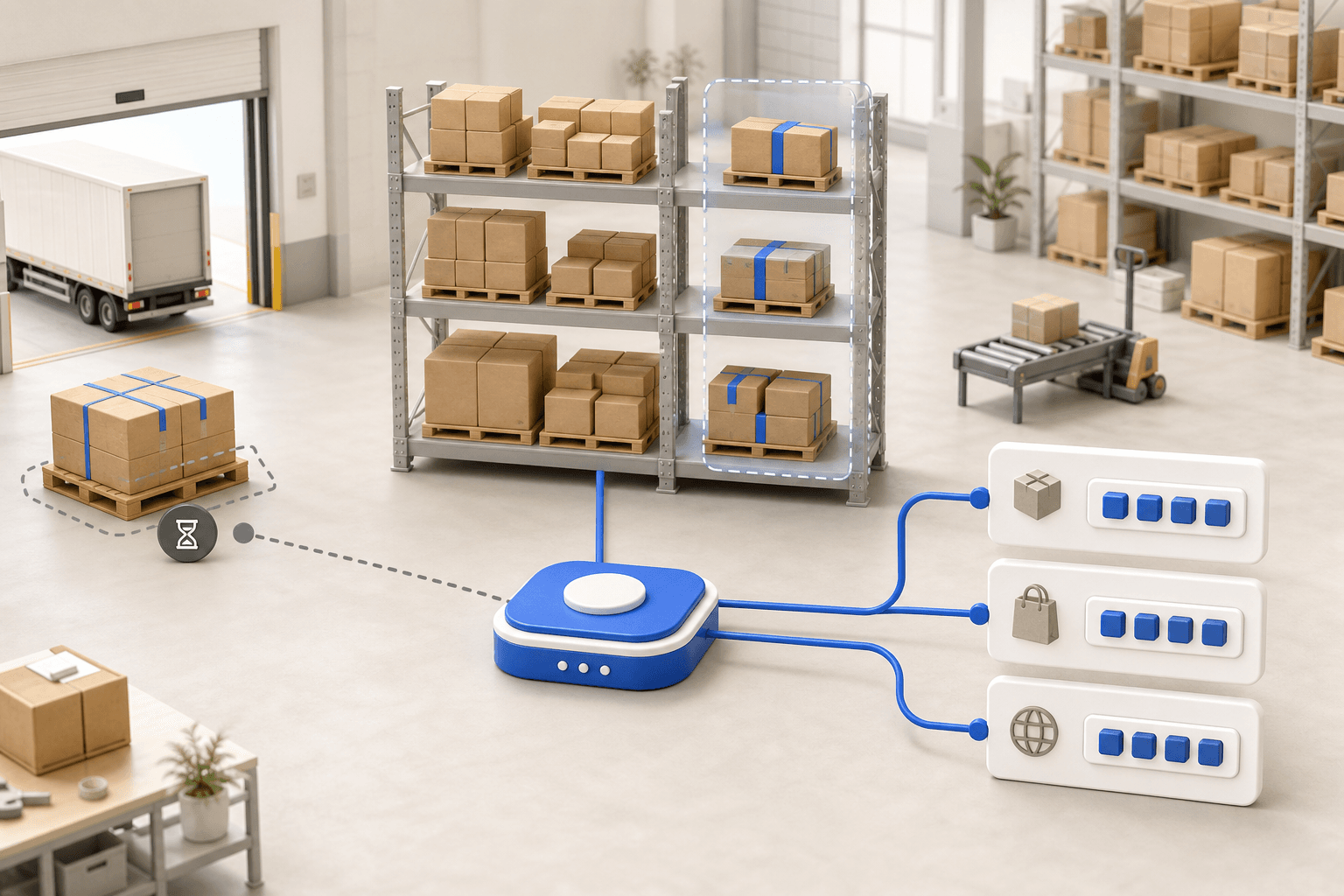

What marketplaces read off your warehouse: availability, picking accuracy, dispatch time. Jonathan Coloma, COO of Repiauto, on going from 300 to 1,000 orders a day in two years: the paper wall, ERPs built for a different problem, a go-live quoted at fifteen days, and what changed in his working day.

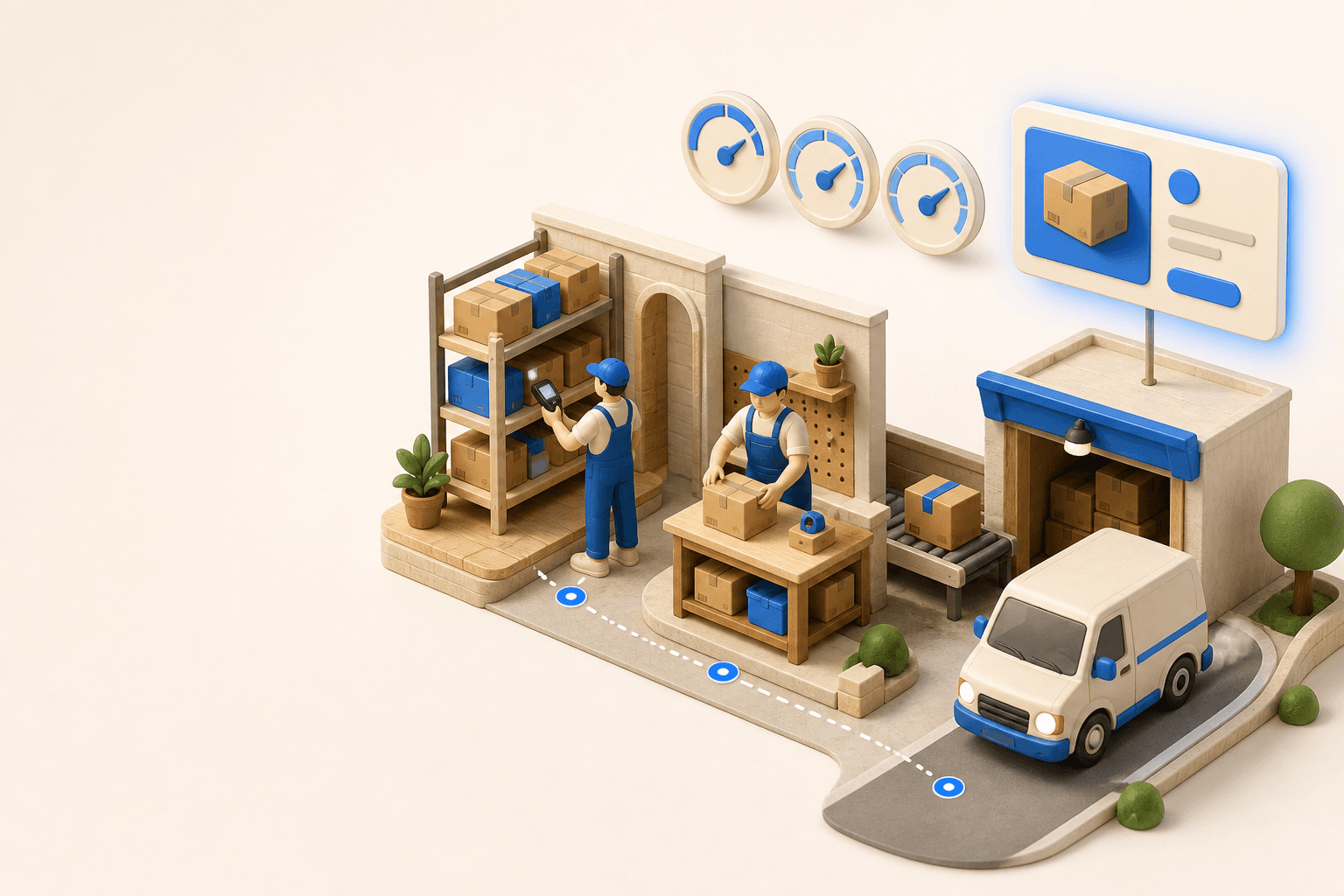
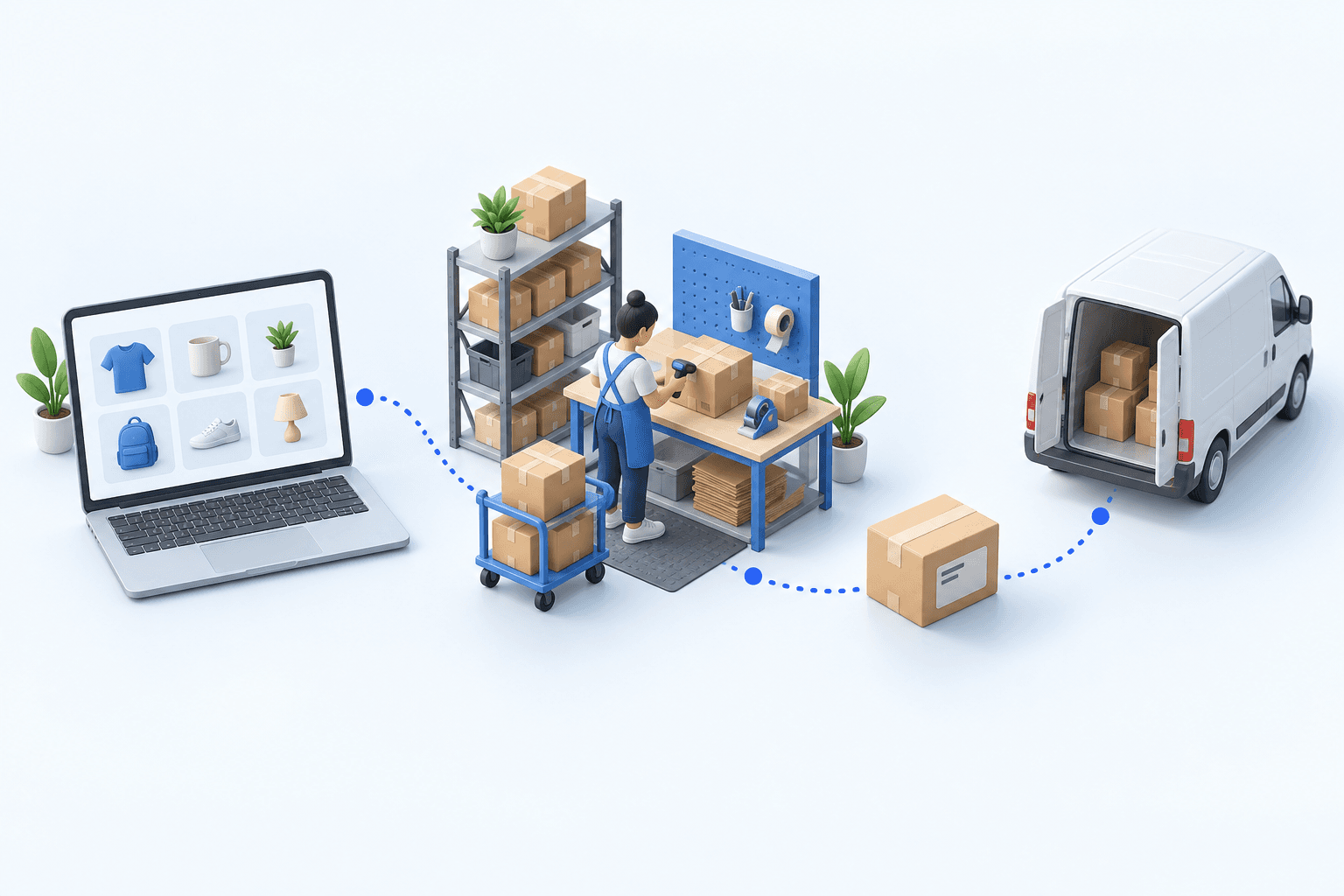
To hold up under peak volume, split the order queue into waves based on real operating constraints, then decide where barcode checks belong. At the packing bench, the operator verifies the parcel. Carrier rules select the service and print the label, so the next order can start without another decision.

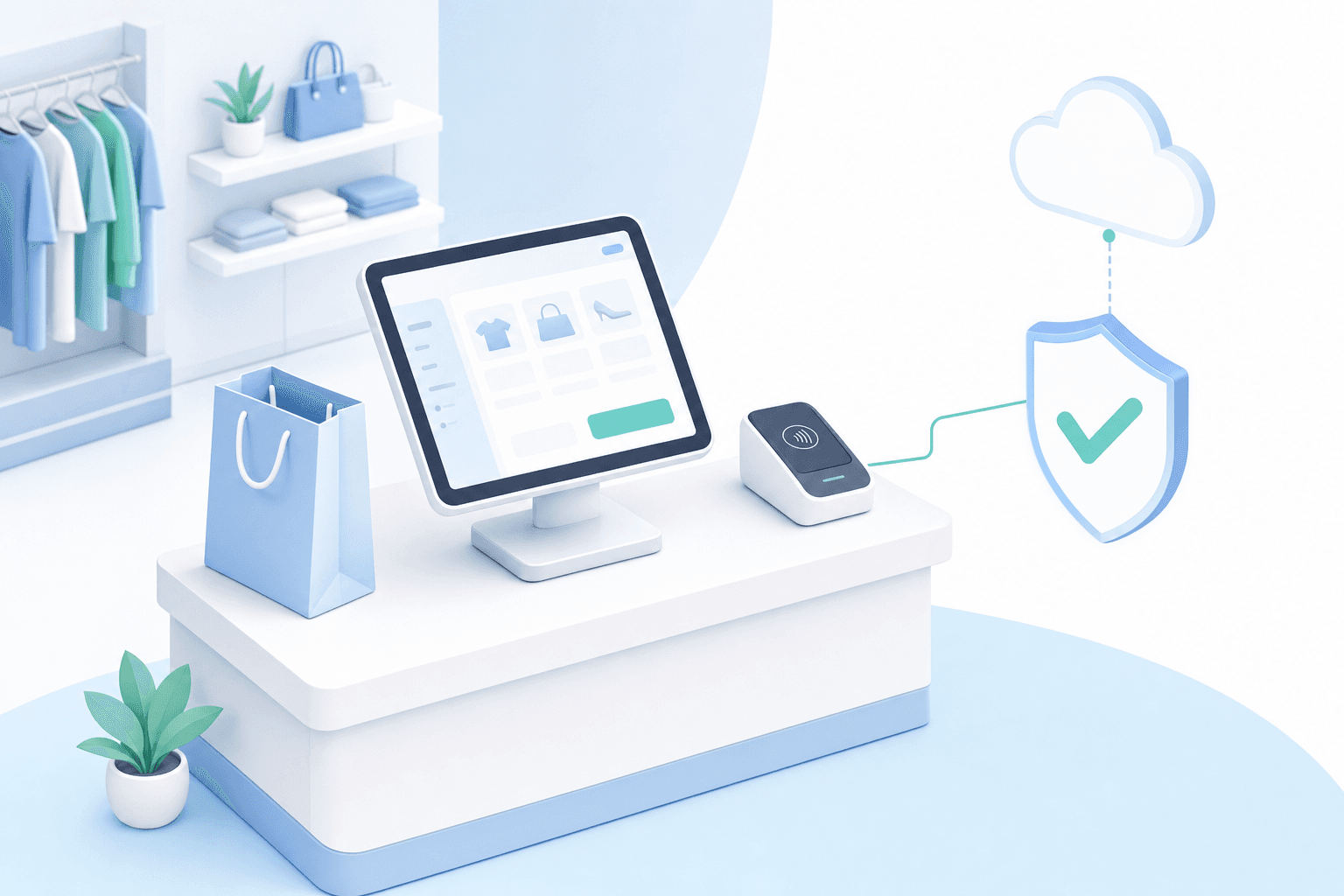
Industrializing your purchasing means ordering on rules, not guesswork: at the right time (the reorder point), in the right quantity (your coverage period), from the right supplier, with a purchase order validated in one click. Available on replay.




See it in your own operations
Book a 20-minute call. We'll map your workflow and point out where it breaks. No slides.
Free 20-min call · No commitment