
Amazon Buy Box: How Operations Affect Your Visibility
The Amazon Buy Box is not decided by price alone. An offer also needs reliable availability, seller performance, and a credible delivery promise. Stockouts, overselling, picking errors, and late shipping can weaken visibility. The practical response is to fix the order flow while keeping pricing as a separate, controlled lever.

The essentials
- In the [gardening retailer’s catalog](/en/case-studies/pricing-intelligence-ad-synergy-gardening-retail), only 8.2% of products needed an immediate price cut and 45.4% had no direct competitor. A catalog-wide cut would have lowered margin on products that did not need it.
- Phantom stock keeps a reserved unit available for purchase. The resulting cancellation turns an inventory error into a seller-performance problem.
- A shipping confirmation sent late can cause an order to be counted as a late shipment.
- Diagnose one ASIN: eligibility, price, seller performance, delivery, and stock. The useful finding is usually the first broken promise in the order flow.
An Amazon Buy Box can disappear while your price has barely moved. In the warehouse, the cause may already be visible. A product remained on sale after its last unit was reserved, an order missed the cutoff, or shipment confirmation arrived late. The listing problem starts upstream.
Amazon now calls the Buy Box the Featured Offer. Its own 2026 seller guide presents price, condition, and shipping speed on the product page, and states that an out-of-stock offer cannot be featured. Check those criteria without assuming how Amazon weights them. Selection is never guaranteed.
Check price, seller performance, and delivery
Amazon compares offers on more than the displayed price. Check three criteria: price, seller performance, and delivery. Your price indicates how competitive your offer is. Seller performance reflects the buyer experience: stock availability, cancellations, order accuracy, and service. For delivery, check the promise shown to the buyer and whether you can keep it.
Amazon France explains that several sellers may compete for the Featured Offer. A consistent buying experience and performance criteria affect eligibility, without guaranteeing selection. The OECD’s 2023 competition note also records price, shipping, seller trust, customer service, and delivery performance as separate dimensions.
Two of the three criteria depend directly on operational execution.
Two of these three criteria depend directly on operations. A price tool can tell you whether an adjustment is sensible. It cannot make a missing unit available, correct the wrong item in a parcel, or get an order onto yesterday’s truck.
Fix stockouts, picking errors, and delays at their source
A stockout is the simplest case. When no sellable unit remains, Amazon cannot feature the offer. The harder case is phantom stock: one unit is still listed as available on the channel, but it has already been reserved through another marketplace or the web store. The resulting cancellation turns an inventory error into a seller-performance problem.
A picking error can cause similar problems. The warehouse sends the wrong size or item; the customer has a poor experience and reports the problem; the seller handles the claim. A late shipment starts with a missed picking wave, a problem with the shipping label, or a confirmation sent after the cutoff. The late shipment then worsens your delivery record on the marketplace. An Amazon moderator specifically warns that late confirmation can be counted as late shipment.
| Problem | Marketplace consequence | Corrective action |
|---|---|---|
| Unavailable stock | Offer becomes ineligible | Reliable available stock |
| Overselling | Cancellation hurts seller performance | Cross-channel reservation |
| Picking error | Claim and poorer reputation | Scan verification |
| Late shipment | Less competitive promise | Shipping coordination and confirmation |
Fix the step that caused the problem. Repricing a phantom-stock offer does not create inventory. Discounting an order that cannot leave today does not improve its shipping promise.
Identify which products need a price adjustment
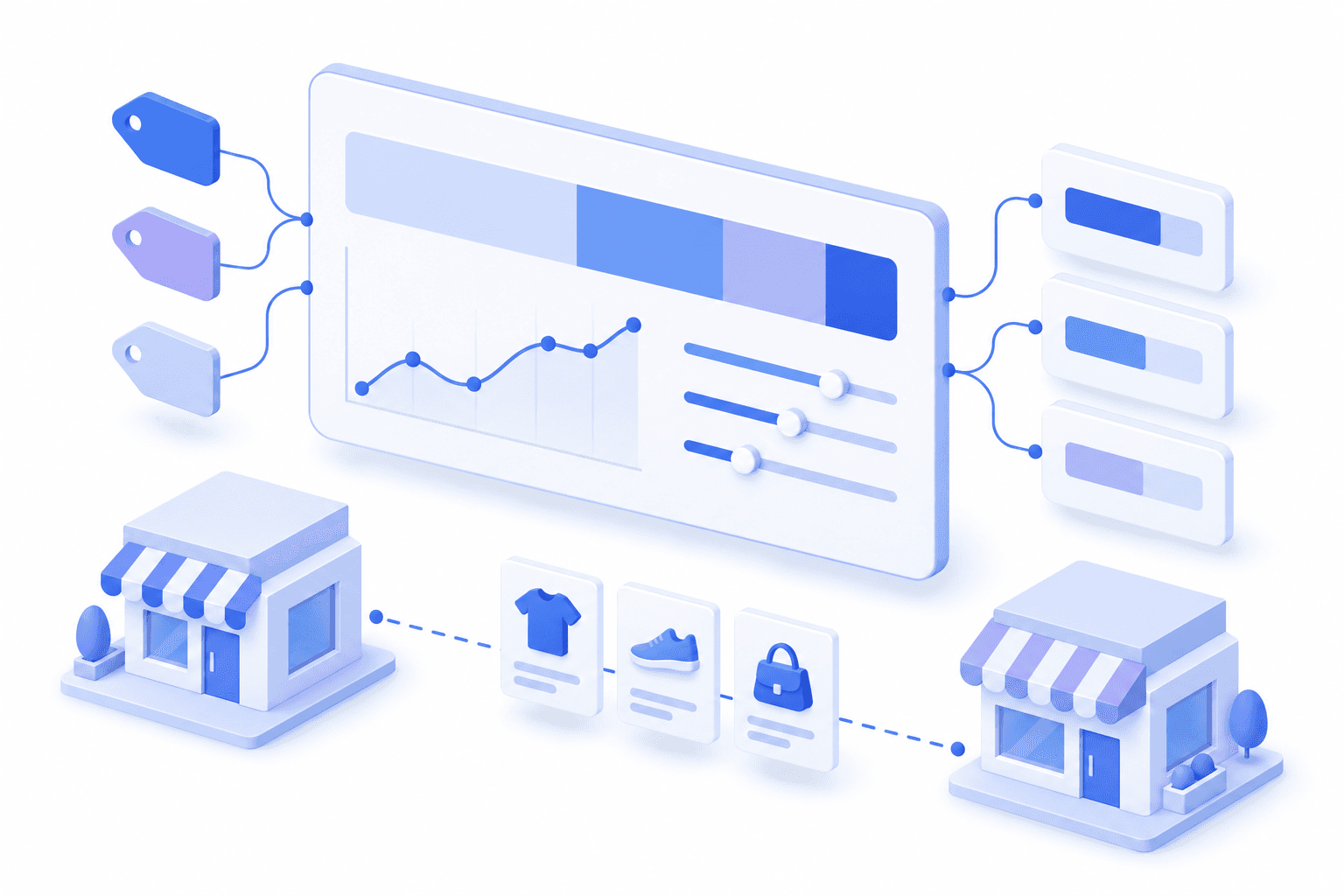
Price still matters, but you should diagnose the problem before cutting prices across the whole catalog. In one myPricing customer case, 23,365 products were classified by competitive position. Only 8.2% were Fighting: close enough that a price adjustment was the immediate action. Another 45.4% had no direct competitor, while Winning and Losing products needed different decisions.
Across 23,365 classified products, only Fighting products were one price adjustment away from a winning competitive position. The others called for a different decision.
That split is a reason to avoid lowering every price after visibility drops. The 2016 study by Chen, Mislove, and Wilson observed Amazon sellers using pricing algorithms winning the Buy Box more often without always posting the lowest price.
Use price monitoring to separate a real price gap from an operational fault. When price is the lever, myPricing can propose a change within your rules and above your margin floor. The operator defines and validates those rules.
Publish available stock and keep shipping on schedule
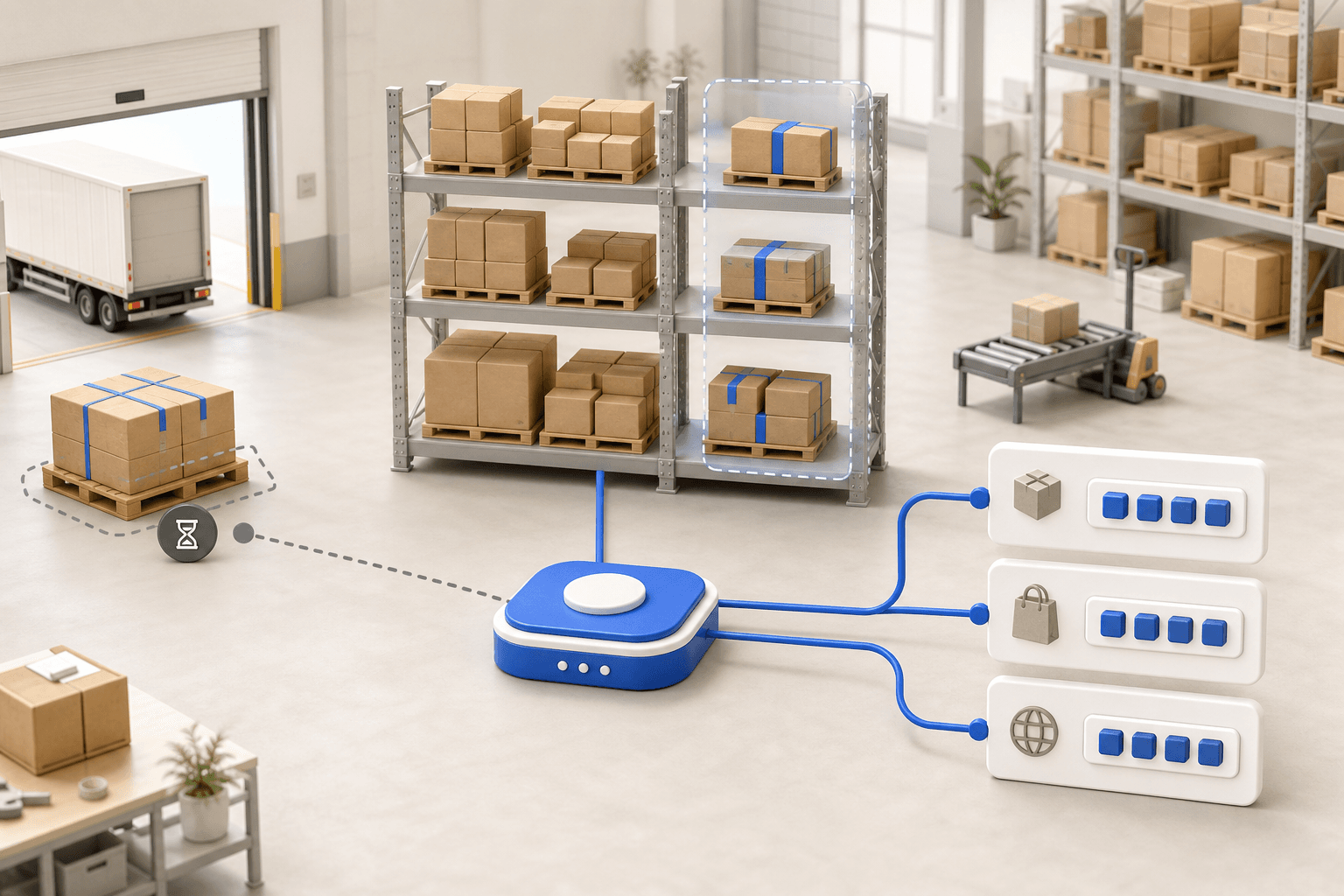
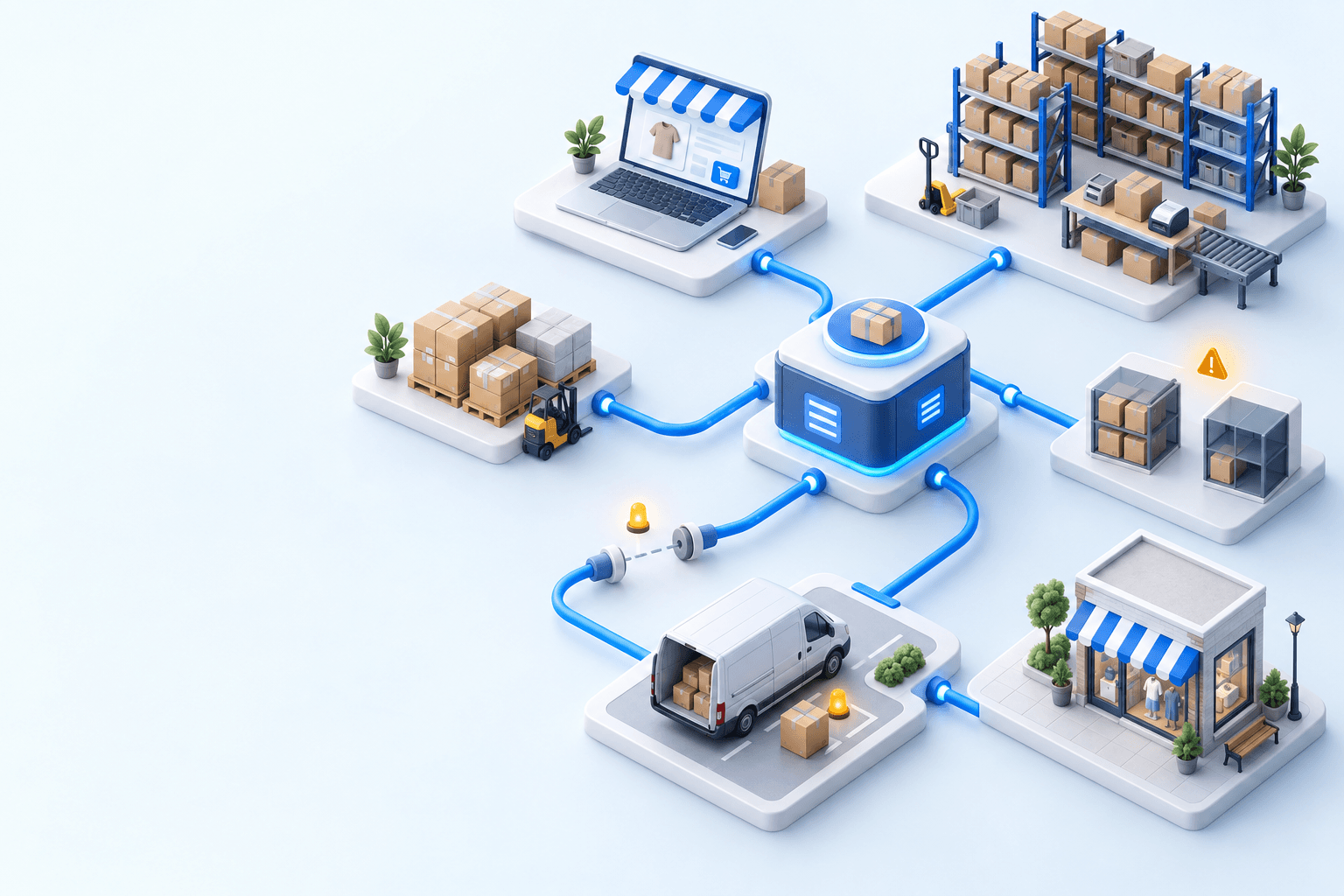
Start with available-to-sell stock. The useful quantity is not physical stock alone; it is physical stock minus units already reserved by open orders. Publish that quantity across channels from one order and inventory system. When Amazon, another marketplace, and your own store sell at the same time, each reservation must update the published stock before the next sale.
Then route the order to a warehouse or supplier that can meet the promised deadline. You may ship stock you own from your warehouse. For supplier orders, use cross-docking or dropshipping when your process and sales channel allow it. Choose a fulfillment route that lets you meet the deadline.
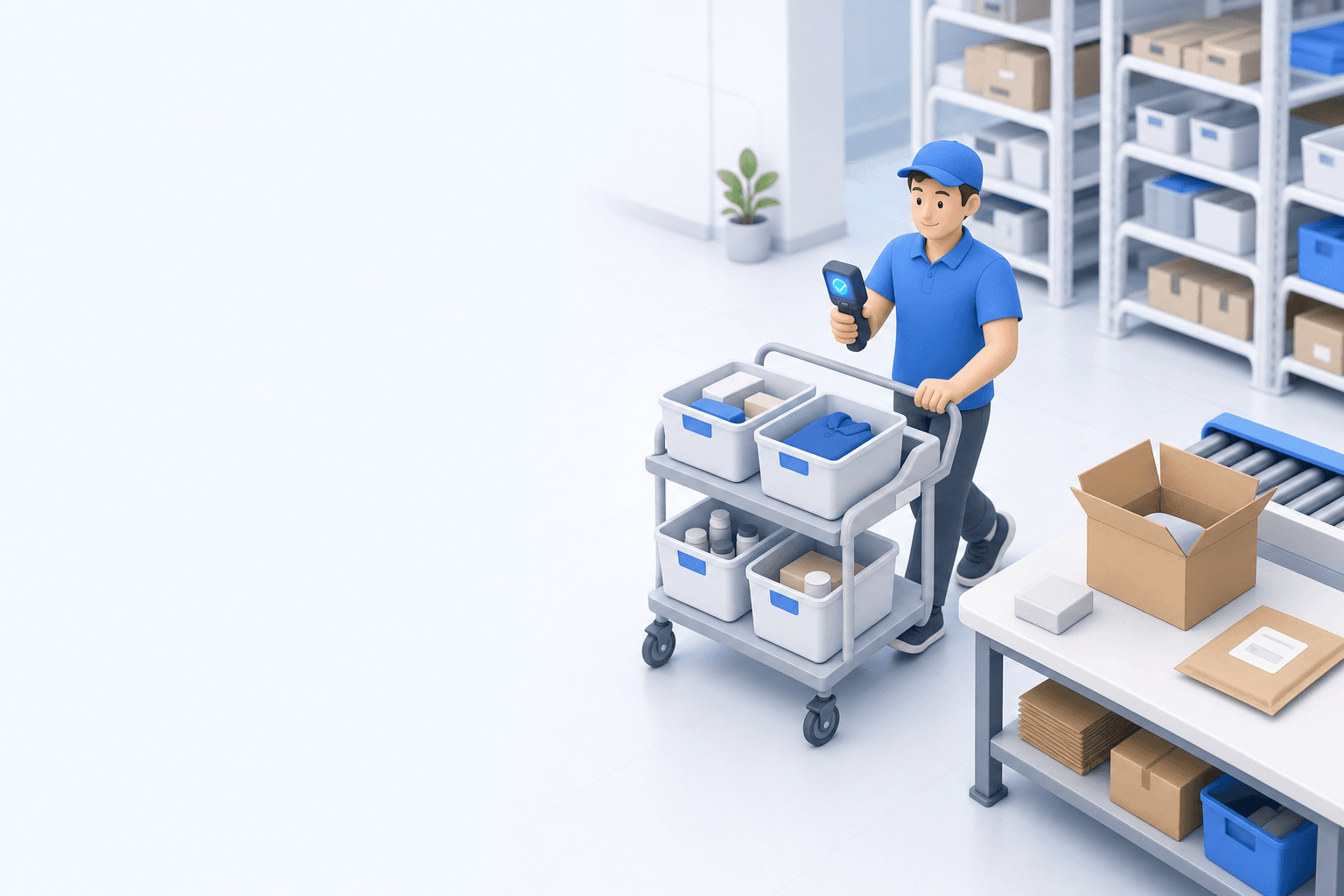
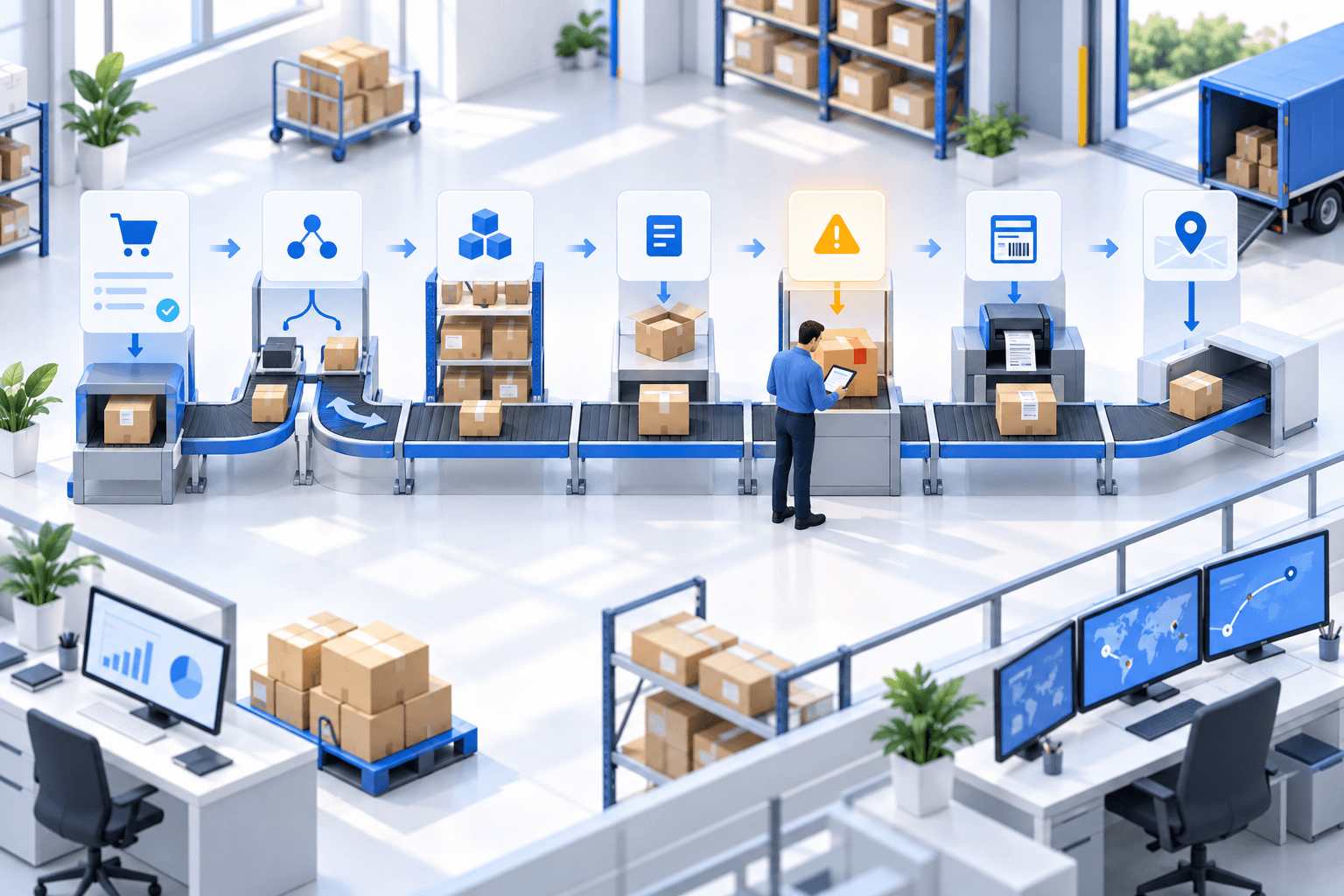
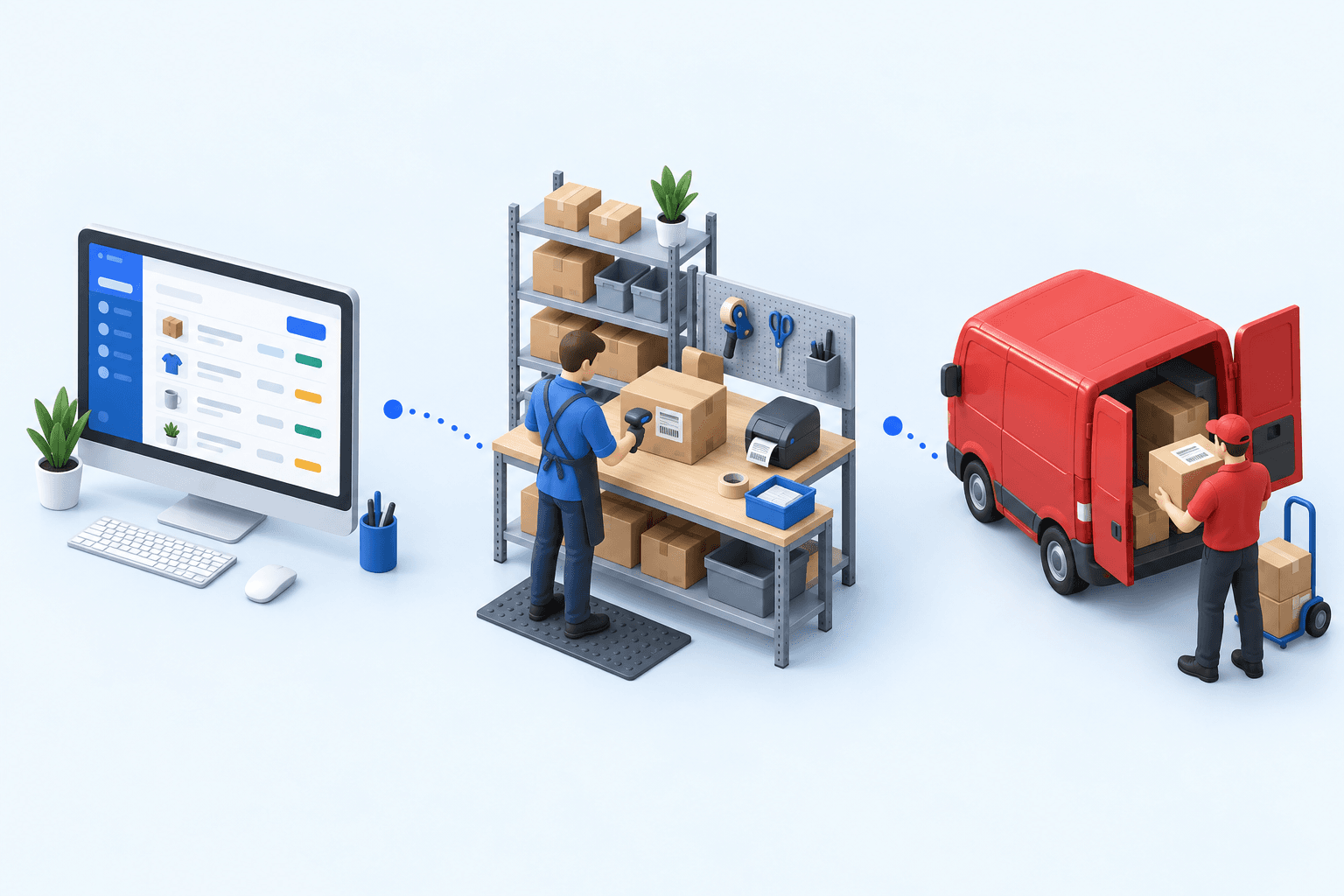
Order preparation needs its own controls. Guided warehouse picking tells the operator where to go; scan verification catches the wrong item before the carton is closed. During shipping, the configured carrier service should be selected, the label produced, and tracking information and confirmation sent on time.
| Operational risk | Data to check |
|---|---|
| Phantom stock | Physical minus reserved stock |
| Slow allocation | Source, cutoff, available quantity |
| Wrong item | Expected SKU and scanned SKU |
| Late confirmation | Carton closing time, carrier handoff, confirmation time |
| Corrective procedure | Marketplace result sought |
|---|---|
| Reserve across every sales channel | Avoid preventable cancellation |
| Route to warehouse, cross-docking, or supplier | Keep the displayed promise |
| Block packing on a mismatch | Protect buyer experience |
| Confirm from the shipping flow | Keep shipment records current |
With myFulfillment, you manage these steps in the same order record. It centralizes orders, reserves stock, guides warehouse execution, and sends shipping information back to channels. Amazon still decides which offer is featured. The software’s role is to remove avoidable operational reasons for losing eligibility.
Trace a Buy Box loss for one ASIN
Do not begin with a catalog-wide price cut. Pick one ASIN that lost the Buy Box and reconstruct the events leading to the loss.
- Confirm eligibility. Is the offer active, in stock, and able to ship to the buyer’s location?
- Compare price. Check the total price to the customer and your competitive position without crossing the margin floor.
- Review seller performance. Look for recent cancellations, claims, returns caused by wrong items, and unresolved order exceptions.
- Inspect delivery. Compare the displayed promise, warehouse cutoff, actual handoff to the carrier, tracking event, and confirmation timestamp.
- Trace inventory. Verify physical stock, reservations, incoming supply, and the last quantity sent to Amazon.
- Fix the underlying problem. Change the reservation rule, route, picking control, or confirmation step that produced the fault.
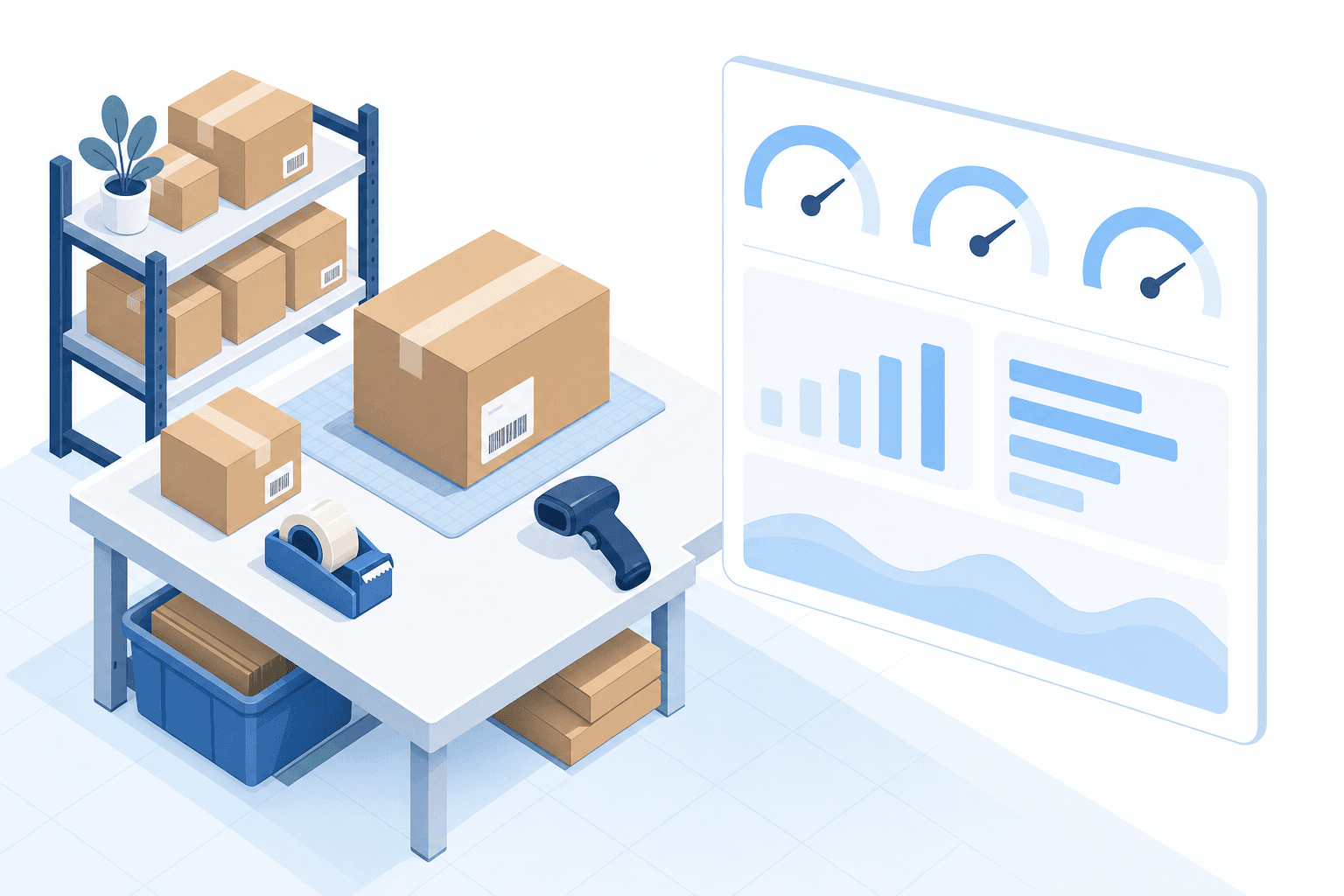
An order-management dashboard supports a regular review. Watch availability, order accuracy, order-to-ship time, and avoidable cancellation by channel. Use these indicators to manage your operations.
Apply the same controls to your own store
Your own website has no Amazon Buy Box, but the same quality of execution matters there. Canceling an order for a product shown as available costs you the order and the buyer’s trust. Sending the wrong item results in a return and a customer review. A vague or missed delivery promise damages conversion before and after checkout.
A fashion brand that brought logistics in-house reduced its picking error rate from an estimated 3-4% to below 0.5% with barcode-verified picking.
These corrections benefit both Amazon sales and sales through your own store. Reliable replenishment keeps products available to buy online. Accurate picking reduces preventable returns. Prompt shipping confirmation gives the buyer useful information about the order’s status. On Amazon, those actions support eligibility and seller performance. In your store, they support conversion, reviews, and repeat purchase.
Fix the cause of the Buy Box loss first
One multi-channel home-and-garden merchant eliminated overselling incidents with unified real-time stock and made same-day shipping the standard.
After losing the Buy Box, check three criteria: price, seller performance, and delivery. If the price is wrong, correct it within a margin rule. myPricing applies your configured pricing rules. If the problem concerns availability, cancellations, order preparation, or shipping, fix that operational problem first. The quickest useful diagnosis usually identifies the first broken promise in the order flow, rather than the lowest price suggested by a repricer.
myFulfillment centralizes orders and stock. Its order-management dashboard and warehouse picking tools support allocation, order preparation, and shipping.
Frequently asked questions
The Amazon Buy Box, now called the Featured Offer, is the prominent purchase area on a product page. When several sellers offer the same item, Amazon selects an eligible offer for that placement. Selection is not guaranteed and depends on more than the listed price.
No. A competitive total price matters, but Amazon also considers the buying and delivery experience. Stock availability, seller performance, and a credible shipping promise can separate two similarly priced offers. Lowering the price cannot compensate for an offer that is out of stock or operationally unreliable.
No. Amazon’s current Featured Offer guidance states that an out-of-stock offer cannot be featured. The operational priority is accurate available-to-sell stock: physical units minus quantities already reserved by open orders across Amazon, other marketplaces, and your own store.
Overselling creates an order the warehouse cannot fulfill. If the seller cancels it, an inventory synchronization fault becomes a seller-performance event. Central reservation across channels reduces the risk by removing committed units from available stock before the next marketplace order arrives.
A wrong item can lead to a claim, return, or poor buyer experience. Scan verification before the carton is closed removes this avoidable cause of seller-performance problems.
Yes. Amazon moderator guidance warns that confirming shipment late can cause an order to be counted as late. Confirm from the shipping workflow when the parcel is closed or handed off. Check carrier cutoff and settings instead of relying on a later manual update.
Yes, if supplier availability is reliable and the fulfillment route is configured. Build the promise from the supplier’s preparation or procurement lead time, then its transit or delivery lead time. Add a realistic receiving buffer; do not present supplier stock as immediately available warehouse stock.
Work backward from the date the stock must be available to sell. Subtract the supplier’s delivery lead time, preparation or procurement lead time, and receiving buffer. The system can suggest a purchase date; the operator checks the constraints and validates the order.
No. myPricing proposes prices within configured rules, and myFulfillment suggests purchasing quantities and dates from operational data. The operator sets the rules, reviews exceptions, and validates activation or the purchase order. Amazon alone decides which eligible offer becomes the Featured Offer.
Start with eligibility and availability, then compare the total price, recent seller-performance incidents, the delivery promise, the actual carrier handoff, and shipment confirmation. Trace one ASIN and one order end to end. The aim is to find the first broken operational promise before making a catalog-wide price change.
There is no Buy Box on your own store, but the same execution affects conversion and loyalty. Phantom stock causes cancellations, wrong items cause returns, and missed delivery promises lead to negative reviews. Reliable stock, order preparation, and shipping protect the customer experience on every channel.
Yes. myFulfillment compares recent sales trends with the same period of the previous year and adjusts the thresholds. The operator reviews the resulting purchasing proposal and validates the order.
Continue exploring



Stock availability, picking accuracy, and shipping times affect marketplace sales. Jonathan Coloma, COO of Repiauto, explains how his team went from 300 to 1,000 orders a day in two years. He describes the limits of paper-based work, ERPs built for different needs, a go-live estimate of fifteen days, and changes to his daily routine.

To hold up under peak volume, split the order queue into waves based on real operating constraints, then decide where barcode checks belong. At the packing bench, the operator verifies the parcel. Carrier rules select the service and print the label, so the next order can start without another decision.

Industrializing your purchasing means ordering on rules, not guesswork: at the right time (the reorder point), in the right quantity (your coverage period), from the right supplier, with a purchase order validated in one click. Available on replay.








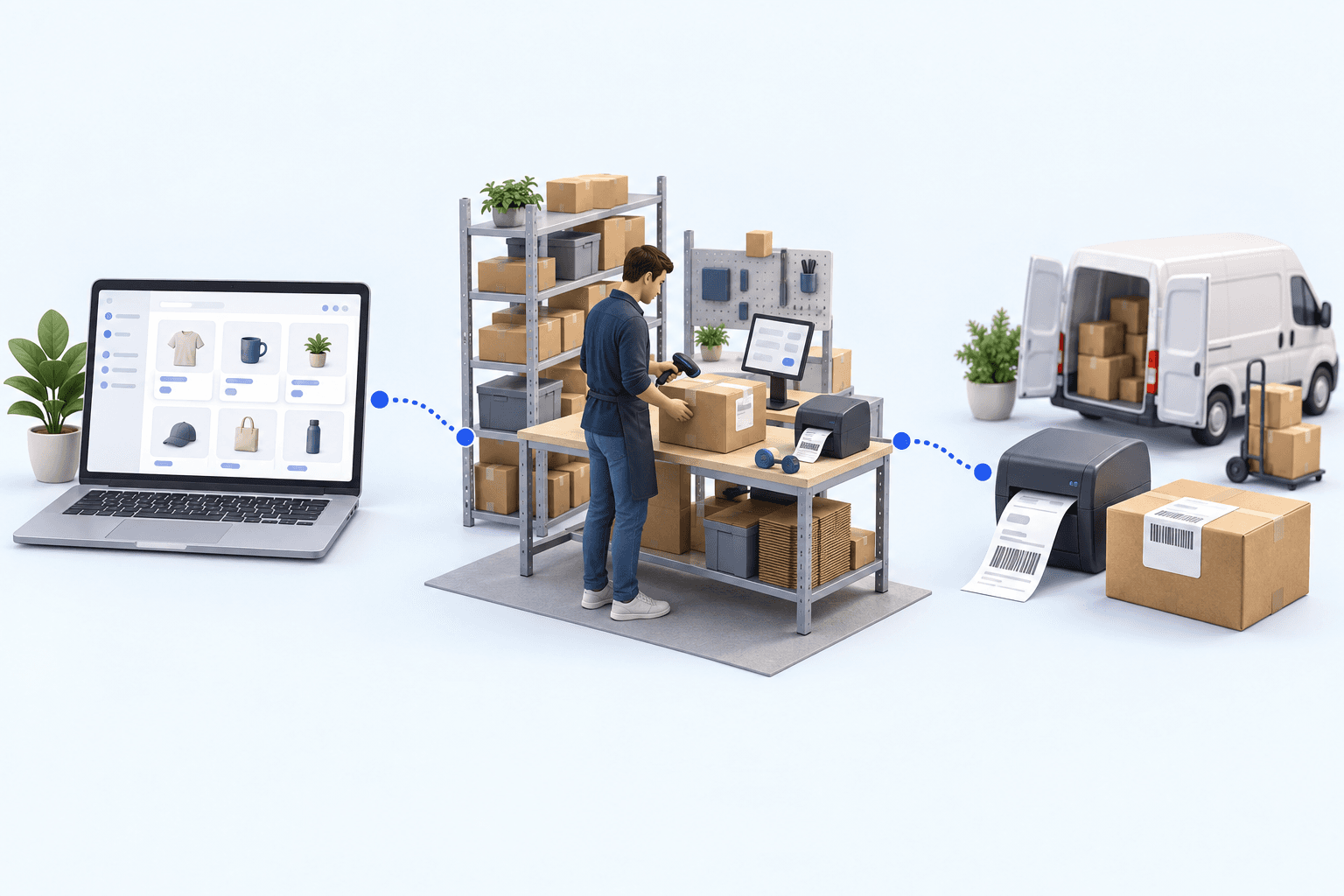
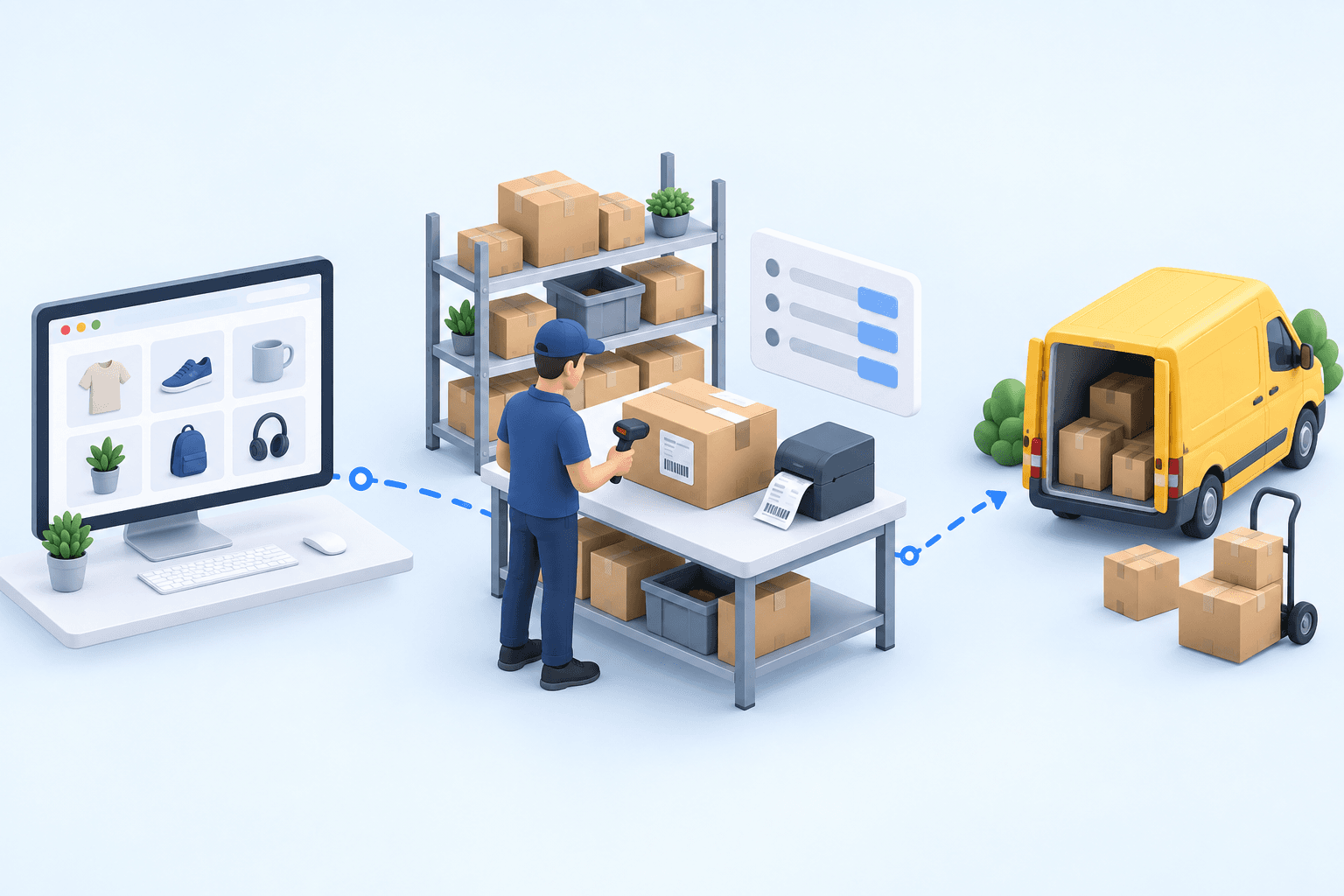
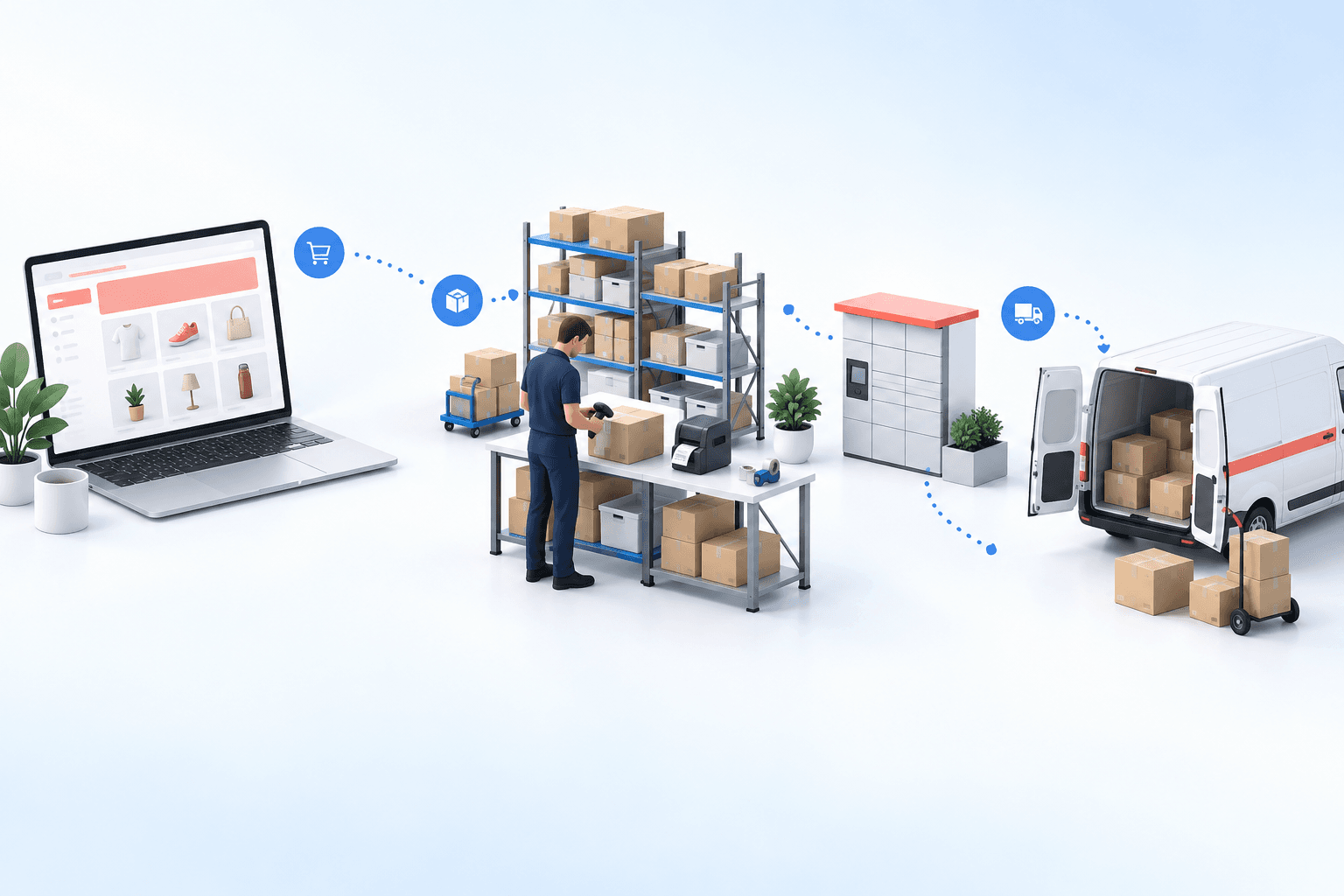
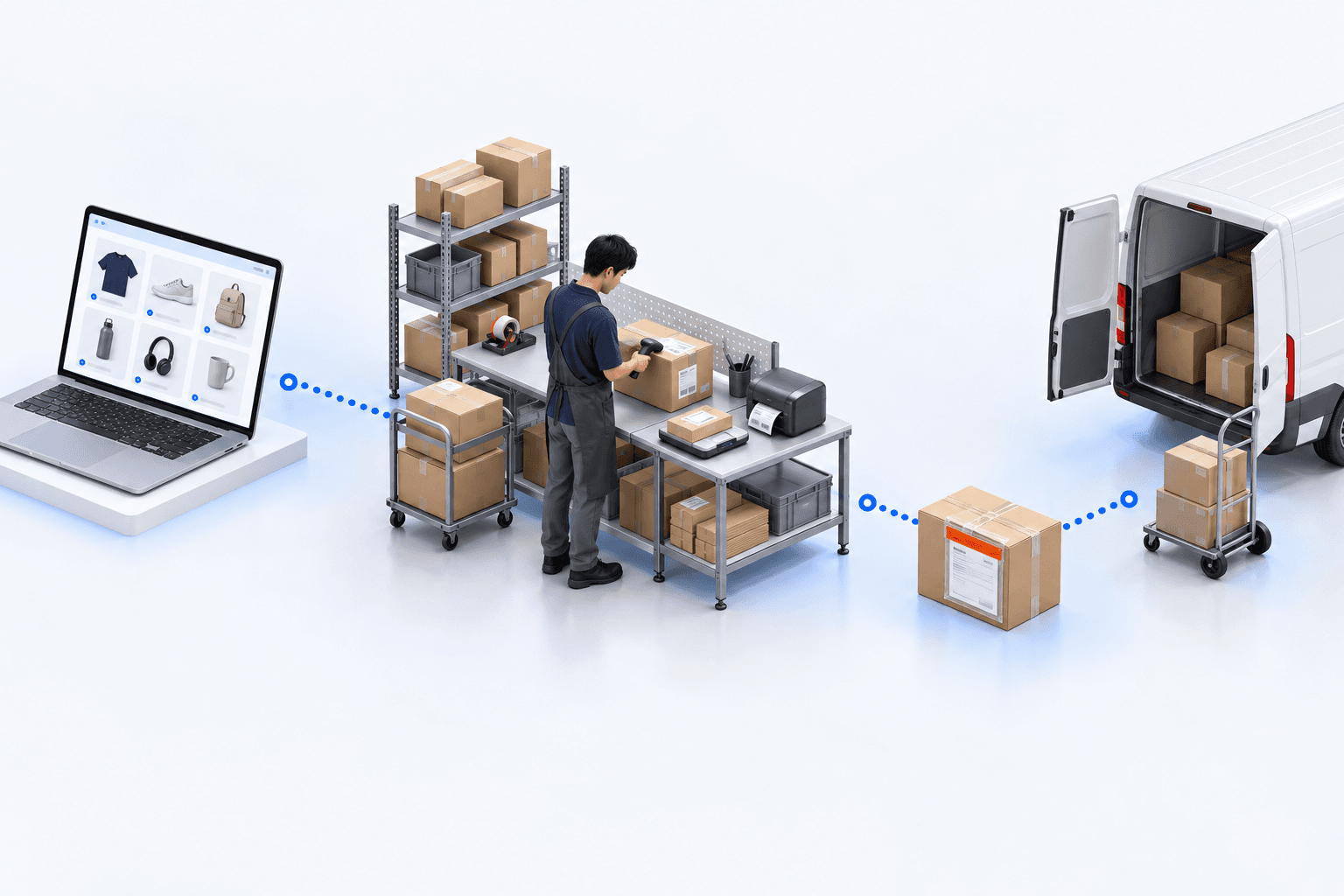
A higher conversion rate becomes profitable growth only when your logistics operation can handle the additional order volume. In 45 minutes, identify the pressure points that put inventory accuracy, order picking, shipping, customer support and margin at risk as sales rise. The webinar is presented in French.
Let’s review your order workflow
In 20 minutes, we’ll identify bottlenecks and ways to save time. No slides.
Free 20-min call · No commitment