

Ecommerce automation: what to automate first
Ecommerce automation should begin with frequent, error-prone work that can be observed and reversed. Score order capture, routing, inventory, purchasing, picking, shipping, and tracking before choosing tools. Keep people responsible for exceptions, approvals, and irreversible actions. A linked matrix of 12 published myFulfillment cases separates numeric evidence from qualitative process changes.

The essentials
- Start with frequent work whose inputs, owner, exception, and rollback are visible.
- Score seven operational rungs on frequency, error cost, exception rate, reversibility, and approval.
- Seven of 12 published myFulfillment cases contain at least one numeric before-and-after pair.
- A person should decide when evidence is missing, spend or compensation is involved, or physical work cannot be undone cheaply.
One order arrives while the last unit is being counted. A purchasing rule wants to reorder it, a routing rule wants to allocate it, and the picker has not confirmed the shelf. If all three actions run without a shared state, ecommerce automation makes the mistake travel faster.
Ecommerce automation is the controlled execution of repeatable operational rules across orders, inventory, purchasing, warehouse work and delivery updates. It works when the input, owner, exception and rollback are visible. The benefit is not less work in the abstract. It is fewer re-keyed fields, earlier failures and consistent handoffs.
That definition covers simple tools that pass an order from a channel to an order management system, as well as warehouse scans and carrier events. The correct starting point is the first frequent, costly and reversible decision in your own flow.
How should you prioritize ecommerce automation?
Start with a week of real events, not a software catalog. Count each repeated decision and every exception. Then score the seven rungs below from 1 to 5 on frequency, error cost, exception rate, reversibility and approval requirement. A high frequency favors automation. High exception and approval scores hold it back. High reversibility makes a safe first release easier.
This profile starts the discussion. Replace every score with your own volumes, incidents, and approval rules before deciding.
The displayed profile is a worked starting point, not a benchmark. Order capture and tracking are frequent, observable and replayable, so they usually make safer first candidates. Purchasing can create a financial commitment, and picking changes the physical state of stock; both need stronger controls even when their rules are stable.
Technology spend raises the cost of choosing a vague program. In its 2025 annual industry report, MHI and Deloitte reported that 55% of surveyed supply-chain leaders were increasing technology investment, while 60% planned to spend more than $1 million. Those figures are not an ecommerce budget. They support one decision here: release automation rung by rung and require observable proof before expanding it.
The person is part of the design. The ILO and NASK 2025 index estimates that one in four jobs has some exposure to generative AI, but says transformation is more likely than replacement because human input remains necessary. That is a workforce-wide GenAI result, not a warehouse estimate. Its useful boundary is task-level: automate a defined action; retain human responsibility for the result.
What should you automate first across the seven rungs?
Use the first table to find repeated work. Use the second to stop an attractive but unsafe candidate. High and low are relative to your operation. Replace them with counts such as imports per day, rejected allocations per week, or labels voided per carrier.
| Rung | Frequency | Error cost | Exception rate | Starting position |
|---|---|---|---|---|
| Order capture | High | High | Low | Start with one channel |
| Routing | High | High | Medium | Automate accepted rules |
| Inventory | High | High | Medium | Publish validated quantities |
| Purchasing | Medium | High | High | Propose before committing |
| Picking | High | High | Medium | Guide and scan |
| Shipping | High | High | Medium | Pilot one carrier |
| Tracking | High | Medium | Low | Sync, then alert |
| Rung | Reversibility | Approval | Automated action | Human boundary |
|---|---|---|---|---|
| Order capture | High | Low | Import and validate | Resolve rejected orders |
| Routing | High | Medium | Apply allocation rule | Choose uncovered cases |
| Inventory | Medium | Medium | Recalculate availability | Reconcile physical mismatch |
| Purchasing | Low | High | Draft purchase order | Approve supplier spend |
| Picking | Low | Medium | Direct next scan | Resolve missing item |
| Shipping | Medium | Medium | Select service; print | Approve costly exception |
| Tracking | High | Low | Update delivery state | Handle stalled parcel |
The sequence does not mean every business starts at row one. A hybrid merchant with an internal warehouse and a 3PL may already import orders reliably but still route them by spreadsheet. In that case, routing is the first unresolved decision. Name the system that owns the order, the location and the status. Then test one normal order, one shortage and one duplicated event before letting the rule act unattended.
Benefits should be measured beside the rung. Capture can remove re-keying. Routing can shorten the queue before warehouse release. Inventory rules can reduce stale availability. Purchasing can reduce review time without giving up spend approval. Guided picking can expose a mismatch at the shelf. Shipping rules can reduce copying between carrier screens. Tracking can surface an exception before the customer asks.
What do 12 published cases actually show?
The matrix declares its fields before making a claim: public case, publication year, before state, configured change, after state, rung and evidence type. All 12 myFulfillment records were published in 2026. Seven contain at least one numeric before/after pair. Five describe a categorical change and remain qualitative. The count is original, but it is not a success rate or a market average.
| Case | Year | Before | Configured change | After | Rung | Evidence |
|---|---|---|---|---|---|---|
| Lyon-based 3PL | 2026 | Every order re-keyed; frequent pick errors | Connectors and guided scans | Zero re-keying; near-zero pick errors | Capture, picking | Qualitative |
| Electrical retailer | 2026 | Frequent cutting errors; manual process | Order-linked cutting workflow | Near-zero errors; industrialized process | Picking | Qualitative |
| Auto-parts distributor | 2026 | Manual cross-dock; hours in transit | Supplier PO and allocation rules | 100% automated; minutes | Routing, purchasing | Numeric |
| Candle manufacturer | 2026 | 300 kg sellable; manual work orders | BOM availability calculation | 1,000 kg; auto-triggered orders | Inventory, purchasing | Numeric |
| Multi-brand group | 2026 | No store access; one warehouse | Real-time portal and order splitting | Live stock; multi-warehouse split | Routing, inventory | Qualitative |
| Ecommerce sellers | 2026 | PO created per order; own stock only | Supplier-stock and PO rules | Automated PO; combined stock | Inventory, purchasing | Qualitative |
| Electronics distributor | 2026 | Manual labels; 5 to 8% label errors | Batch labels and carrier rules | Auto-print; under 1% errors | Shipping | Numeric |
| Lifestyle retailer | 2026 | 2 days/week; 15 to 20 stockouts/month | Forecast-led replenishment review | 30 min/week; zero stockouts | Purchasing | Numeric |
| Multichannel retailer | 2026 | 3 to 5 tabs; 1 to 2 days late | Unified order view | One screen; same-day shipping | Capture, routing | Numeric |
| Health retailer | 2026 | Excel; 2 to 3 expired shipments/month | Digital lots and FIFO control | 100% digital; zero expired shipments | Inventory, picking | Numeric |
| DTC fashion brand | 2026 | 24-hour stock delay; 3-4% mispicks (unverifiable) | In-house WMS with tracked scans | Real-time; <0.5% (tracked) | Inventory, picking | Numeric |
| Bedroom retailer | 2026 | Every order split by hand | Country, zone and product rules | Zero manual splits; live tracking | Routing, tracking | Qualitative |
The numeric records show why one blended average would be meaningless. An electronics distributor moved label errors from 5 to 8% of shipments to under 1%. A lifestyle retailer moved purchasing review from two days a week to 30 minutes and recorded zero monthly stockouts on its top sellers, down from 15 to 20. A multichannel retailer moved from three to five open tabs to one screen. A DTC fashion brand reduced a tracked mispick rate to under 0.5% after reporting an unverifiable 3 to 4% before the change.
Those results have separate denominators and belong to their recorded context. The qualitative records still expose mechanisms. A multi-brand group retained multi-warehouse splitting alongside its warehouse system. A Lyon-based 3PL removed re-keying through configured connectors. A bedroom-products retailer replaced hand-cut splits with country, zone and product rules. None supplies a defensible elapsed-time saving, so none is claimed.
Read each case as a test design. Copy the before field you can observe, the rule being introduced, and the after field you will measure. Do not copy the customer's result into a business case as an expected outcome. If no baseline is available, run the existing process long enough to count it before automating.
What stays human when the workflow is automated?
Automate the action, never the accountability. A rule may execute when its inputs are present, the standard path is explicit, the exception is detectable, and the outcome can be reversed or replayed. A person should decide when evidence is missing, when the next step commits material spend, when customer compensation is involved, or when physical work cannot be undone cheaply.
| Signal | Machine may do | Person must do | Evidence retained |
|---|---|---|---|
| Valid order | Import and acknowledge | Set acceptance policy | External ID and status |
| Stock mismatch | Stop allocation | Reconcile the count | Scan and adjustment |
| Supplier need | Draft a PO | Approve the spend | Rule and approver |
| Wrong shelf item | Block the pick | Inspect and correct | Location and scan |
| Carrier rejection | Hold the parcel | Choose the recovery | Error and retry |
| Stalled tracking | Raise an alert | Contact carrier or buyer | Last event time |
Customer problems make the exception path a first-class requirement. Eurostat reported in 2025, using 2023 EU data, that 18.7% of online shoppers encountered slower-than-expected delivery, 10.8% had website difficulties, and 8.6% received incorrect or damaged goods. These are shopper-reported issues, not automation failure rates. They support a concrete design choice: keep late, rejected and mismatched orders in a visible queue with an owner and a recovery action.
Scans are useful because they create an observable event. A GS1 support article modified in 2025 says a GS1 barcode is scanned 10 billion times each day. That global figure does not promise warehouse accuracy. It explains why a stable identifier, location and timestamp are practical control points. A scan should block a mismatch and preserve what happened; it should not force an operator to confirm an item that is visibly wrong.
For a hybrid operation, write the boundary across both sites. The merchant owns the customer promise and allocation policy. The 3PL owns the physical confirmation and local exception. The shared record must show when responsibility passed, what was acknowledged, and which side restarts a failed handoff.
How do you turn the score into a safe rollout?
Choose one rung, one channel or site, and one recovery owner. Run the normal path, then force a missing field, a duplicate, a shortage and a downstream outage. Record whether the team can stop, correct and replay the event without creating a second order or losing the audit trail.
| Release test | Pass condition | Stop condition |
|---|---|---|
| Normal event | One accepted record | Missing acknowledgment |
| Missing field | Visible rejection | Silent default |
| Duplicate | One retained order | Two operational records |
| Shortage | Allocation stops | Negative promise |
| Downstream outage | Retry is queued | Event disappears |
| Rollback | Old path works | Unreconciled states |
After that decision, map the selected rung to the tool. myFulfillment has modules for order capture and routing, inventory visibility, purchase orders, guided warehouse work, and labels and tracking. Current code confirms the individual mechanisms recorded in the source ledger: one connector creates or skips orders by status; the purchase-order API exposes creation, validation-error and permission responses; batch picking carries product, quantity, location, order and bin fields; one carrier adapter generates a label and tracking number; and the tracking service preserves skipped, updated and failed states. Connector, carrier and project configuration determine the exact scope.
Keep the rollout reversible until the operators who handle exceptions can recover the four forced failures themselves. Expansion is earned by evidence from the first rung, not by the size of the software contract.
Sources
- MHI and Deloitte, 2025 MHI Annual Industry Report, 2025.
- ILO and NASK, Generative AI and Jobs: A Refined Global Index, 2025.
- Eurostat, Online shopping in the EU: 3 in 10 face issues, 2025, reporting 2023 data.
- GS1, Why is GS1 supporting industry to transition to the next generation of barcodes?, modified 2025.
- Twelve published myFulfillment case studies, checked field by field in the 2026 registry.
Frequently asked questions
Ecommerce automation is the controlled execution of repeatable rules across orders, inventory, purchasing, warehouse work, shipping, and tracking. It requires visible inputs, exceptions, owners, and recovery steps.
Start with a frequent action that has clear inputs, low exceptions, and a safe rollback. Order capture or tracking often qualifies, but your measured error cost and approval rules should decide.
Keep a person responsible when evidence is missing, supplier spend needs approval, a customer remedy is binding, or physical work cannot be reversed cheaply. Automate the action, not accountability.
Measure the same field before and after: re-keyed orders, rejected allocations, review time, pick errors, label errors, or stalled tracking events. Keep each result tied to its denominator and period.
Yes, if merchant and 3PL responsibilities are explicit. Record who owns allocation, physical confirmation, exceptions, acknowledgments, and replay. Test failed handoffs as carefully as the normal order path.
Continue exploring
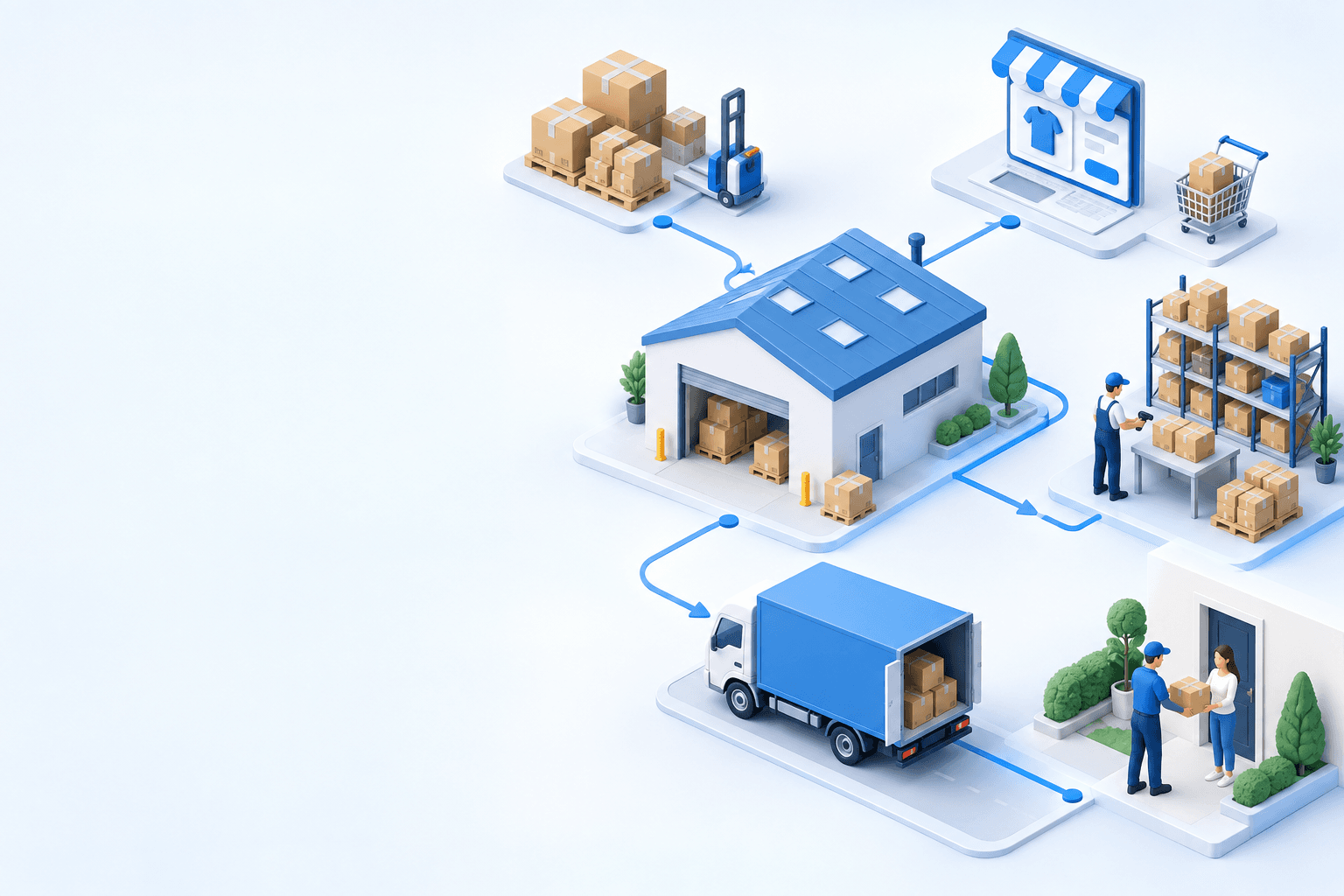



Stock availability, picking accuracy, and shipping times affect marketplace sales. Jonathan Coloma, COO of Repiauto, explains how his team went from 300 to 1,000 orders a day in two years. He describes the limits of paper-based work, ERPs built for different needs, a go-live estimate of fifteen days, and changes to his daily routine.

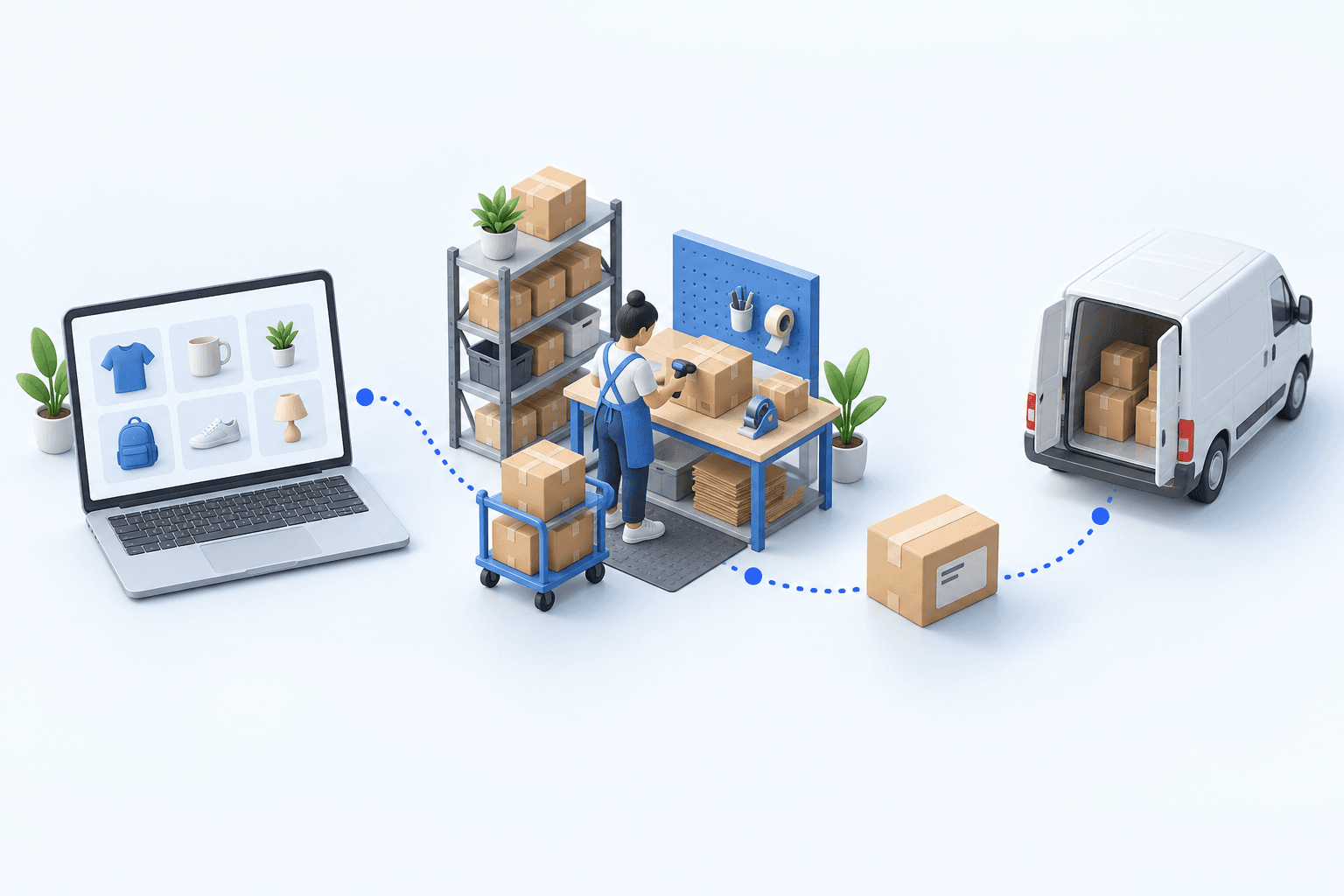
To hold up under peak volume, split the order queue into waves based on real operating constraints, then decide where barcode checks belong. At the packing bench, the operator verifies the parcel. Carrier rules select the service and print the label, so the next order can start without another decision.

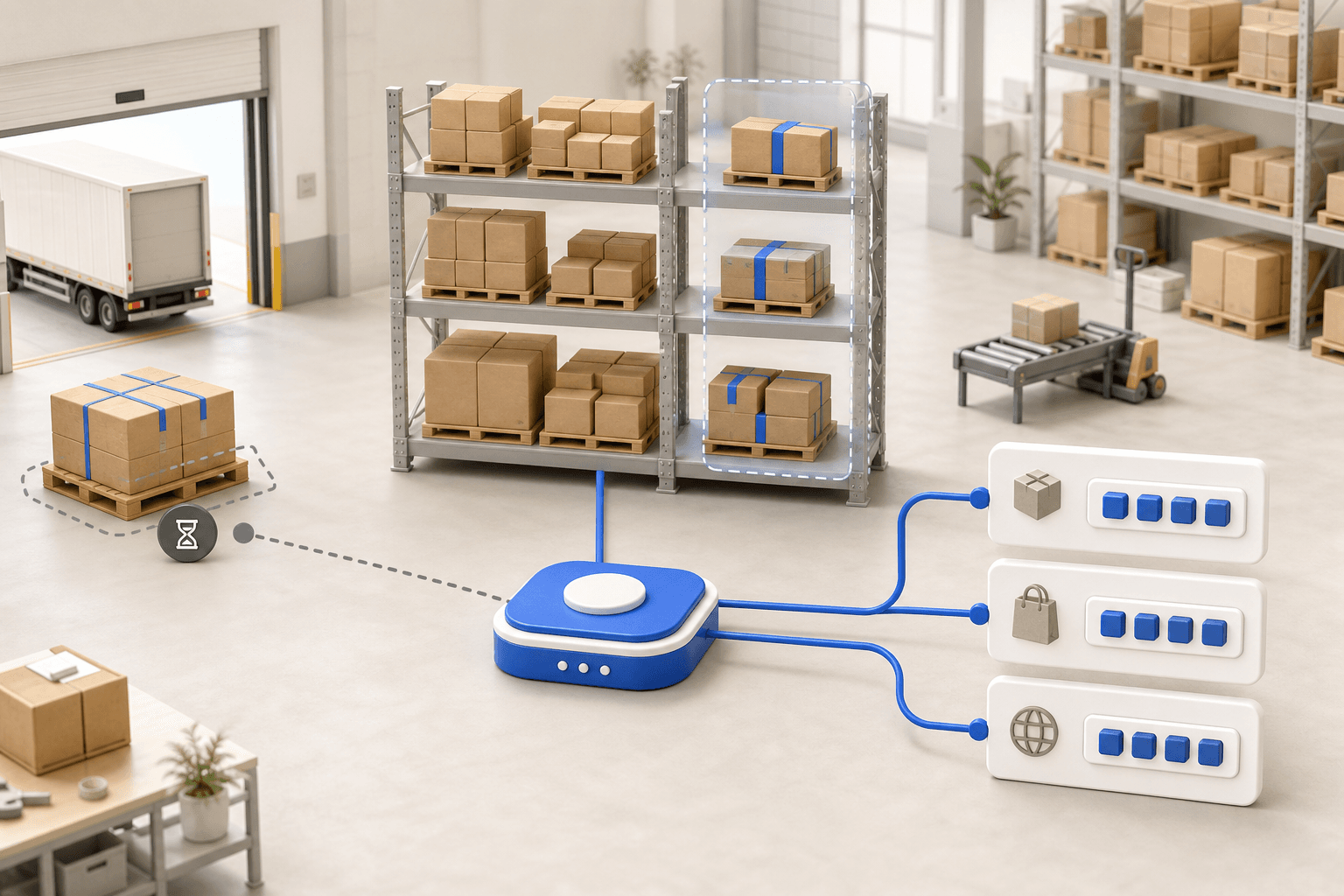
Industrializing your purchasing means ordering on rules, not guesswork: at the right time (the reorder point), in the right quantity (your coverage period), from the right supplier, with a purchase order validated in one click. Available on replay.











See it in your own operations
Book a 20-minute call. We'll map your workflow and point out where it breaks. No slides.
Free 20-min call · No commitment